
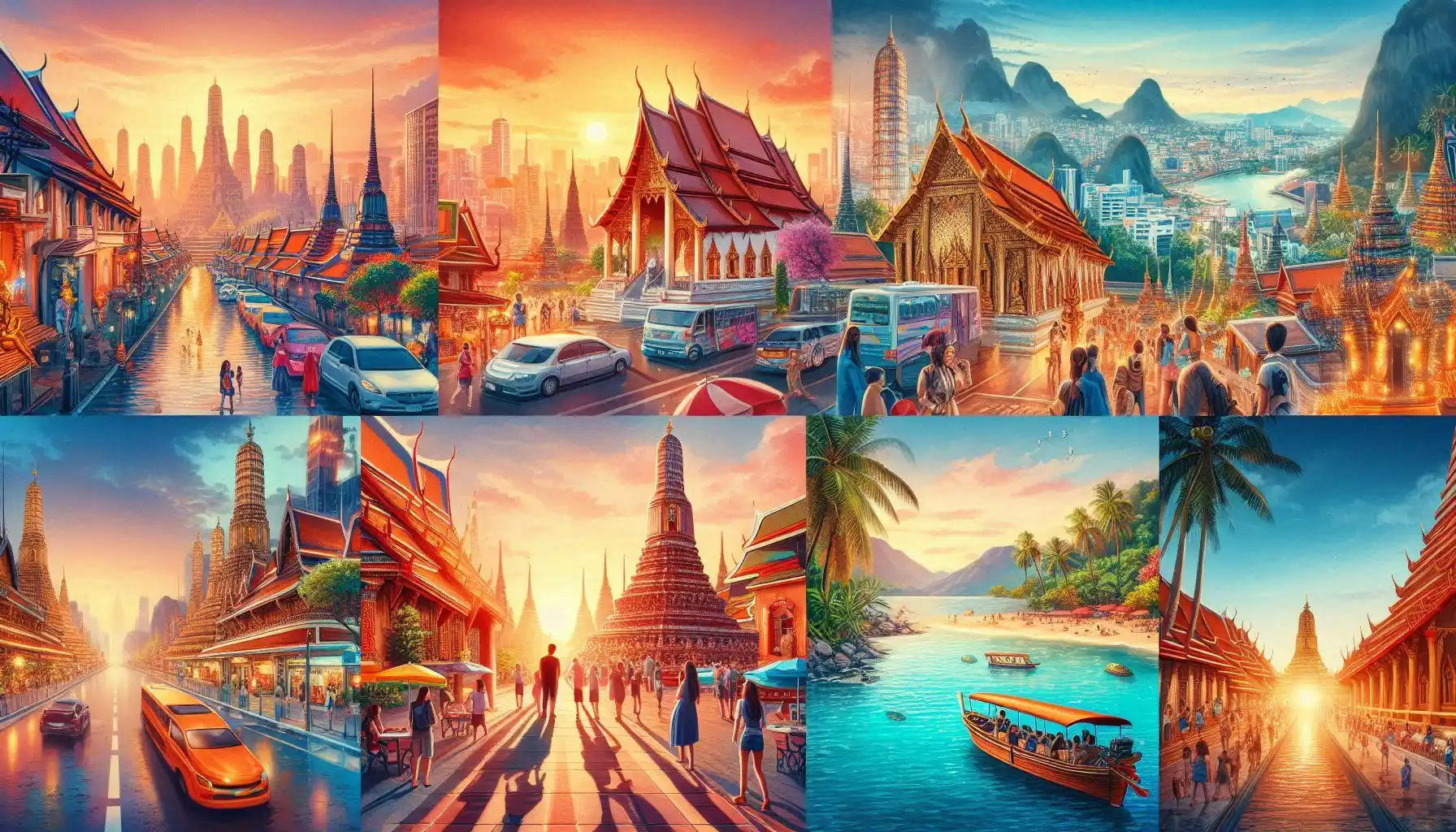

Bangkok, Chiang Mai, or the Islands How to Choose Your Perfect Thailand Base
Bangkok, Chiang Mai, or the Islands? How to Choose Your Perfect Thailand Base
The dream is vivid, isn’t it? It flickers behind your eyelids as you sit through another endless meeting. It’s a kaleidoscope of sensory memories, some real, some gleaned from travel shows and Instagram feeds: the electric hum of a longtail boat cutting through a turquoise lagoon, the heady scent of lemongrass and chilli wafting from a sizzling street wok, the serene, golden face of a Buddha statue emerging from the morning mist, the cacophony of a bustling market where every colour is brighter and every sound is louder.
Thailand. The Land of Smiles. It’s a destination that promises everything, and for the most part, it delivers. But for the modern traveler—the digital nomad, the long-term explorer, the slow-travel enthusiast, or even the family planning an extended sabbatical—the question is no longer just “Should I go to Thailand?” The question is far more complex and consequential: “Where in Thailand should I base myself?”
This single decision shapes your entire experience. It dictates your daily rhythm, your social circle, your budget, your weekend adventures, and the very flavour of your life abroad. It’s the difference between waking up to the sound of birds in the mountains and the rumble of the Skytrain above a metropolis of 15 million people. It’s the choice between a world-class museum on your doorstep and a world-class reef a ten-minute swim away.
Three contenders consistently rise to the top of this debate, each representing a distinct facet of the Thai identity. There is Bangkok, the pulsating, chaotic, and endlessly fascinating heart of the nation. There is Chiang Mai, the cultured, serene, and nature-embraced capital of the north. And then there are The Islands, a fragmented paradise of sun, sea, and sand, each island a unique personality in a vast archipelago.
Choosing between them is not about finding the “best” place in Thailand. Such a place doesn’t exist. It’s about finding the right place for you. This guide is your definitive resource for making that choice. We will delve deep, moving beyond the glossy travel brochures to explore the gritty, wonderful, and challenging realities of life in each location. We’ll dissect the cost of living, the lifestyle, the communities, the food, and the opportunities for adventure. By the end, you won’t just have information; you’ll have clarity. You’ll be able to match your personality, your priorities, and your budget to your perfect Thai home base.
So, let’s embark on this journey of discovery. Let’s unravel the tapestry of Thailand, thread by thread, to find the place where your own story can begin.
Part 1: The Soul-Searching Questionnaire – Who Are You as a Traveler?
Before we even begin to compare the locations, we need to look inward. The “perfect” base is entirely subjective. A place that is a utopia for a 22-year-old backpacker could be a nightmare for a family with toddlers. A hub for a digital nomad might feel isolating for a culture vulture. So, grab a coffee (or a Chang beer), and let’s figure out your traveler archetype. Which of these resonates most strongly with you?
The Digital Nomad
Your primary concern is connectivity and productivity. You need reliable, high-speed internet, comfortable co-working spaces, and a community of like-minded individuals to combat the isolation of remote work. Your budget is a key driver, but you’re willing to pay a premium for infrastructure that supports your workflow. You value a good work-life balance, dreaming of finishing your day’s tasks and heading straight for a beach, a hiking trail, or a vibrant social scene. You need a place with a solid visa infrastructure and a reasonable cost of living to make your finances work.
The Culture Vulture
You travel to immerse yourself in history, art, and tradition. You want to wake up surrounded by ancient temples, spend your afternoons in museums, and your evenings at traditional dance performances. You’re not just looking to see the sights; you want to understand the soul of the place. You crave authenticity, seeking out local festivals, learning the language, and taking cooking classes. For you, the convenience of modern life is secondary to the richness of the cultural experience.
The Foodie
Your journey is mapped out by meals. You believe the best way to understand a culture is through its cuisine. You’re on a quest for the perfect Pad Thai, the most fiery Som Tum, and the creamiest Massaman Curry. You’re just as happy eating at a plastic-stooled street stall as you are dining in a Michelin-starred restaurant. You want to explore local markets, take cooking classes, and maybe even forage for exotic ingredients. Your ideal base is a place where the food scene is diverse, authentic, and constantly exciting.
The Adventure Seeker
You live for adrenaline and exploration. Your perfect week involves trekking through jungles, scuba diving with whale sharks, rock climbing on limestone karsts, or kayaking through hidden mangroves. You’re not one to sit still for long. You need a base that serves as a launchpad for epic adventures, with easy access to nature and a community that shares your passion for the outdoors. Comfort is a bonus, but access to wild, untamed places is a necessity.
The Family Traveler
Your priorities are safety, convenience, and enrichment for all ages. You need reliable healthcare, international schools (if you’re staying long-term), family-friendly activities, and accommodation with space for everyone. You’re looking for a balance between cultural experiences and relaxation. You want your kids to have fun and learn about the world, but you also need a predictable routine and amenities that make life with children easier. A chaotic, 24/7 party scene is the last thing you want.
The Budget Backpacker
You’re on a mission to stretch every dollar, baht, or satang as far as it will go. Your ideal base is cheap. You’re happy with basic accommodation, street food for every meal, and free or low-cost activities. You thrive on meeting other travelers, sharing tips, and finding hidden gems that aren’t in the guidebooks. Your travel style is flexible and spontaneous, and you’re willing to trade comfort for an authentic experience and a longer trip.
The Luxury Seeker & Wellness Retreater
You travel to unwind, rejuvenate, and indulge. You’re seeking world-class spas, five-star resorts, fine dining, and impeccable service. Your idea of a good time is a private yoga session, a gourmet meal overlooking the ocean, or a cocktail at a rooftop bar. You value privacy, comfort, and exclusivity. You’re looking for a base that offers a high standard of living, with easy access to wellness retreats, boutique shopping, and premium experiences.
Identifying with one (or a blend) of these archetypes is the first step. As we now dive into the heart of Bangkok, Chiang Mai, and the Islands, keep your personal profile in mind. It will be your compass.
Part 2: Bangkok – The Electric Heart of the Metropolis
To choose Bangkok as your base is to embrace chaos. It’s a decision to dive headfirst into one of the world’s most vibrant, overwhelming, and intoxicating cities. This is not a gentle introduction to Southeast Asia; it is a full-throttle immersion. Bangkok is a city of a thousand faces, a place where gleaming, gold-leafed skyscrapers cast shadows over ancient, crumbling temples, where serene monks in saffron robes navigate bustling, traffic-choked streets, and where the scent of jasmine incense mingles with the fumes of a tuk-tuk.
Living here is a constant exercise in contrasts. It’s a city that never truly sleeps, offering 24/7 everything—from food and shopping to co-working spaces and social life. For those who thrive on energy, diversity, and endless possibility, Bangkok is not just a city; it’s an addiction.
The Vibe: A Symphony of Contrasts
The atmosphere in Bangkok is electric. It’s a high-frequency hum of human activity. Walk down any street, and you’ll be bombarded with stimuli: the blare of a car horn, the chatter of vendors in a market, the thumping bass from a rooftop bar, the sight of ornate spirit houses outside modern convenience stores, the taste of a sweet Thai iced tea on a sweltering day. It’s loud, it’s fast, and it’s utterly alive.
There’s a sense of grand scale here. The Chao Phraya River, the “River of Kings,” is a massive, muddy artery that bisects the city, flanked by opulent temples and towering waterfront hotels. The road network is a spaghetti junction of elevated expressways and surface-level gridlock. The shopping malls, like Siam Paragon or ICONSIAM, are not just retail spaces; they are climate-controlled cathedrals of consumerism, complete with aquariums and art exhibitions.
Yet, within this immense urban sprawl, you can find pockets of incredible tranquility. Step through the gate of a temple like Wat Pho, and the city’s noise fades to a distant hum, replaced by the gentle clinking of wind chimes and the soft chanting of monks. Explore the narrow alleys (sois) of a neighbourhood like Ari or Thonglor, and you’ll find a boutique, community-focused vibe with trendy cafes, independent art galleries, and quiet parks.
Bangkok is a city that rewards the curious. It challenges you, frustrates you, but never, ever bores you.
Cost of Living: A Tale of Two Cities
Bangkok can be as cheap or as expensive as you want it to be. It is, without a doubt, the most expensive of our three options, but it offers an unparalleled range of choices.
- Accommodation: This is your biggest variable. You can find a basic room in a shared apartment or a older-style apartment building for 8,000 – 15,000 THB/month ($230 – $430 USD). For a modern, one-bedroom condo in a desirable area with a gym and pool (the standard for many expats and nomads), expect to pay 20,000 – 40,000 THB/month ($570 – $1,140 USD). Luxury, three-bedroom apartments in prime locations can easily exceed 80,000 THB/month ($2,280 USD).
- Food: This is where Bangkok shines for budget-conscious living. A delicious, filling meal from a street food stall or a simple local eatery will cost you between 60 – 150 THB ($1.70 – $4.30 USD). You could eat like a king for under 500 THB ($14 USD) a day. However, the city is also a culinary capital with a world-class fine-dining scene. A meal at a mid-range restaurant will be 400 – 800 THB ($11 – $23 USD) per person, while a high-end experience can run into thousands of baht.
- Transport: The BTS Skytrain and MRT subway are your best friends for avoiding the infamous traffic. Fares are cheap, typically 16 – 60 THB ($0.45 – $1.70 USD) per journey. Taxis and Grab (the Southeast Asian equivalent of Uber) are plentiful, but traffic can make them expensive and slow. A tuk-tuk ride is a pricier, touristy experience, so always agree on a price first.
- Activities: Many of Bangkok’s greatest attractions—its temples, markets, and public spaces—are free or very cheap to enter. The Grand Palace is an exception at 500 THB ($14 USD), but it’s a worthwhile splurge. Co-working spaces are abundant, with day passes averaging 400 – 600 THB ($11 – $17 USD).
Monthly Budget Estimate (for a comfortable nomad/expat lifestyle):
- Frugal: 30,000 – 45,000 THB ($850 – $1,285 USD)
- Comfortable: 50,000 – 80,000 THB ($1,425 – $2,280 USD)
- Luxury: 100,000+ THB ($2,850+ USD)
Lifestyle & Pace: Fast, Furious, and Flexible
Life in Bangkok is fast-paced. The city operates on a different frequency. The sheer number of people, the density of the urban environment, and the 24/7 nature of commerce create a sense of constant motion. This can be exhilarating for some and exhausting for others.
The daily rhythm is often dictated by the weather. You learn to schedule your day around the heat. Mornings are for errands and exploration before the midday sun becomes unbearable. Afternoons are for retreating to air-conditioned havens—malls, cafes, co-working spaces, or your apartment. The city comes alive again in the evening when the temperature drops, and the streets fill with people dining, shopping, and socializing.
The lifestyle is incredibly flexible. Whatever your hobby or interest, Bangkok has a community for it. You can join a rock climbing gym, a dragon boat team, a language exchange group, a pottery class, or a blockchain meetup. The social scene is vast and varied, from backpacker hostels in Khao San Road to sophisticated expat bars in Sukhumvit and underground techno clubs in Ekkamai.
Community: A Melting Pot of the World
Bangkok is a true global hub. The community is a diverse and transient mix of expats, nomads, tourists, and, of course, Thais.
- Expats: There are large, established expat communities from all over the world, particularly from Japan, China, Europe, and North America. Many work in multinational corporations, embassies, or the education sector. These communities can be insular but also offer a strong support network.
- Digital Nomads: The nomad scene is thriving and well-organized. Co-working spaces are the epicentres of this community, hosting networking events, skill-sharing workshops, and socials. It’s easy to meet other remote workers from a huge variety of professions.
- Tourists: The sheer volume of tourists means the city is constantly in flux. In popular areas, you’ll be surrounded by people from every corner of the globe. This can make it hard to form deep connections but also ensures there’s always someone new to meet.
- Locals: Thais are, by and large, warm, friendly, and incredibly patient. However, breaking into a local social circle can be challenging due to language barriers and cultural differences. Learning even a few words of Thai goes a long way.
Connectivity & Infrastructure: World-Class with Caveats
For a megacity of its size, Bangkok’s infrastructure is remarkably good, but it comes with the city’s trademark chaos.
- Internet: Excellent. 5G is widely available, and fiber-optic broadband in condos is fast and reliable. You will have no problem working from home or a cafe.
- Transport: The BTS and MRT are clean, efficient, and air-conditioned, but the network doesn’t cover the entire city. For areas not on the lines, you’re reliant on buses, taxis, Grab, or the ubiquitous motorcycle taxis, which are a fast but hair-raising way to get around. Traffic is the city’s biggest curse; a journey that takes 20 minutes at midnight can take two hours during rush hour.
- Healthcare: Bangkok is a medical tourism hub. The hospitals, like Bumrungrad International Hospital or Bangkok Hospital, are world-class, with English-speaking staff and state-of-the-art facilities. Many expats choose Bangkok for this reason alone.
- Shopping: You can buy absolutely anything in Bangkok. From sprawling, chaotic markets like Chatuchak Weekend Market to hyper-modern, luxury malls, the city is a shopper’s paradise.
Culture & Attractions: An Overwhelming Abundance
You could live in Bangkok for a year and barely scratch the surface of its cultural offerings.
- Temples: The city is home to over 400 temples. The “big three”—the Grand Palace (with Wat Phra Kaew), Wat Pho (Reclining Buddha), and Wat Arun (Temple of Dawn)—are unmissable. But the real joy is in discovering the smaller, local temples tucked away down quiet sois.
- Museums & Art: The Bangkok Art and Culture Centre (BACC) is a hub for contemporary art. The Museum Siam offers an interactive look at Thai identity. Jim Thompson’s House provides a fascinating glimpse into the life of an American entrepreneur who revitalized the Thai silk industry.
- Markets: Beyond Chatuchak, there are countless other markets. The train market at Maeklong, where vendors retract their stalls for a passing train, is a spectacle. The floating markets, like Damnoen Saduak (though touristy) or the more authentic Amphawa, offer a unique shopping and dining experience.
- Food Scene: This is a culture in itself. From the street food stalls of Yaowarat (Chinatown) to the fine-dining restaurants helmed by Michelin-starred chefs, Bangkok is a culinary titan. Taking a food tour is a fantastic way to dive in.
Bangkok: The Pros and Cons
| Pros 👍 | Cons 👎 |
| Unparalleled Convenience: 24/7 everything, world-class healthcare, endless shopping and dining options. | Intense Overwhelm: The noise, traffic, crowds, and sheer scale can be mentally and physically draining. |
| Excellent Connectivity: Superb internet, co-working spaces, and international airport hub making travel easy. | High Cost of Living: Significantly more expensive than Chiang Mai or the islands, especially for accommodation. |
| Vibrant Social Scene: Huge, diverse expat and nomad communities; endless opportunities to meet people. | Lack of Nature: You are firmly in a concrete jungle. Getting to nature requires a planned trip. |
| Cultural Epicenter: The best place in Thailand for museums, galleries, theatre, and major historical sites. | Transient Feel: The constant flow of tourists can make it hard to put down roots and feel part of a stable community. |
| Foodie Paradise: The most diverse and dynamic food scene in the country, from street food to fine dining. | The Heat & Pollution: It’s hot and humid year-round, and air pollution can be a serious issue, especially during the burning season (Feb-Apr). |
Who is Bangkok PERFECT for?
- The Digital Nomad who prioritizes high-speed internet, co-working spaces, and networking.
- The Culture Vulture who wants to be surrounded by museums, galleries, and historical sites.
- The Foodie who craves endless variety and access to the best restaurants in the country.
- The Luxury Seeker who values fine dining, high-end shopping, and five-star amenities.
- The Family Traveler who needs access to top-tier international schools and healthcare.
Who should probably AVOID Bangkok?
- The Budget Backpacker looking to stretch their money as far as possible.
- The Adventure Seeker who wants to be surrounded by nature and have daily access to hiking, climbing, or diving.
- Anyone who is easily stressed by noise, crowds, and chaos.
Part 3: Chiang Mai – The Serene Soul of the North
If Bangkok is a frantic, high-energy rock song, then Chiang Mai is a soothing, melodic acoustic ballad. Nestled in a mountainous valley in the north of Thailand, Chiang Mai, or “The Rose of the North,” offers a completely different pace of life. It’s a city that somehow manages to blend the conveniences of urban living with the tranquility of the countryside.
Choosing Chiang Mai as your base is a decision to prioritize balance. It’s for those who want the cultural richness of a city with a 700-year history, but also want to be able to escape into the jungle or up a mountain in under 30 minutes. It’s a place where the pace is slower, the smiles are warmer, and the connection to nature is tangible. For years, it has been the unofficial capital of the digital nomad world, and for good reason: it offers an incredible quality of life at an unbeatable price.
The Vibe: Laid-Back, Creative, and Connected
The atmosphere in Chiang Mai is its greatest asset. It’s relaxed, but not sleepy. There’s a gentle, creative energy that permeates the city. The core of this is the moat-encircled Old City, a square-kilometre grid of narrow lanes lined with ancient temples, guesthouses, quirky cafes, and small boutiques. Walking or cycling through the Old City, with its golden chedis peeking out over the walls, feels like stepping back in time.
Outside the Old City, Chiang Mai sprawls into distinct neighbourhoods. Nimmanhaemin Road, or “Nimman,” is the modern, hip heart of the city. It’s a tree-lined avenue of stylish coffee shops, co-working spaces, art galleries, and trendy restaurants, and it’s the primary hub for the city’s large nomad and expat community. Further out, you’ll find local markets, sprawling shopping malls, and residential areas where you get a real sense of everyday Thai life.
The surrounding nature is never far from view. The majestic Doi Suthep mountain looms over the city, a constant reminder of the jungle and national parks that lie just beyond the city limits. This proximity to the natural world gives Chiang Mai a feeling of space and breathability that is completely absent from Bangkok.
Cost of Living: Unbeatable Value
This is where Chiang Mai truly shines. Your money goes significantly further here, allowing for a very comfortable lifestyle on a modest budget.
- Accommodation: Drastically cheaper than Bangkok. A modern, one-bedroom condo with a pool outside the city centre can be found for 10,000 – 18,000 THB/month ($285 – $515 USD). Inside the Old City or in trendy Nimman, prices are a bit higher, maybe 15,000 – 25,000 THB/month ($425 – $715 USD). You can even find basic, long-stay rooms for as little as 6,000 – 8,000 THB/month ($170 – $230 USD).
- Food: Incredibly affordable. A delicious bowl of the local specialty, Khao Soi, will cost you 40 – 60 THB ($1.15 – $1.70 USD). A plate of Pad Thai is similarly priced. Eating out at local restaurants is cheap, with most dishes coming in under 100 THB ($2.85 USD). Western food is more expensive but still very reasonable.
- Transport: The main mode of public transport is the red songthaews (shared taxis). You flag one down, tell the driver your destination, and negotiate a fare, which is usually 30 – 60 THB ($0.85 – $1.70 USD) for most trips within the city. Grab is also available. Many long-term residents choose to buy or rent a scooter for ultimate freedom, which costs around 2,500 – 4,000 THB/month ($70 – $115 USD).
- Activities: Many of the best things to do in Chiang Mai are cheap or free. Visiting most temples is free or has a small nominal fee. Hiking in the mountains is free. Co-working spaces are plentiful and cheaper than in Bangkok, with day passes around 250 – 400 THB ($7 – $11 USD).
Monthly Budget Estimate (for a comfortable nomad/expat lifestyle):
- Frugal: 25,000 – 35,000 THB ($715 – $1,000 USD)
- Comfortable: 40,000 – 60,000 THB ($1,140 – $1,715 USD)
- Luxury: 70,000+ THB ($2,000+ USD)
Lifestyle & Pace: Work-Life Balance Realized
The lifestyle in Chiang Mai is all about balance. It’s a city that encourages you to work hard, but also to play hard and relax well. A typical day for a nomad might involve a morning yoga session, a few hours of work in a co-working space, a healthy lunch at a vegan cafe, an afternoon exploring a temple, and an evening at the sprawling Night Bazaar or a trendy bar in Nimman.
The pace is noticeably slower than Bangkok. People walk more slowly. There’s less of a sense of urgency. This slower pace extends to the service culture, which can be a blessing or a curse depending on your personality. If you’re used to instant gratification, you might need to adjust your expectations.
The city has a strong wellness and self-improvement focus. You’ll find an abundance of yoga studios, Muay Thai gyms, meditation retreats, and healthy-eating restaurants. It’s a place that encourages you to be the best version of yourself, whether that’s through physical fitness, mindfulness, or learning a new skill like Thai cooking or massage.
Community: The World’s Biggest Co-working Space
Chiang Mai is famous for its community, particularly among digital nomads and expats.
- Digital Nomads: This is the tribe. Chiang Mai is arguably the digital nomad capital of the world. The community is large, welcoming, and well-established. Co-working spaces like PunSpace and CAMP are social hubs as much as they are workplaces. It’s incredibly easy to meet other remote workers, find collaborators, and build a strong social network. There are regular meetups, talks, and social events.
- Expats: There’s a significant population of long-term Western expats, many of whom are retirees. They are generally very friendly and have created their own support networks and social circles.
- Locals: Chiang Mai is known for having some of the friendliest people in Thailand. The local Northern Thai (Lanna) culture is distinct and proud. Because the city is less overwhelming than Bangkok, it can be easier to interact with locals and form genuine connections, especially if you make an effort to learn some Thai.
Connectivity & Infrastructure: Good, Not Perfect
Chiang Mai has all the infrastructure you need for a comfortable life, but it’s a step down from the world-class level of Bangkok.
- Internet: Generally very good. Most condos and cafes have high-speed internet suitable for remote work. However, it can occasionally be less stable than in Bangkok, and power outages can happen during heavy rain storms.
- Transport: The lack of a public metro system is the biggest drawback. The songthaews are convenient but can be confusing for newcomers. The city is very spread out, so having your own transport (a scooter is the most popular choice) is almost a necessity for long-term stays.
- Healthcare: Very good. Chiang Mai Ram Hospital and Bangkok Hospital Chiang Mai are excellent private hospitals with English-speaking staff and modern facilities. They can handle most medical issues, though for highly specialized procedures, some people still choose to travel to Bangkok.
- Shopping: You have everything you need. There are modern malls like Central Festival, but the shopping experience is more focused on local markets, artisan shops, and boutiques, which is part of the city’s charm.
Culture & Attractions: Ancient History and Natural Beauty
Chiang Mai is the cultural capital of Northern Thailand, with a rich Lanna heritage.
- Temples: The Old City alone contains over 30 temples, each with its own unique character and history. Wat Chedi Luang is a magnificent, ruined 15th-century stupa. Wat Phra Singh is home to a highly revered Buddha image. The crown jewel, however, is Wat Phra That Doi Suthep, a stunning golden temple on a mountain overlooking the city. The drive up and the view from the top are breathtaking.
- Nature & Adventure: This is Chiang Mai’s trump card. You can go elephant trekking (ensure you choose an ethical sanctuary), zip-lining through the jungle, rafting on rivers, and trekking to remote hill tribe villages. Doi Inthanon National Park, home to Thailand’s highest peak, is a paradise for hikers and nature lovers.
- Markets & Crafts: The city is a hub for traditional Thai crafts. You can visit the Bo Sang Umbrella Village or the Borsang handicrafts village to see artisans at work. The Night Bazaar is a nightly institution for souvenir shopping and street food, while the Sunday Walking Street Market, which takes over the main road in the Old City, is a massive, must-see event.
- Festivals: Chiang Mai is famous for its festivals, particularly Yi Peng (Lantern Festival) and Songkran (Thai New Year), which are celebrated here with more passion and tradition than anywhere else in the country.
Chiang Mai: The Pros and Cons
| Pros 👍 | Cons 👎 |
| Incredible Value for Money: A very high quality of life is achievable on a modest budget. | The “Burning Season”: From February to April, agricultural burning can cause severe air pollution (PM2.5), making it unhealthy to be outdoors. |
| Perfect Work-Life Balance: Combines city amenities with unparalleled access to nature. | Limited Public Transport: The city is spread out and lacks a metro system, making a scooter almost essential. |
| Strong & Welcoming Community: The world’s best digital nomad scene and a friendly, established expat community. | Slower Pace of Life: Service can be slow, and getting things done can require more patience than in Bangkok. |
| Rich Culture & Nature: Deep Lanna cultural heritage, stunning temples, and mountains/jungles on your doorstep. | Less “Happening”: Fewer world-class concerts, exhibitions, and international events compared to the capital. |
| Excellent Food Scene: Amazing Northern Thai cuisine and a healthy, international cafe culture. | Healthcare is Good, Not Elite: While the hospitals are very good, for highly complex issues, Bangkok is still the ultimate destination. |
Who is Chiang Mai PERFECT for?
- The Digital Nomad seeking the best balance of cost, community, and connectivity.
- The Culture Vulture interested in Lanna history, temples, and local traditions.
- The Foodie who wants to dive deep into Northern Thai cuisine and enjoys a healthy, cafe-heavy scene.
- The Adventure Seeker who wants a base with immediate access to trekking, hiking, and nature.
- The Budget Backpacker who wants to settle in one place for a while to live cheaply.
Who should probably AVOID Chiang Mai?
- Anyone with severe respiratory issues, due to the burning season air pollution.
- The Luxury Seeker who craves the high-end shopping, dining, and hotel options of a major global capital.
- Someone who hates driving a scooter and is unwilling to navigate the city’s limited public transport.
Part 4: The Islands – A Fragmented Paradise
To choose “The Islands” as your base is not a single choice, but a hundred smaller ones. It’s a decision to trade the convenience of the city for the beauty of the beach, the certainty of a 9-to-5 rhythm for the ebb and flow of the tides. It’s a lifestyle centered around sun, sea, and sand, where your biggest decision of the day might be whether to go snorkelling or simply read a book in a hammock.
But—and this is a crucial but—”The Islands” is a meaningless generalization. An island base on the Andaman Coast is a completely different world from one in the Gulf of Thailand. A party-centric island like Ko Pha-ngan has nothing in common with a family-friendly island like Ko Lanta. The first and most important step in choosing an island life is to shatter the monolithic myth of “paradise” and understand the distinct personalities of Thailand’s island archipelagos.
The Great Divide: Andaman Coast vs. Gulf of Thailand
Your first major decision is which coast to call home. This choice is dictated by one thing above all else: the weather.
- The Andaman Coast (Phuket, Krabi, Ko Phi Phi, Ko Lanta, etc.): This is the coast you see in most brochures, with its dramatic limestone karsts jutting out of the turquoise sea. The high season, with the best weather, is from November to April. The monsoon season, from May to October, brings rough seas, heavy rain, and many businesses (especially on the smaller islands) shut down completely.
- The Gulf of Thailand (Ko Samui, Ko Pha-ngan, Ko Tao, etc.): This coast has a different weather pattern. The high season is from February to September. The monsoon season, from October to January, brings more rain and rougher seas, though it’s generally less severe than on the Andaman Coast, and many places remain open year-round.
Bottom Line: If you plan to be based on the islands for a full year, you might even consider a “split year,” spending half the year on one coast and half on the other to chase the endless summer.
A Guide to Island Personalities
Once you’ve chosen your coast, you need to choose your island. Here’s a breakdown of the main types:
The Party Islands: Ko Pha-ngan & Ko Samui
- The Vibe: High-energy, social, and focused on nightlife. Ko Pha-ngan is the undisputed king, famous for the monthly Full Moon Party and its many offshoots (Half Moon, Black Moon). Ko Samui is a more developed, older sibling, with a party scene centered around Chaweng Beach but also offering more family-friendly resorts and upscale dining.
- Who it’s for: Young backpackers, party-lovers, and social butterflies who want to be in the middle of the action.
- Reality Check: The party scene can be all-consuming and isolating if you’re not into it. The “paradise” vibe can be shattered by thumping techno music at 4 a.m. Costs can be surprisingly high, especially around party times.
The Scenic & Dramatic Islands: Ko Phi Phi & Phuket
- The Vibe: Breathtakingly beautiful, but often crowded and commercialized. Ko Phi Phi (of “The Beach” fame) is stunningly gorgeous but can feel like a theme park during the day, with day-trippers flooding the beaches. Phuket is a large, developed island with a huge range of amenities, from luxury resorts to bustling nightlife in Patong.
- Who it’s for: Those who prioritize epic scenery above all else and don’t mind crowds. Phuket is good for families and those who want a city-like infrastructure on an island.
- Reality Check: These are some of the most expensive islands. They can feel overrun and lack the authentic, laid-back Thai vibe. Ko Phi Phi has no cars, which means you’ll be hauling your luggage through crowds.
The Chill & Laid-Back Islands: Ko Lanta, Ko Tao, Ko Muk, Ko Jum
- The Vibe: This is where you find the classic, relaxed “island time” atmosphere. Ko Lanta is known for its long, beautiful beaches, excellent food scene, and a laid-back vibe that appeals to families and couples. Ko Tao is the diving mecca of Thailand, with a young, active community centered around the sea. Ko Muk and Ko Jum are even quieter, offering a true escape from the hustle and bustle.
- Who it’s for: The Adventure Seeker (especially divers on Ko Tao), the Family Traveler (Ko Lanta), and anyone seeking genuine peace, quiet, and a slower pace of life.
- Reality Check: Amenities are more limited. Nightlife is quiet (or non-existent). Internet can be patchy, and during the low season, many places close down, leaving them feeling like ghost towns.
Cost of Living on the Islands: A Wild Spectrum
The cost of living on the islands is the most variable of the three options. It depends entirely on which island you choose and your lifestyle.
- Accommodation: A basic beach bungalow on a quiet island can be as little as 10,000 THB/month ($285 USD) long-term. A modern one-bedroom apartment or villa in a more developed area like Ko Samui or on Phuket will be 20,000 – 40,000+ THB/month ($570 – $1,140+ USD).
- Food: Eating local Thai food is cheap, similar to Chiang Mai. However, everything has to be shipped to the island, so imported goods and Western food are significantly more expensive than on the mainland.
- Transport: Most islands rely on songthaews or taxis, which can be expensive and have fixed, non-negotiable prices. Renting a scooter is almost essential for freedom and costs 2,500 – 4,000 THB/month ($70 – $115 USD). Inter-island travel via ferries and speedboats can add up.
- Activities: The main activities—beaching, swimming, snorkelling—are free. However, organized tours, diving courses, and boat trips are the main tourist draw and can be pricey.
Monthly Budget Estimate (for a comfortable lifestyle on a mid-range island like Ko Lanta):
- Frugal: 35,000 – 50,000 THB ($1,000 – $1,425 USD)
- Comfortable: 60,000 – 90,000 THB ($1,715 – $2,570 USD)
- Luxury: 100,000+ THB ($2,850+ USD)
Lifestyle & Pace: Governed by the Sun and Sea
Island life is dictated by nature. Your day starts with the sunrise and often ends not long after sunset, as many smaller islands have limited electricity or a quiet nightlife. The pace is slow. “Island time” is a real concept—things happen when they happen, and there’s no point in getting stressed about it.
The lifestyle is incredibly outdoorsy. You’ll live in swimwear. Your social life will revolve around the beach, beach bars, and sunset viewings. It’s a healthy, active lifestyle, but it can also feel isolating. The community can be transient, with backpackers and tourists coming and going every week, making it harder to form deep, lasting connections than in a city-based expat hub.
Connectivity & Infrastructure: The Weakest Link
This is the biggest compromise you’ll make by choosing an island base.
- Internet: This is the number one complaint. While it has improved dramatically, Wi-Fi can still be frustratingly slow and unreliable, especially during storms or on more remote islands. It is generally not suitable for a bandwidth-heavy remote work job unless you are in a very modern, developed area.
- Transport: You are at the mercy of the ferry schedules. A simple trip to the mainland for a visa run or to see a specialist doctor can turn into a full-day expedition.
- Healthcare: Most islands have small clinics for minor ailments. For anything serious, you will need to be evacuated to a major hospital on the mainland, like in Krabi or Surat Thani, or all the way to Bangkok. This is a critical consideration for anyone with health issues or for families with children.
- Shopping: You can get the basics, but for variety, specific items, or large shopping trips, you’ll need to go to the mainland.
The Islands: The Pros and Cons
| Pros 👍 | Cons 👎 |
| Unbeatable Natural Beauty: Waking up to a beach or a jungle view is a daily reality. | Poor Infrastructure: Unreliable internet, limited transport, and a lack of top-tier healthcare. |
| Relaxed Pace of Life: “Island time” forces you to slow down, de-stress, and live in the moment. | Isolation & Transience: It can be lonely, with a constantly rotating population of tourists. |
| Active, Outdoor Lifestyle: The focus is on swimming, diving, snorkelling, hiking, and beach life. | The “Off-Season”: The monsoon season can bring rain, rough seas, and business closures, leading to boredom. |
| Strong Sense of Community (on some islands): On smaller islands, you can get to know everyone quickly. | The “Paradise Tax”: Everything is more expensive. Imported goods, transport, and even some food cost more. |
| Clear Purpose: You’re there to enjoy the beach and nature. Life is simpler. | Limited Amenities: Fewer choices for shopping, dining, entertainment, and specialized services. |
Who are The Islands PERFECT for?
- The Adventure Seeker (especially divers and surfers) who wants to live and breathe their sport.
- The Luxury Seeker who can afford a villa in a private resort and doesn’t need to worry about infrastructure.
- Anyone on a short-term (3-6 month) sabbatical whose primary goal is pure relaxation and de-stressing.
- Writers, artists, or creatives looking for a beautiful, distraction-free environment to focus on a project.
Who should probably AVOID The Islands as a base?
- The Digital Nomad who relies on high-speed, stable internet for their livelihood.
- The Family Traveler with young children who need reliable access to schools and comprehensive healthcare.
- The Culture Vulture who wants to be surrounded by museums, temples, and historical sites.
- Anyone who gets bored easily or needs a wide variety of social and entertainment options.
Part 5: The Hybrid Approach – Why Not Have It All?
Who says you have to choose just one? The beauty of Thailand is its excellent and affordable domestic transport network. For many, the perfect solution is not to pick a single base, but to create a nomadic itinerary that allows them to experience the best of all three worlds. This hybrid approach is the ultimate way to tailor your Thai adventure to your exact desires.
Here are a few sample itineraries to inspire you:
The “Taster” Itinerary (1-2 Months)
This is perfect for those who are truly undecided and want to experience each place before committing.
- Week 1-2: Bangkok. Dive into the deep end. Get over the jet lag, explore the major temples, enjoy the food scene, and get a feel for the big city energy.
- Week 3-4: Chiang Mai. Fly north to slow down the pace. Explore the Old City, hike up Doi Suthep, and immerse yourself in the digital nomad community.
- Week 5-6/8: The Islands. Based on the time of year, fly to either the Andaman or Gulf coast. Pick an island that suits your vibe—Ko Lanta for a chill vibe, Ko Tao for diving, or Ko Samui for a mix of everything.
- Outcome: You’ll leave with a crystal-clear idea of where you’d want to spend a longer period.
The “City & Culture” Itinerary (3-6 Months)
This is for those who prioritize cultural immersion, convenience, and community, with a beach break as a reward.
- 2-4 Months in Chiang Mai: Settle in. Get a condo, join a co-working space, take a Thai cooking course, and use it as a base to explore the north—Chiang Rai, Pai, the Golden Triangle.
- 1-2 Months on an Island (e.g., Ko Lanta): After your city stint, fly south for a well-deserved break. Rent a bungalow near the beach, spend your days reading, swimming, and enjoying the sun. This is the perfect way to decompress before heading home.
The “Grand Tour” Itinerary (6-12 Months)
This is the ultimate long-term Thai experience, allowing you to live like a local in different environments and truly understand the country’s diversity.
- 3 Months in Bangkok (Nov-Jan): Start during the cool season. Enjoy the city’s pleasantest weather, the festive Christmas/New Year period, and the Chinese New Year celebrations. Establish a productive routine.
- 3 Months in Chiang Mai (Feb-Apr): Move north as Bangkok starts to heat up. Caveat: This is the burning season. Be prepared for the air pollution, but also enjoy the incredible Songkran festival in April.
- 3 Months on the Andaman Coast Islands (May-July): As the monsoon hits the north, head to the Andaman coast. While it’s the “green season,” the islands are quieter, cheaper, and lushly beautiful. You’ll have beaches almost to yourself.
- 3 Months on the Gulf Coast Islands (Aug-Oct): As the Andaman monsoon peaks, the Gulf coast is entering its prime dry season. Head to Ko Samui, Ko Tao, or Ko Pha-ngan for sunny days and perfect beach weather.
This hybrid approach requires more planning—securing accommodation in different places, dealing with visa runs, and packing/unpacking—but it offers an unparalleled richness of experience. It’s the best way to avoid the potential downsides of any single location and fully embrace the multifaceted jewel that is Thailand.
Part 6: The Final Verdict – Making Your Decision
We’ve journeyed through the frenetic energy of Bangkok, the serene charm of Chiang Mai, and the fragmented paradise of the islands. We’ve dissected their costs, lifestyles, communities, and compromises. Now, it’s time to bring it all together. Let’s make your decision final. Ask yourself these critical questions, and be honest with your answers.
- What is my #1, non-negotiable priority?
- If it’s career/productivity -> Bangkok.
- If it’s work-life balance and community -> Chiang Mai.
- If it’s beaches and nature -> The Islands.
- What is my realistic monthly budget?
- Under $1,500 USD/month -> Chiang Mai is your most comfortable bet.
- $1,500 – $2,500 USD/month -> All three are possible, but Chiang Mai will be most comfortable, Bangkok will require careful budgeting, and The Islands will depend on your choice.
- Over $2,500 USD/month -> You can live comfortably in Bangkok or on a developed island like Ko Samui/Phuket.
- What pace of life do I truly crave?
- Fast, energetic, 24/7 -> Bangkok.
- Balanced, relaxed but with amenities -> Chiang Mai.
- Slow, “island time,” dictated by nature -> The Islands.
- How important is access to nature vs. city amenities?
- I need world-class museums, shopping, and healthcare on my doorstep -> Bangkok.
- I want a mix of city life and easy access to mountains and jungles -> Chiang Mai.
- I want my daily life to be nature, and I’m willing to sacrifice amenities for it -> The Islands.
- What kind of community am I looking for?
- A diverse, global, and transient mix of people -> Bangkok.
- A large, established, and welcoming digital nomad/expat hub -> Chiang Mai.
- A small, tight-knit, or very transient tourist/backpacker crowd -> The Islands.
There is no algorithm, no perfect score. The right answer is a feeling, a resonance between your innermost desires and the character of a place. Maybe, after reading this, the choice is crystal clear. Or maybe you’ve realized that the hybrid approach is the only way to satisfy your wanderlust.
Whatever you choose, know this: you can’t go wrong. Bangkok, Chiang Mai, and the Islands of Thailand are not just destinations; they are experiences that will shape you, challenge you, and leave you with memories that last a lifetime. The perfect base is the one that feels like home. It’s the place where, after a day of exploration, you can sit back, take a deep breath, and think, “Yes. This is it. This is my Thailand.”
Your adventure awaits.
Disclaimer
The information provided in this blog post (“Bangkok, Chiang Mai, or the Islands? How to Choose Your Perfect Thailand Base”) is intended for general informational and entertainment purposes only. The content is based on the author’s research and personal experiences up to the date of publication, and the world of travel, especially in a dynamic country like Thailand, is subject to constant change.
Accuracy of Information: While every effort has been made to ensure the accuracy of the information presented, including but not limited to pricing, visa regulations, transportation options, and business operations, we cannot guarantee that all details are current, complete, or error-free. Prices fluctuate, businesses open and close, and government policies (especially concerning visas and immigration) are updated frequently. Before making any travel, financial, or relocation decisions, it is your sole responsibility to conduct your own thorough, up-to-date research by consulting official government websites, recent traveler reviews, and on-the-ground sources.
Personal Responsibility: Travel and living abroad, particularly in a foreign culture, come with inherent risks. The author and publisher of this blog post are not responsible for any loss, injury, damage, or inconvenience sustained by any person as a result of the information contained herein. You are solely responsible for your own safety, health, security, and well-being. This includes ensuring you have appropriate travel insurance, adhering to local laws and customs, and taking necessary precautions regarding food safety, traffic conditions, and personal security.
Subjectivity of Experience: The descriptions of the “vibe,” “lifestyle,” and community in each location are inherently subjective. What one person finds vibrant and exciting, another may find chaotic and overwhelming. Your personal experience may vary significantly from the descriptions provided in this guide.
No Professional Advice: The content of this blog post does not constitute legal, financial, medical, or professional advice. Any reliance you place on such information is therefore strictly at your own risk. For advice on specific matters such as visa applications, financial planning, or healthcare, please consult with a qualified professional in the relevant field.
By reading and using the information in this blog post, you acknowledge and agree to this disclaimer in its entirety. Travel wisely, travel safely, and embrace the adventure with open eyes and an informed mind.
Have any thoughts?
Share your reaction or leave a quick response — we’d love to hear what you think!
-
 0
-
 0
-
 0
-
 0
-
 0
-
 0
