
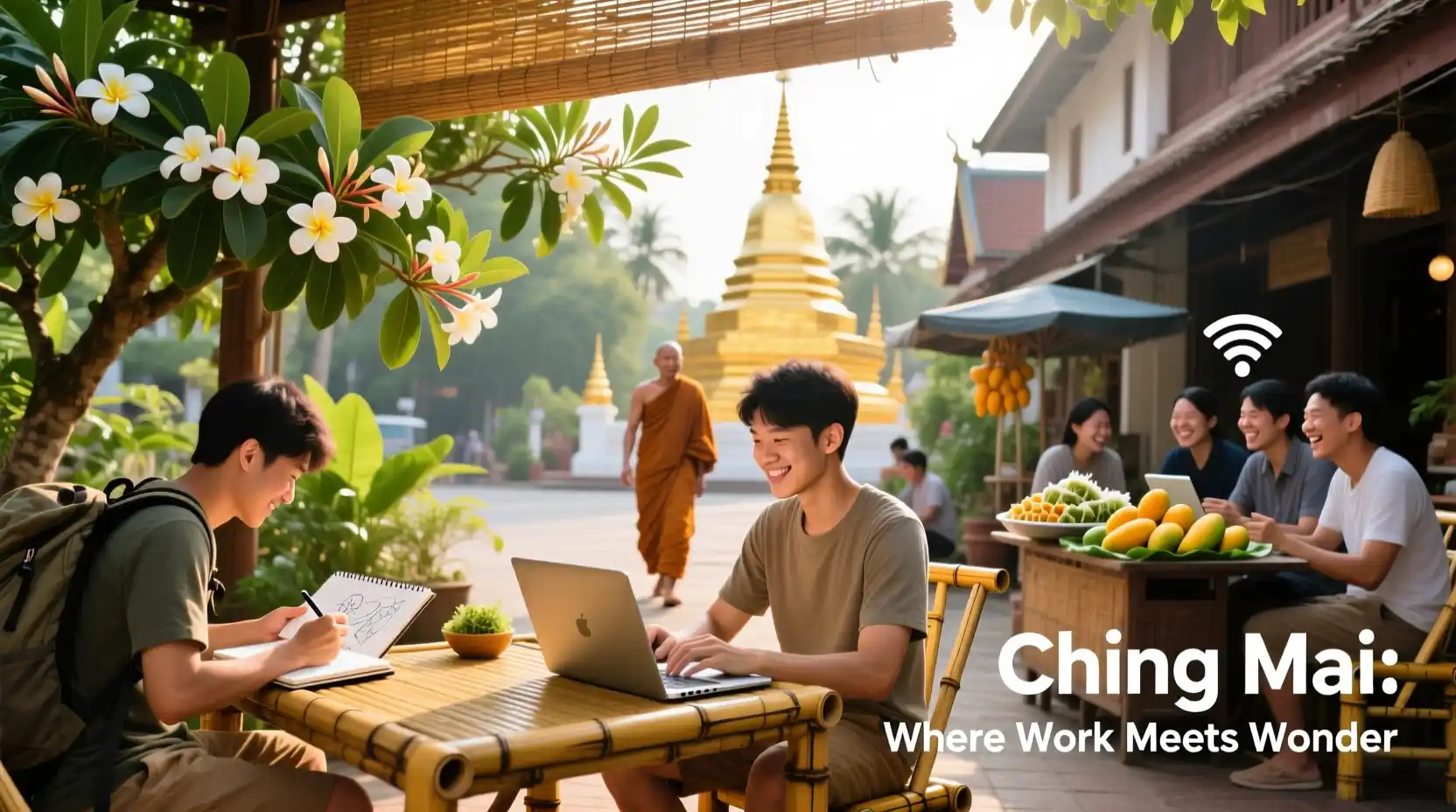
Chiang Mai for Digital Nomads The Perfect Blend of Work, Culture, and Adventure
Chiang Mai for Digital Nomads: The Ultimate Guide to the Perfect Blend of Work, Culture, and Adventure
The dream of the digital nomad is a potent cocktail: one part professional freedom, one part perpetual travel, and one part the search for a place that feels less like a temporary stop and more like a true home. For years, this dream has led a steady stream of location-independent professionals to a single, unlikely city nestled in the mountainous north of Thailand. That city is Chiang Mai. It’s not just a destination; it’s a global phenomenon, a rite of passage for many in the nomad community. But what is it about this ancient Lanna capital that has captured the hearts and laptops of the world’s workforce?
This isn’t just another article telling you Chiang Mai is cheap and has good Wi-Fi. This is a deep dive into the very fabric of what makes this city the world’s premier digital nomad hub. We’ll move beyond the surface-level attractions to explore the intricate ecosystem that supports a thriving community of remote workers. We’ll delve into the practicalities of visas and accommodation, uncover the best-kept secrets for productivity, and guide you through the rich tapestry of culture and adventure that awaits just outside your coworking space door. This is your definitive guide to not just surviving, but thriving in Chiang Mai.
Part 1: The Foundation – Getting Settled in the Rose of the North
Before you can find your perfect work-life balance, you need to build the foundation. This section covers the non-negotiables: the logistics, the costs, and the choices you’ll need to make before you can even think about opening your laptop.
Chapter 1: Navigating the Visa Maze
This is often the most daunting part of planning a move to Thailand, but it’s crucial to get it right. The rules can and do change, so always check the latest official sources (like the Thai Embassy or Consulate website in your home country) before making plans.
- Visa Exemption & Tourist Visa (The Entry Points): Many nationalities can enter Thailand visa-free for 30 days (if arriving by air) or 15 days (if arriving overland). This is perfect for a reconnaissance trip. However, you cannot legally work on a visa exemption. A more common starting point is the Tourist Visa (TR), typically obtained from a Thai consulate abroad before you travel. The single-entry TR usually grants you a 60-day stay, which can often be extended once for 30 days at the local immigration office in Chiang Mai, giving you a total of 90 days. This is a fantastic window to get a feel for the city and handle longer-term visa applications from within the country.
- The Digital Nomad Visa Dilemma (or lack thereof): As of late 2023/early 2024, Thailand still does not have a specific, long-term “Digital Nomad Visa.” This is a common misconception. What it does have are several long-term options that resourceful nomads use.
- The Long-Term Resident (LTR) Visa: This is the newest and most attractive option for high-earning digital nomads. It’s a 10-year visa aimed at “Wealthy Global Citizens,” “Wealthy Pensioners,” “Work-from-Thailand Professionals,” and “High-Skilled Professionals.” For the “Work-from-Thailand” category, the key requirements are:
- Being a remote employee or freelancer for a company based outside of Thailand.
- Having a minimum annual income of $80,000 USD for the past two years. (This can be lowered to $40,000 USD if you have a Master’s degree or higher, or hold specific intellectual property).
- Having at least $1 million USD in assets (or a 5-year work experience with a minimum $80,000/year income). This is a fantastic but high-bar option.
- The Education Visa (ED Visa): This has been a classic route for long-term stays. You enroll in a Thai language course (or other approved subjects like Muay Thai or cooking) at a government-approved school. The visa is typically granted for one year, requiring you to attend classes and make visa runs or extensions every 90 days. While it provides a legal stay, it’s a grey area for “work,” and you should be aware that immigration is cracking down on schools that don’t maintain proper attendance records. It’s a viable path if you are genuinely committed to learning the language.
- The “Elite” Visa: This is essentially a long-term tourism visa package. It comes with a hefty price tag (from 600,000 THB to 2 million THB for 5, 10, or 20 years) and offers a range of premium services like airport fast-track, lounge access, and government liaison services. It doesn’t grant you the right to work, but it provides a hassle-free, multi-year legal stay.
- Border Runs & Visa Runs: In the past, many nomads would do “visa runs” every 60-90 days, crossing a border into a neighboring country (like Laos or Malaysia) to get a new stamp or activate a new tourist visa. This has become more difficult and less reliable, with immigration officers increasingly scrutinizing frequent “back-to-back” tourists. It’s best viewed as a last resort or a way to combine a trip with a visa renewal, rather than a sustainable long-term strategy.
Pro Tip: Connect with visa agents in Chiang Mai. For a fee, they can handle the entire application process for you, saving you countless hours of paperwork and queuing at the immigration office. They are up-to-date on the latest rule changes and can offer the best advice for your specific situation.
Chapter 2: Finding Your Nest – A Guide to Chiang Mai’s Neighbourhoods and Accommodation
Where you live in Chiang Mai will dramatically shape your experience. The city is sprawling, and each neighbourhood has a distinct personality.
- Nimmanhaemin (Nimman): The undisputed heart of the digital nomad universe. This is the trendy, upscale area west of the old city. It’s lined with chic cafes, modern coworking spaces, boutique shops, and fantastic restaurants. It’s where you’ll find the highest concentration of nomads, expats, and well-to-do Thais.
- Vibe: Modern, energetic, social, convenient.
- Pros: Everything you need is within walking distance. Best coworking spaces and cafes are here. Great nightlife and food scene.
- Cons: More expensive than other areas. Can feel a bit like a bubble, disconnected from “traditional” Thailand.
- Accommodation: Mostly modern condos and apartments. Expect to pay 12,000 – 25,000+ THB/month for a nice one-bedroom with a pool and gym in a building like The Base, The Condo, or Hugo.
- The Old City (Moat Area): The historic and cultural centre of Chiang Mai, surrounded by a moat and ancient city walls. It’s home to dozens of beautiful temples (wats), guesthouses, and a more laid-back vibe.
- Vibe: Historic, cultural, touristy but relaxed.
- Pros: Rich in history and atmosphere. Tons of great, cheap food options. Close to major weekend markets. More affordable than Nimman.
- Cons: Can be noisy due to tourism and traffic. Fewer modern condos; more older-style shop houses and guesthouses. Coworking options are more limited here.
- Accommodation: A mix of guesthouses, older apartments, and some newer condos. You can find a basic room for 6,000-10,000 THB/month or a nicer place for 10,000-15,000 THB/month.
- Santitham / Wat Ket: Located just north of the Old City, this is a predominantly Thai neighbourhood that’s becoming increasingly popular with expats and nomads looking for a more authentic experience.
- Vibe: Local, authentic, bustling, great value.
- Pros: Much cheaper cost of living. Excellent local markets and street food. Feels more “real” than Nimman.
- Cons: Fewer Western-style amenities. Less English is spoken. Fewer dedicated nomad hangouts.
- Accommodation: Great value. You can find a modern, spacious one-bedroom apartment for 8,000-12,000 THB/month.
- Hang Dong / Mae Rim: These are suburban areas further out, popular with families and those seeking peace and quiet.
- Vibe: Suburban, quiet, green, spacious.
- Pros: Get more for your money (houses with gardens). Closer to nature, attractions like the Grand Canyon and Tiger Kingdom.
- Cons: You will need to rent a scooter or car. Not walkable. Far from the main nomad hubs.
Types of Accommodation:
- Condos/Apartments: The most common choice for long-term nomads. Found on sites like DDProperty, FazWaz, and Facebook groups. They come with facilities like pools, gyms, and security.
- Guesthouses: Great for short-term stays when you first arrive. Can be very cheap, but not ideal for long-term work due to noise and lack of proper workspace.
- Houses: An option if you’re staying with a partner or family and want more space. Usually found in the suburbs.
- Airbnb/Booking.com: Good for the first few weeks, but the monthly rates are almost always higher than signing a direct lease with a landlord.
Pro Tip: Don’t rent long-term sight unseen. Book an Airbnb or guesthouse for two weeks. Use that time to explore the different neighbourhoods, visit potential apartments in person, and negotiate a better deal directly with the landlord. Always ask for a discount on the advertised monthly rate – it’s expected.
Chapter 3: The Almighty Baht – A Realistic Breakdown of the Cost of Living
Chiang Mai’s reputation for affordability is well-earned, but costs have been rising. Here’s a realistic monthly budget for a comfortable nomad lifestyle (not living like a backpacker, but not splurging excessively either). All prices are in Thai Baht (THB). As of late 2023, the exchange rate is roughly 35 THB to 1 USD.
| Category | Budget (THB) | Mid-Range (THB) | Notes |
| Accommodation | 8,000 – 12,000 | 15,000 – 25,000 | Budget: Room in Santitham. Mid-Range: 1-bed condo in Nimman. |
| Food & Groceries | 6,000 – 9,000 | 10,000 – 15,000 | Budget: Mostly street food and home cooking. Mid-Range: Mix of street food, casual cafes, and nicer restaurants. |
| Transport | 1,000 – 2,000 | 3,000 – 5,000 | Budget: Walking and red songthaews. Mid-Range: Renting a scooter (3,000-4,000/month) plus Grab/Bolt. |
| Coworking | 0 | 3,000 – 5,000 | Budget: Working from cafes. Mid-Range: A dedicated desk at a top-tier space. |
| Visa & Admin | 1,000 | 2,000 | Averaged out cost of visa runs, extensions, agent fees. |
| Health/Insurance | 1,500 | 3,000 – 5,000 | Travel/health insurance premium. |
| Phone & Internet | 800 | 1,500 | SIM card with data. Home fiber internet if needed. |
| Entertainment & Social | 4,000 – 6,000 | 8,000 – 15,000 | Budget: Night markets, cheap beers. Mid-Range: Weekend trips, nice dinners, co-working events. |
| Miscellaneous | 2,000 | 4,000 | Shopping, toiletries, unexpected costs. |
| TOTAL MONTHLY | ~24,300 THB | ~53,500 THB | |
| (in USD) | ~$695 USD | ~$1,530 USD |
Key Takeaways:
- You can live very frugally in Chiang Mai for under $700/month, but it will require sacrifices.
- A very comfortable, “typical” nomad lifestyle will cost between $1,000 – $1,500/month.
- Food is your biggest variable. Eating local Thai food from street stalls and food courts is incredibly cheap and delicious. Frequenting Western restaurants and upscale cafes will quickly inflate your budget.
- Renting a scooter is the single biggest game-changer for both convenience and cost, but it comes with risks (see the Health & Safety section).
Part 2: The Work – Finding Your Flow in the Land of Smiles
Chiang Mai isn’t just a holiday destination; it’s a productivity powerhouse. The combination of low living costs, excellent infrastructure, and an inspiring environment creates the perfect conditions for deep work.
Chapter 4: The Coworking Ecosystem – From Hubs to Hideouts
Chiang Mai has one of the densest and most mature coworking scenes in the world. There’s a space for every personality and work style.
- PunSpace: The OG. The undisputed king. With two locations, PunSpace is almost a rite of passage.
- Tha Phae Gate Location: Housed in a beautiful, historic teakwood building. It has a charming, relaxed, almost library-like atmosphere. Great for focused work. The community is a bit more established and quieter here.
- Nimman Location: Sleek, modern, and bustling. This is the social heart of the nomad scene. It’s louder, more energetic, and fantastic for networking. The coffee is excellent, and the community events are top-notch.
- Vibe: Professional, community-focused, the “default” choice.
- Price: Around 3,000-4,000 THB/month for a dedicated desk.
- CAMP (Creative & Meeting Place): Located on the top floor of the Maya Lifestyle Shopping Mall in Nimman, CAMP is technically a free public space, but it functions as a massive, open-plan coworking hub.
- Vibe: Youthful, energetic, sometimes chaotic. It’s a public space, so you get everyone from students to nomads to families.
- Pros: It’s free! Great people-watching. Excellent location with tons of food and shopping options downstairs. Open 24/7.
- Cons: Can be very noisy. Finding a power outlet can be a battle during peak hours. The Wi-Fi can be unreliable at times. Not ideal for important video calls.
- Price: Free. You can pay for a premium “CAMP Zone” seat for more comfort and guaranteed power.
- Hub53: A sleek, professional, and beautifully designed space in the Santitham area. It’s a favorite among those who live in that neighbourhood and want to escape the Nimman bubble.
- Vibe: Modern, clean, quiet, and focused.
- Pros: Very reliable high-speed internet. Excellent air conditioning. A more serious, less “party” vibe than some other spaces. Great community of long-term residents.
- Cons: A bit further from the main Nimman action.
- Price: Around 3,000-4,000 THB/month.
- The Brick: A smaller, more intimate, and stylish space located in the trendy Chang Phueak area, just north of the Old City.
- Vibe: Artsy, cozy, boutique.
- Pros: Beautiful, unique design. Feels like working from a high-end coffee shop. Very friendly and welcoming community.
- Cons: Smaller, so might be harder to get a dedicated desk. Fewer networking events than the bigger players.
- Price: Around 3,000 THB/month.
- AKHA Ama Coffee: This is a unique entry. It’s not a coworking space, but a coffee shop with a powerful social mission (supporting local Akha hilltribe farmers). The original location is tiny, but the newer, larger branch has plenty of seating, a serene atmosphere, and some of the best coffee in the city.
- Vibe: Ethical, tranquil, coffee-obsessed.
- Pros: Fantastic coffee. A calm, beautiful environment to work from. You’re supporting a great cause.
- Cons: Not a dedicated workspace (no private call booths, etc.). Can get busy.
Chapter 5: The Cafe Culture – Your Office on Every Corner
If coworking spaces aren’t your thing, you’re in luck. Chiang Mai is a city obsessed with coffee. You can find a decent cafe with Wi-Fi on almost every street corner.
How to Spot a Good “Work Cafe”:
- Power Outlets: This is the #1 rule. Before you order, scan the room for visible outlets. If you don’t see any, move on.
- Wi-Fi Speed: Ask the staff for the password and do a quick speed test (Speedtest.net is your friend). Look for at least 20-30 Mbps download.
- Seating: Are there comfortable chairs and tables with enough space for your laptop and a notebook?
- Vibe: Is it a quiet, focused space or a loud social hub? Both are fine, but you need to know what you’re getting into.
Curated List of Nomad-Approved Work Cafes:
- For the Social Butterfly (Nimman Area): Ristr8to, Graph, Cheevit Cheeva. These are bustling, famous spots. Great for meeting people, but can be loud and crowded. Go for the atmosphere, not for deep focus.
- For the Focused Worker (Nimman/Santitham): Woo Cafe (gorgeous art gallery setting), Aom Tea Garden (serene outdoor space), The Baristro (excellent coffee, professional vibe).
- For the Explorer (Old City/North): Akha Ama Coffee (as mentioned above), Khao Soi Khun Yai (work off an incredible bowl of Khao Soi in their simple back room), Chill Chiang Mai (rooftop views).
- For the Hidden Gem: Explore the side streets (sois) off Nimman and Santitham. You’ll find countless independent, owner-run cafes that are perfect for a few hours of uninterrupted work.
Pro Tip: Buy a coffee or a meal every couple of hours to justify your presence. Don’t just camp out with a single water bottle all day. It’s about respecting the business.
Chapter 6: The Community – Your Network, Your Tribe, Your Lifeline
The single most valuable asset in Chiang Mai is the community. You are surrounded by thousands of people who understand your lifestyle, your challenges, and your ambitions.
- Facebook Groups: This is the digital town square.
- Digital Nomads Chiang Mai: The main, massive group. Great for asking questions, finding accommodation, and selling/buying things. Can be a bit noisy.
- Chiang Mai Friends & Social (CMFS): More focused on social events, meetups, and activities. A great place to find people to do things with.
- Chiang Mai Vegan/Vegetarian: For plant-based nomads.
- Meetup.com & Eventbrite: These platforms are used to organize more structured events, from tech talks and entrepreneurship workshops to language exchanges and hiking trips.
- Coworking Events: Almost every coworking space hosts weekly or monthly events. PunSpace’s Friday socials are legendary. These are the easiest way to get integrated into the community quickly.
- Just Say “Yes”: The best way to build your network is to be open. When someone invites you for lunch, to a market, or to go hiking, say yes. The community is incredibly welcoming to newcomers. Your first week, make it your mission to say “yes” to everything.
Part 3: The Culture – Immersing Yourself in the Lanna Kingdom
To truly thrive in Chiang Mai, you must look up from your laptop and engage with the profound and beautiful culture that surrounds you. This is what separates a tourist from a resident.
Chapter 7: More Than Just Temples – Understanding Lanna Culture
Chiang Mai was the capital of the independent Lanna Kingdom until the 19th century, and its unique identity is still palpable.
- The Spirit of “Lanna”: The Lanna culture is gentler, more reserved, and more distinct than the culture of central Thailand. You’ll see it in the architecture, the dialect, the food, and the people’s demeanor.
- The Wai: This is the traditional Thai greeting. You place your palms together in a prayer-like gesture. The height of your hands indicates the level of respect: fingertips at the chest for peers, at the nose for elders or those of higher status, and at the forehead for monks or royalty. As a foreigner, a simple wai at chest height is a respectful and appreciated gesture.
- Sanuk (The Importance of Fun): Thais believe life should contain an element of sanuk – fun, joy, and playfulness. This is why work is often balanced with laughter and socializing. Embrace this.
- Kreng Jai (Consideration for Others): This is a complex but vital concept. It’s the feeling of not wanting to impose on or bother someone. It’s why Thais can seem indirect or hesitant to say “no.” Understanding kreng jai will help you navigate social situations with more grace.
Chapter 8: A Culinary Odyssey – From Street Food Stalls to Royal Cuisine
Food is the heart of Thai culture, and Chiang Mai is a culinary paradise. This is not just sustenance; it’s an adventure.
- The Street Food is Your Gourmet Kitchen: Don’t be afraid. The busiest stalls with the most locals are almost always the safest and most delicious. A full, incredible meal of Pad Thai, a Som Tum (papaya salad), and a grilled skewer can cost less than $2.
- Must-Try Dishes:
- Khao Soi: The signature dish of Northern Thailand. A creamy, coconut-based curry soup with both boiled and crispy-fried egg noodles, chicken or beef, and pickled mustard greens. It’s life-changing.
- Sai Oua: Northern Thai sausage. A spicy, herb-filled pork sausage grilled over charcoal. Found at every market.
- Gaeng Hang Lay: A Burmese-influenced pork belly curry with tamarind, ginger, and peanuts. Rich, savory, and complex.
- Nam Prik Ong: A spicy tomato and minced pork dip, served with fresh and steamed vegetables. A classic Northern appetizer.
- Must-Try Dishes:
- The Markets – The Soul of the City:
- Night Bazaar (Touristy but Fun): Every night on Chang Khlan Road. Good for souvenirs and tourist-oriented food.
- Sunday & Saturday Walking Streets: The best markets. The Sunday market runs through the main street in the Old City; the Saturday market runs through Wua Lai Road. They are incredible for local handicrafts, art, and an endless variety of amazing street food. Go hungry.
- Local Food Markets: Places like Warorot Market (Kad Luang) and Muang Mai Market are where the locals shop. They are chaotic, fascinating, and offer the most authentic food experience.
- Cooking Classes: A fantastic way to spend a day and learn about the ingredients and techniques behind Thai food. Most classes include a guided tour of a local market. Smile Organic Farm Cooking School and Thai Farm Cooking School are highly recommended.
- Beyond Thai: Chiang Mai has a sophisticated international food scene. You can find incredible Japanese, Italian, Indian, and vegan food, often at very reasonable prices.
Chapter 9: The Rhythm of the Year – Festivals and Seasons
Timing your visit to coincide with a festival can elevate your experience from memorable to unforgettable.
- Yi Peng & Loi Krathong (November): This is the most magical time of year. Yi Peng is the Northern Thai festival of lanterns. Thousands of paper lanterns (khom loi) are released into the night sky, while Loi Krathong involves floating decorated baskets (krathong) on rivers and canals. The main mass lantern release at Mae Jo University is a ticketed event, but the entire city is alight with lanterns for a week. It is breathtakingly beautiful.
- Songkran (April 13-15): The Thai New Year. This is not a festival, it’s a nationwide water fight. For three days, the streets (especially around the moat) are a chaotic, joyous celebration where everyone douses everyone with water to wash away the previous year’s misfortunes. Be prepared to get soaked.
- Flower Festival (February): Chiang Mai showcases its beautiful temperate and tropical flowers with a parade and flower show.
- Inthakin (May/June): A seven-day festival held at the city pillar in the centre of the Old City to invoke divine blessings for the city.
The Three Seasons:
- Cool Season (November – February): The peak season. Pleasant temperatures, little rain. This is the most comfortable time to be in Chiang Mai, and therefore the most crowded and expensive.
- Hot Season (March – June): Temperatures can soar to 40°C (104°F). It’s hot and dry. This is when the “burning season” (smoky season) occurs, where farmers in the region burn fields, causing significant air pollution. This is a major downside and can be a health concern for many. Check the Air Quality Index (AQI) before planning a trip during this time.
- Rainy Season (July – October): Characterized by heavy, but usually short, downpours in the afternoon. The landscape becomes lush and green. It’s the low season, so there are fewer tourists and better deals on accommodation.
Part 4: The Adventure – Exploring Northern Thailand’s Natural Wonders
When you close your laptop, a world of adventure awaits. Chiang Mai is the perfect base for exploring the mountains, jungles, and unique cultures of Northern Thailand.
Chapter 10: In and Around Chiang Mai – Day Trips and Local Excursions
- Doi Suthep: The mountain that looms over Chiang Mai. A “must-do” trip. Drive or ride a songthaew up the winding road to Wat Phra That Doi Suthep, a stunning golden temple with panoramic views of the city. You can also continue higher up to Bhubing Palace (the royal winter residence) and Doi Pui, a Hmong village.
- Ethical Elephant Encounters: This is a critical point. Please, do not ride elephants or visit camps that offer them. The industry is rife with cruelty. Instead, choose an ethical sanctuary where elephants have been rescued from logging and tourism and are allowed to live in a natural environment.
- Elephant Nature Park: The most famous and reputable. A full-day trip where you help prepare food, feed the elephants, and watch them bathe in the river. No riding.
- Elephant Jungle Sanctuary: Another excellent, well-regarded option with multiple locations.
- Grand Canyon Chiang Mai: An old quarry that has filled with water, creating a stunning landscape for swimming, cliff jumping, and kayaking. A fun, active day out.
- Doi Inthanon National Park: “The Roof of Thailand.” Home to the highest peak in the country. It’s a full-day trip, but worth it for the cool climate, stunning waterfalls (Wachirathan and Siriphum), the Royal Twin Pagodas, and the Ang Ka nature trail.
Chapter 11: The Weekend Escape – Epic Road Trips
Rent a scooter (if you’re an experienced rider) or, even better, hire a car with a driver or join a tour for these longer journeys.
- Pai: The legendary backpacker town. A 3-hour, 762-curve drive from Chiang Mai through stunning mountain scenery. Pai itself is a small, laid-back town with a vibrant hippie vibe, surrounded by hot springs, canyons, and waterfalls. It’s a perfect weekend reset.
- Chiang Rai: A 3-hour drive to the north. While less of a nomad hub than Chiang Mai, it’s home to some of the most unique and awe-inspiring temples in Thailand. The White Temple (Wat Rong Khun) is a breathtaking, contemporary masterpiece. The Blue Temple (Wat Rong Suea Ten) is equally stunning. And the Wat Huay Pla Kang features an enormous white Guan Yin statue.
Chapter 12: Finding Your Flow – Adventure for the Body and Mind
- Muay Thai: Immerse yourself in Thailand’s national sport. There are dozens of Muay Thai gyms in Chiang Mai catering to all levels, from absolute beginners to professional fighters. It’s an incredible workout and a way to connect with a core part of the culture. Santai Muay Thai and Team Quest are popular choices.
- Trekking and Hiking: The surrounding mountains are crisscrossed with trails. You can hire a guide for multi-day treks that visit hilltribe villages, or simply explore the trails in Doi Suthep National Park.
- Meditation and Yoga Retreats: Northern Thailand is a hub for spiritual seekers. You can find everything from drop-in yoga classes to 10-day silent Vipassana meditation retreats. It’s a powerful way to disconnect from the digital world and reconnect with yourself.
- Ziplining and Flight of the Gibbon: For an adrenaline rush, spend a day ziplining through the jungle canopy. It’s an exhilarating way to see the rainforest from a different perspective.
Part 5: The Reality Check – Health, Safety, and Potential Downsides
No place is paradise. A successful long-term stay requires a realistic understanding of the challenges.
Chapter 13: Health, Wellness, and Safety
- Healthcare: Chiang Mai has excellent, affordable healthcare. Chiang Mai Ram Hospital and Bangkok Hospital Chiang Mai are international-standard facilities with English-speaking staff. Many nomads forgo comprehensive health insurance and simply pay out-of-pocket for minor issues, as it’s so cheap. However, for major emergencies or for peace of mind, comprehensive travel health insurance is highly recommended.
- Food and Water: Tap water is not potable. Drink bottled water or get a water filter with a UV sterilizer. Be cautious with street food initially, but as your stomach acclimatizes, you’ll find it’s generally safe. Look for stalls that are busy and have high turnover.
- The Scooter Epidemic: So many nomads get into scooter accidents. The roads are chaotic, the driving style is different, and helmets are non-negotiable (both for safety and to avoid police fines). Only rent a scooter if you are an experienced and licensed motorcycle rider. Otherwise, use the incredibly cheap and convenient Grab/Bolt apps for taxis and the red songthaews (shared taxis).
- Dengue Fever: A mosquito-borne illness. There is no vaccine. Use mosquito repellent, especially during the day and in the early evening, and consider staying in places with screens or air conditioning.
- The Smoky Season (February – April): This cannot be overstated. The air quality can become hazardous, with AQI levels often exceeding 200 (“Very Unhealthy”). This can cause respiratory issues, headaches, and fatigue. Many nomads leave during this period. If you have asthma or other respiratory conditions, you should avoid visiting during these months. Invest in a high-quality air purifier for your room and an N95 mask for when you’re outside.
Chapter 14: The Dark Side of Paradise – Potential Burnout and Culture Shock
- The “Productivity Guilt”: You’re in a beautiful, amazing place, but you have deadlines. This can lead to a strange form of guilt where you feel you should be exploring instead of working, or working instead of exploring. The key is discipline and balance. Create a work schedule and stick to it, so you can fully enjoy your free time without anxiety.
- The Bubble Effect: It’s easy to get stuck in the Nimman bubble, surrounded by other foreigners, eating Western food, and only speaking English. You can live in Chiang Mai for a year and barely engage with Thai culture. Make a conscious effort to break out: explore local neighbourhoods, learn a few phrases of Thai, eat at local food stalls.
- Relationships and Transience: The nomad community is fluid. You will meet amazing people and form deep connections, only for them to leave a few months later. This can be emotionally draining. It’s important to cherish the time you have with people and be open to the constant cycle of hellos and goodbyes.
- Bureaucracy and “Sabai Sabai”: Dealing with immigration, setting up a bank account, or getting a phone contract can involve a surprising amount of paperwork and patience. The Thai concept of “sabai sabai” (take it easy/go with the flow) is wonderful on holiday but can be frustrating when you’re trying to get something done. Accept that things move at a different pace and bring a book to your immigration appointments.
Conclusion: Is Chiang Mai Your Perfect Nomad Base?
After thousands of words, the answer remains a resounding “yes” for a huge number of people. Chiang Mai is not just a cheap place with good Wi-Fi. It’s a mature, supportive, and inspiring ecosystem for the modern remote worker. It offers a unique proposition that few other places can match: the ability to live a high-quality life, build a global network, advance your career, and have a profound cultural and adventure-filled experience, all without breaking the bank.
It’s a city that challenges you as much as it comforts you. It will test your patience with its bureaucracy and its smoky season, but it will reward you with the warmth of its people, the depth of its culture, and the sheer joy of its culinary and natural wonders.
To succeed in Chiang Mai is to embrace the balance. To close your laptop and explore a temple. To learn a phrase of Thai. To say “yes” to a new friend. To find your flow not just in your work, but in the gentle rhythm of the Land of Smiles itself.
So, pack your laptop, your sense of adventure, and an open mind. The Rose of the North is waiting.
Blog Post Disclaimer
Copyright and Usage: The content of this blog post, including all text, images, and graphics, is the property of [Your Blog Name/Your Name] and is protected by international copyright laws. You may not reproduce, distribute, or republish any part of this content without prior written permission from the author.
Accuracy of Information: While every effort has been made to ensure the accuracy and completeness of the information provided in this article at the time of writing (October 2023), the world is constantly changing. Details such as visa requirements, prices, business hours, and contact information are subject to change without notice. The author and [Your Blog Name] make no representations or warranties of any kind, express or implied, about the completeness, accuracy, reliability, suitability, or availability with respect to the information, products, services, or related graphics contained in this article for any purpose.
Not Professional Advice: The information contained in this blog post is for general informational and entertainment purposes only. It is not intended as and should not be construed as professional legal, financial, medical, or visa advice. You should consult with a qualified professional (such as a lawyer, financial advisor, medical practitioner, or licensed visa agent) for advice tailored to your specific situation before making any decisions based on the information provided herein. Relying on any information provided in this article is solely at your own risk.
Personal Responsibility and Risk: Travel, especially long-term travel, involves inherent risks, including but not limited to personal injury, illness, loss of property, and unforeseen travel disruptions. The author and [Your Blog Name] are not responsible for any loss, injury, or damage incurred as a result of following the advice or recommendations in this article. You are solely responsible for your own safety, well-being, and travel preparations. This includes conducting your own thorough research, obtaining appropriate travel and health insurance, and taking all necessary precautions.
Affiliate Links: This blog post may contain affiliate links. This means that if you click on a link and make a purchase, I may receive a small commission at no additional cost to you. This helps support the blog and allows me to continue to create content like this. I only recommend products or services that I genuinely believe in and have personally used or researched.
Endorsement: Mention of specific businesses, services, or products in this article does not constitute an official endorsement or guarantee of quality. Experiences can vary, and what works for one person may not work for another. Always conduct your own due diligence.
By using and accessing this blog post, you acknowledge and agree to this disclaimer in its entirety.
Have any thoughts?
Share your reaction or leave a quick response — we’d love to hear what you think!
-
 0
-
 0
-
 0
-
 0
-
 0
-
 0
