
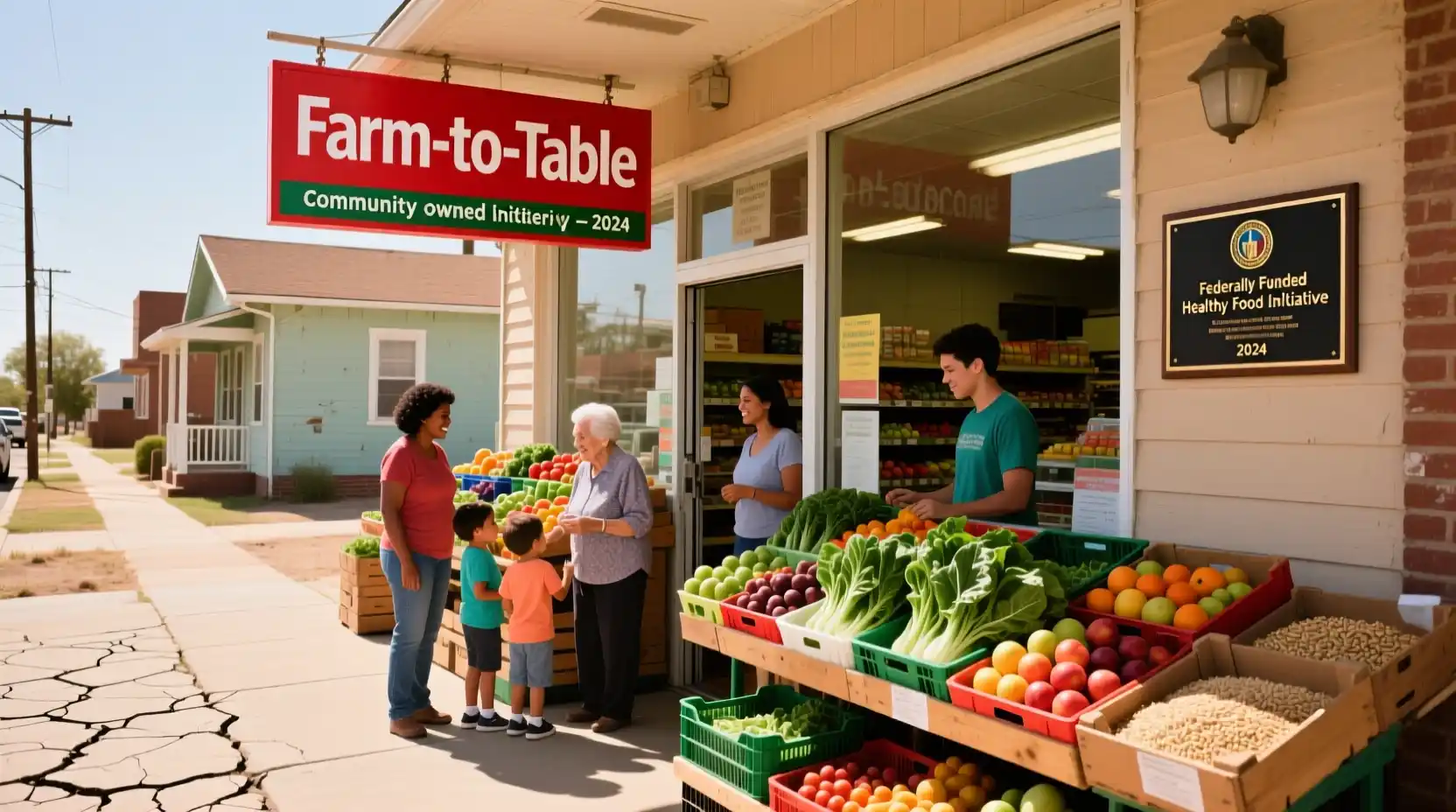
The Harvest of Hope: How Federal Funds Are Reshaping America’s Food Deserts
Introduction: The Quiet Crisis on Every Corner
In the wealthiest nation on Earth, a paradox of scarcity persists. It’s not a scarcity of food in the aggregate, but a scarcity of good food, a geographic and economic void where fresh apples are an exotic luxury and a head of lettuce is a rare find. These are America’s food deserts, vast swaths of urban and rural landscapes where residents’ access to affordable, healthy food is severely limited or non-existent. For decades, this reality has been a silent driver of chronic disease, a barrier to economic mobility, and a stark symbol of systemic inequality. The map of these deserts overlays uncomfortably with maps of poverty and marginalized communities, painting a picture of a nation where nutritional security is far from a guaranteed right.
For too long, the solutions proposed have been piecemeal, underfunded, and often focused on placing the burden of change on the communities themselves. But a significant shift is underway. A confluence of recent federal legislation, including the 2018 Farm Bill, the American Rescue Plan, and the Inflation Reduction Act, has unleashed an unprecedented wave of funding aimed directly at the roots of this problem. This is not merely a trickle of aid; it is a deliberate, multi-billion-dollar investment designed to fundamentally alter the food landscape. The funds are seeding a new generation of grocery stores, farmers’ markets, mobile markets, and community-owned food cooperatives in the very places that have been starved of investment for generations.
This influx of capital marks a potential turning point in the fight for food equity. It represents a federal acknowledgment that access to healthy food is not a luxury good but a cornerstone of public health, economic stability, and national well-being. The question now is whether this harvest of hope can truly take root. Can these funds overcome decades of disinvestment and complex systemic barriers? Will they create sustainable, community-driven solutions, or merely a temporary fix? This deep dive will explore the anatomy of America’s food deserts, trace the historical and economic forces that created them, examine the architecture of the new federal response, showcase the early successes on the ground, and confront the significant challenges that remain. It is a story of policy, of community, and of the fundamental human right to a nourishing meal.
Part 1: The Anatomy of a Food Desert – More Than Just a Missing Grocery Store
To understand the impact of the new federal funds, one must first understand the complex and often misunderstood nature of the problem they aim to solve. The term “food desert,” while widely used, can be a deceptively simple label for a multifaceted issue. It’s a clinical-sounding term that masks the lived reality of navigating a food environment designed for failure.
Defining the Void: The USDA Criteria and Its Limitations
The United States Department of Agriculture (USDA) provides the most common definition of a food desert. Technically, a census tract is designated as a food desert if it meets two key criteria: it is a low-income community, where the poverty rate is 20 percent or greater, or the median family income is at or below 80 percent of the statewide median family income; and it is a low-access community, where at least 500 people, or 33 percent of the population, live more than one mile (in urban areas) or more than 10 miles (in rural areas) from a supermarket or large grocery store.
While this definition is a vital tool for mapping and allocating resources, it has its limitations. It focuses heavily on the presence or absence of a large-format retailer, often overlooking the quality and affordability of the food within that store. A store that technically meets the definition of a “supermarket” might still stock mostly processed, unhealthy foods at inflated prices. This has led some academics and food justice advocates to prefer the term “food apartheid,” which emphasizes the human-made, systemic, and racially discriminatory policies that create these food landscapes, rather than the natural, passive imagery evoked by “desert.”
Furthermore, the definition doesn’t fully capture the reality of a “food swamp.” A food swamp is an area where an overabundance of high-calorie, low-nutrient food sources—fast-food restaurants, convenience stores, corner shops—drowns out any access to healthy options. Many communities are both food deserts and food swamps simultaneously, facing a dual burden of scarcity and saturation of unhealthy choices.
The Human Demographics of Scarcity
The residents of America’s food deserts are not a random cross-section of the population. Data consistently shows that food insecurity and lack of access are inextricably linked to race, class, and geography.
- Communities of Color: Black and Hispanic households are disproportionately affected. Studies have shown that predominantly Black neighborhoods have fewer supermarkets and more small convenience stores compared to predominantly white neighborhoods, even after controlling for income and other demographics. This is a direct legacy of historical policies like redlining, which systematically devalued assets and discouraged investment in minority communities.
- Low-Income Families: Poverty is the most significant predictor of food access. When a family’s budget is stretched thin, transportation becomes a major barrier. Owning and maintaining a car is a significant expense, and relying on public transit to make a weekly grocery trip with multiple bags of fresh produce is often impractical or impossible, especially for the elderly or parents with young children.
- Rural America: While often overlooked in the national conversation, rural food deserts are a critical issue. The vast distances involved, combined with the decline of local main street businesses and the consolidation of the grocery industry into a few large chains, have left many small towns without a single place to buy fresh food. The 10-mile USDA criterion can feel like a gross understatement in states like Montana or West Virginia, where a trip to the nearest full-service grocery store can be a 50-mile or more journey.
- Tribal Lands: Native American reservations face some of the most severe food access challenges in the country. Geographically isolated, often with underdeveloped infrastructure, and subjected to a complex history of displacement and broken treaties, many reservation communities rely heavily on federal commodity food programs, which have historically been criticized for providing processed, high-calorie, low-nutrient foods. This has contributed to epidemic rates of diabetes and other diet-related diseases.
The Devastating Health Consequences
The most immediate and visible impact of living in a food desert is on public health. The human body cannot thrive on a diet composed primarily of the shelf-stable, processed foods available at convenience stores and gas stations.
- Chronic Disease: There is a direct, well-documented link between food desert status and higher rates of obesity, type 2 diabetes, hypertension, and cardiovascular disease. When the most accessible and affordable calories come from sugar-sweetened beverages, chips, and fast food, the body’s metabolic systems are put under constant stress.
- Nutritional Deficiencies: Even in the absence of obesity, a lack of access to fresh fruits, vegetables, lean proteins, and whole grains can lead to “hidden hunger,” or micronutrient deficiencies. This can affect everything from cognitive development in children to immune function in adults.
- Mental Health: Emerging research also suggests a link between diet quality and mental health. Diets high in processed foods are associated with an increased risk of depression and anxiety, while nutrient-rich diets can have a protective effect. The stress and anxiety of not being able to provide healthy food for one’s family is a significant psychological burden in itself.
The Economic and Social Toll
The impact of food deserts extends far beyond individual health, rippling out to affect the entire community’s economic and social fabric.
- The Poverty Premium: Residents of food deserts often pay more for less. Convenience stores and corner markets, which have higher per-unit operating costs than large supermarkets, typically charge significantly higher prices for their limited selection of lower-quality food. This “poverty premium” means that a family with a tight food budget gets even less nutritional value for their dollar.
- Economic Disinvestment: The absence of a grocery store is both a symptom and a cause of economic decline. A full-service supermarket is an anchor institution. It provides jobs, attracts other businesses, and serves as a community hub. When it leaves, it creates a vacuum that accelerates a neighborhood’s downward spiral.
- Erosion of Community and Culture: Food is more than just fuel; it is culture, tradition, and community. The inability to access fresh ingredients for traditional meals can sever cultural connections. The loss of a local grocery store also means the loss of a central gathering place, a spot where neighbors might run into each other, further eroding the social bonds that hold a community together.
Understanding this complex anatomy is crucial. It reveals that the problem is not simply a logistical one to be solved by dropping a new building into a neighborhood. It is a deeply entrenched issue of equity, economics, and justice that requires a sophisticated, sustained, and community-centered response. The new wave of federal funding is the most significant attempt yet to provide just that.
Part 2: The Root Causes – Why Do Food Deserts Exist?
Food deserts do not occur by accident. They are the predictable outcome of a complex web of historical, economic, and policy decisions made over decades. To solve the problem, we must first understand its origins, which lie not in a lack of demand for healthy food, but in a systemic failure of the market and public policy to serve vulnerable communities.
Supermarket Redlining and the Logic of Disinvestment
At the heart of the issue lies a brutal economic calculus. Large grocery chains operate on razor-thin profit margins, typically just 1-2 percent. Their business model relies on high volume, quick turnover, and predictable consumer spending patterns. From this perspective, many low-income urban and rural communities are seen as high-risk, low-reward investments.
This phenomenon is often referred to as “supermarket redlining,” a direct parallel to the discriminatory housing practices of the mid-20th century. The perceived risks include:
- Lower Per-Capita Sales: Residents of low-income communities have less disposable income, leading to lower average transaction values.
- Higher Operational Costs: Stores in these areas often face higher costs for security, insurance, and shrinkage (theft and spoilage).
- Real Estate Costs and Logistics: In dense urban areas, securing a large parcel of land for a modern supermarket can be prohibitively expensive and complex. In rural areas, the logistical challenge of supplying a remote store with a consistent flow of fresh produce can increase costs.
- Perceived Market Instability: Planners may view these neighborhoods as unstable, fearing population decline or a lack of future economic growth.
Faced with these perceived headwinds, grocery chains have historically chosen to invest in more affluent suburbs, where land is cheaper, consumer spending is higher, and perceived risks are lower. This exodus began in earnest in the 1960s and 70s, coinciding with white flight and suburbanization, leaving behind urban “food vacuums.” A similar process occurred in rural America as small, independent grocers were unable to compete with the economies of scale of large regional and national chains, which consolidated and centralized their distribution centers, bypassing smaller towns.
The Legacy of Systemic Racism and Segregation
It is impossible to discuss the geography of food access without confronting the legacy of systemic racism. The maps of today’s food deserts are a near-perfect overlay of the maps created by the Home Owners’ Loan Corporation (HOLC) in the 1930s, which graded neighborhoods based on racial makeup. Minority communities were systematically marked as “hazardous” (redlined), making it nearly impossible for residents and businesses there to secure mortgages or loans.
This historic disinvestment had a cascading effect. Without access to capital, Black entrepreneurs couldn’t open or sustain grocery stores. Without property investment, the tax base eroded, leading to underfunded public services, including transportation, which further isolated residents. The very infrastructure needed to support a healthy community was systematically dismantled. The flight of white residents and businesses to the suburbs drained economic resources from urban centers, leaving the predominantly Black and brown residents behind to grapple with the consequences. This is not ancient history; the economic and social patterns established by these policies persist today and are a primary driver of food apartheid.
The Rise of the Dollar Store and the Convenience Store Trap
As full-service supermarkets fled, a new type of retailer moved in to fill the void: the dollar store. Chains like Dollar General and Dollar Tree have experienced explosive growth, often targeting the very same low-income and rural communities abandoned by traditional grocers. Their business model is predicated on small-format stores, low labor costs, and a supply chain focused on shelf-stable, pre-packaged national brand goods.
While they provide access to low-cost household items, their contribution to the food environment is deeply problematic. Their food aisles are dominated by canned goods with high sodium content, sugary snacks, candy, and soda. Fresh produce, meat, and dairy are rare or non-existent. The dollar store has become the de facto grocery store for millions of Americans, not by providing a solution to food access, but by capitalizing on the lack of other options. They normalize a diet of ultra-processed foods and actively crowd out any potential for a healthier food retailer to enter the market.
Similarly, corner stores and convenience stores, often owned by immigrant families trying to make a living, are trapped in the same system. They lack the capital, refrigeration space, and supply chain connections to stock fresh, perishable foods, which carry a higher risk of financial loss if unsold. They are forced to rely on the same high-margin, low-nutrient products that define the food swamp.
Infrastructure Gaps: The Tyranny of Distance
Even if a healthy food option exists a few miles away, it may as well be on the moon for residents without reliable transportation. The American landscape, particularly outside of a few dense urban cores, is built around the automobile.
- Car Ownership: For many low-income families, owning a reliable car is an unaffordable luxury. The costs of purchase, insurance, fuel, and maintenance can easily eclipse a monthly food budget.
- Public Transit: Public transportation systems in many American cities are inadequate, with infrequent service, limited routes that don’t connect residential areas to grocery stores, and a lack of space for carrying multiple bags of groceries. A two-hour bus ride with toddlers in tow to buy a week’s worth of food is a daunting, often impossible, task.
- Rural Isolation: In rural areas, the problem is magnified. There is often no public transit at all. A lack of a vehicle means complete dependency on others for rides or reliance on the limited, expensive options at the local gas station.
This transportation barrier is a critical, often overlooked, component of the food desert problem. It transforms a geographic issue of distance into a profound issue of time, money, and physical ability.
In essence, food deserts are not a market failure in the classic sense, but a market outcome—the logical result of a system that prioritizes profit over people, that has been shaped by a history of racial and economic injustice, and that is built on an infrastructure of car dependency. Any meaningful solution must therefore address not just the symptom (the missing store), but these deep-seated root causes.
Part 3: The Federal Response – A Deep Dive into the Architecture of Funding
Recognizing the scale and complexity of the crisis, the federal government has moved beyond small-scale pilot programs to launch a comprehensive, multi-pronged financial assault on food deserts. This new era of funding is not a single program, but an ecosystem of initiatives housed primarily within the USDA and designed to work in concert. Understanding the architecture of this response is key to understanding its potential impact.
The Legislative Foundation: Farm Bills, Rescue Plans, and Beyond
The groundwork for this new wave of investment was laid in the 2018 Agriculture and Nutrition Act, commonly known as the 2018 Farm Bill. This massive piece of legislation, reauthorized every five years, is the primary vehicle for the nation’s food and agricultural policy. The 2018 bill made significant strides by:
- Mandating and Funding HFFI: It formally authorized and provided dedicated funding streams for the Healthy Food Financing Initiative (HFFI), making it a cornerstone of USDA’s rural and urban development efforts.
- Strengthening GusNIP: It expanded and reauthorized the Gus Schumacher Nutrition Incentive Program (GusNIP), solidifying the federal government’s commitment to incentives that make fresh produce more affordable for SNAP participants.
- Supporting Local Food Systems: It included numerous provisions to support farmers’ markets, local food hubs, and community food projects, recognizing that a resilient food system is a local one.
The legislative momentum was then supercharged by the American Rescue Plan Act (ARPA) of 2021. Passed in response to the COVID-19 pandemic, ARPA recognized that the pandemic had exacerbated food insecurity at an alarming rate. It injected billions of dollars into nutrition assistance and food access programs, including:
- A historic investment of over $1 billion specifically for nutrition security, with a significant portion directed towards HFFI and other food access projects.
- Temporary boosts to SNAP benefits, which increased the purchasing power of low-income families and demonstrated the critical role of nutrition assistance in economic stability.
Further investments have been made through other channels, including the Inflation Reduction Act, which included funding for climate-smart agriculture that can also benefit local food systems, and annual appropriations bills that continue to fund these critical programs.
Key Programs and How They Work
The federal strategy is not a one-size-fits-all approach. It employs a variety of financial tools to address different parts of the problem.
- The Healthy Food Financing Initiative (HFFI)
HFFI is the flagship program for tackling the “retail gap” in food deserts. It does not typically give money directly to stores. Instead, it functions as a “gap financier,” working through a network of community development financial institutions (CDFIs) and other non-profit lenders. Its model is based on providing flexible capital that traditional banks are unwilling to offer.
- How it Works: HFFI provides grants and loans to CDFIs. These CDFIs then create tailored financial packages for food retail projects. This can include:
- Loan Guarantees: De-risking loans for private banks, encouraging them to lend to projects they would otherwise reject.
- Low-Interest Loans: Providing direct, affordable capital for construction, renovation, or equipment purchases.
- Grants: Offering non-repayable funds to cover pre-development costs (like feasibility studies), technical assistance, or to make a project financially viable.
- Who it Helps: HFFI funds a wide spectrum of projects, from helping a large regional chain open a store in an underserved urban neighborhood, to financing a rural food co-op, to helping a corner store owner install new refrigeration to stock fresh produce. This flexibility is its greatest strength.
- The Gus Schumacher Nutrition Incentive Program (GusNIP)
GusNIP addresses the “affordability gap.” It operates on a simple but powerful premise: make healthy food the more affordable choice for families on a tight budget.
- How it Works: GusNIP provides grants to non-profits, local government agencies, and farmers’ market associations to run nutrition incentive programs. The most common model is an incentive like “Double Up Food Bucks.” When a SNAP (Supplemental Nutrition Assistance Program) recipient uses their EBT card to purchase produce, the program matches their spending, providing them with additional dollars to buy more fruits and vegetables.
- Where it Works: These incentives can be found at farmers’ markets, mobile markets, and even in some traditional grocery stores. The program is a win-win-win: low-income families get more healthy food, local farmers see an increase in sales, and more federal dollars stay within the local food economy.
- The NIFA Community Food Projects Competitive Grant Program (CFPCGP)
Administered by the National Institute of Food and Agriculture (NIFA), this program focuses on building community-level food system infrastructure. It is less about single retail projects and more about holistic, community-driven solutions.
- How it Works: It provides one-time grants to non-profits for projects that meet specific local food needs. Examples include:
- Developing community gardens or urban farms.
- Creating food hubs that aggregate and distribute local produce.
- Establishing gleaning programs to rescue surplus food from farms.
- Creating food policy councils to coordinate local efforts.
- The Goal: The focus is on developing long-term solutions that increase self-reliance and community control over the food system.
- Support for SNAP and WIC
While not new, the sustained and expanded funding for core nutrition assistance programs like SNAP and the Special Supplemental Nutrition Program for Women, Infants, and Children (WIC) is a critical part of the federal response. These programs create the consistent customer base that makes opening a grocery store in a low-income area a more viable business proposition. They are the demand-side engine that drives the supply-side investments of HFFI.
The Scale of the Investment
The key takeaway is the scale of this commitment. We are talking about billions of dollars being directed specifically at the problem of food access. This is a seismic shift from decades of underfunding and represents a clear policy directive from the federal government: food equity is a national priority. This capital provides the resources needed for communities and entrepreneurs to begin to reverse the decades of disinvestment that have defined their food landscapes.
Part 4: On the Ground – Case Studies of Early Successes and Hope
The true measure of this federal investment will not be found in budget lines or policy papers, but in the lived experiences of people in communities across the country. Across the nation, these funds are beginning to translate into tangible, life-changing projects. While it is still early, the seeds of transformation are already sprouting. Here are three illustrative case studies that showcase the diverse ways this funding is being applied.
Case Study 1: The Urban Co-op Revival – Baltimore, Maryland
In the heart of Baltimore, a city marked by stark health disparities, the Harlem Park neighborhood has been a food desert for over 15 years. When the last supermarket closed, residents were left to rely on corner stores and liquor marts. For years, community leaders dreamed of a different model—one owned and controlled by the community itself.
That dream is becoming a reality, thanks in large part to a strategic combination of federal and local funds. The project, a community-owned food cooperative, received a critical loan from a local CDFI, Capital Impact Partners, which was in turn supported by the Healthy Food Financing Initiative (HFFI). This HFFI-backed loan provided the flexible, low-interest capital needed to secure a site and begin renovations.
- The Model: Instead of waiting for a corporate chain, the community is building its own store. Membership is open to all residents, with a focus on equity and accessibility. The co-op’s board is elected from the membership, ensuring community control.
- The Role of Federal Funds: The HFFI-backed loan was the linchpin. It de-risked the project for other funders and provided the foundational capital that traditional banks would not. Additional federal grants are being used to provide technical assistance on everything from business planning to healthy food merchandising.
- The Impact: The co-op is more than just a place to buy food. It is creating local jobs, keeping wealth within the community, and serving as a hub for nutrition education and cooking classes. It will source produce from regional farmers whenever possible, strengthening the local food economy. It represents a direct challenge to the top-down model of food retail, proving that with the right financial support, communities can build their own solutions.
Case Study 2: The Rural Mobile Market – The Mississippi Delta
The Mississippi Delta is a region of profound poverty and deep-rooted food apartheid. Small towns are spread far apart, and many residents, particularly the elderly and those without cars, have no way to reach the few supermarkets that serve the vast region. Here, the solution isn’t a single brick-and-mortar store, but a food delivery system on wheels.
A local non-profit, the Delta Health Alliance, launched a “Delta Fresh” mobile market, a refrigerated truck that acts as a traveling grocery store. It visits a regular schedule of stops in isolated communities, selling fresh produce, dairy, and other healthy staples at affordable prices.
- The Model: The mobile market brings the food directly to the people, eliminating the transportation barrier. It accepts SNAP and EBT, and crucially, it has integrated a GusNIP-funded incentive program. When customers use their SNAP benefits, they get “Fresh Bucks” to double their purchasing power for produce.
- The Role of Federal Funds: This project is a perfect example of how different federal programs work together. A grant from the USDA’s NIFA Community Food Projects program helped with the initial purchase of the truck and equipment. GusNIP funding makes the food affordable and drives demand. HFFI funds are being used to help establish a permanent “hub” where the truck can be stocked and managed, increasing its efficiency and sustainability.
- The Impact: For an elderly resident in a tiny Delta town, the weekly arrival of the mobile market is a lifeline. It provides access to fresh food that was previously unimaginable, improves health outcomes, and creates a vital social connection. The incentive program ensures that residents can not only access but also afford the healthy food on offer, changing purchasing habits for the better.
Case Study 3: Reclaiming Food Sovereignty on Tribal Lands – The Navajo Nation
The Navajo Nation, spanning parts of Arizona, New Mexico, and Utah, is a food desert the size of West Virginia. The legacy of colonization, displacement, and a broken food system has led to staggering rates of diabetes and other diet-related diseases. In response, many Navajo communities are looking not just to a grocery store, but to a revival of traditional food systems and food sovereignty.
A project on the western side of the nation is using federal funds to build a series of community-controlled greenhouses and a traditional foods processing center.
- The Model: This project moves beyond simply importing food and focuses on growing it locally. The greenhouses will produce fresh vegetables year-round in an arid climate. The processing center will allow for the preservation of traditional foods like corn, squash, and beans, connecting back to cultural heritage. The food will be distributed through a combination of new small markets and a home-delivery program for elders.
- The Role of Federal Funds: This multi-faceted project is supported by a blend of funding sources. Grants from the USDA’s Tribal Agriculture Extension program and the NIFA Community Food Projects program are providing the capital for construction and equipment. HFFI financing is helping to establish the distribution and retail components. The project is also leveraging SNAP and WIC programs to ensure affordability.
- The Impact: This is about more than just access to vegetables; it’s about reclaiming health, culture, and self-determination. By controlling the means of production and distribution, the Navajo community is building a resilient food system that is independent of the fragile supply chains that often fail them. It is a powerful example of how federal funds, when directed by a community with a clear vision, can be a tool for true food sovereignty.
These case studies illustrate the versatility and power of the federal response. The funds are not a monolithic solution but a toolkit, enabling communities to design and build the solutions that make the most sense for their unique contexts, whether it’s an urban co-op, a rural mobile market, or a sovereign tribal food system. They are proof that with sustained investment, the barren landscape of the food desert can indeed begin to bloom.
Part 5: The Challenges and Criticisms – A Nuanced Perspective
While the influx of federal funds is a cause for celebration, it is not a panacea. A critical and sober analysis is necessary to ensure that this massive investment leads to lasting, equitable change. The path from funding to a truly nourished community is fraught with potential pitfalls, and many food justice advocates and researchers have raised important challenges and criticisms that must be addressed.
The Question of Sustainability: What Happens When the Grant Money Runs Out?
One of the most significant concerns is the long-term financial viability of the projects being funded. A grocery store, co-op, or mobile market that relies on start-up grants and low-interest loans must eventually be able to stand on its own two feet.
- The Thin-Margin Problem: The fundamental economic challenge of selling groceries in a low-income area has not disappeared. Even with initial subsidies, a new store must achieve a high enough volume of sales and manage its costs effectively to remain profitable once the grant funding period ends.
- The Co-op Conundrum: Community co-ops, while empowering, face particular sustainability challenges. They require a high level of member engagement, volunteer labor, and sophisticated management. Without strong business acumen and continued community buy-in, they can struggle to compete with more efficient corporate chains.
- The Mobile Market Model: Mobile markets have high operational costs (fuel, maintenance, driver salaries) and limited capacity. They often operate as non-profits and require a continuous stream of grant funding and donations to survive, making them inherently less sustainable than a for-profit retail model.
The risk is a wave of “flash-in-the-pan” projects that open with great fanfare but close a few years later, leaving the community back where it started, but with a deeper sense of disillusionment. Mitigating this risk requires that federal funding be paired with robust technical assistance, long-term business planning support, and a focus on building models that are economically resilient.
The “Retail Fallacy”: Is a Store Enough?
For decades, the dominant policy approach to food deserts was the “retail model”—the belief that simply building a supermarket would solve the problem. Research, however, has shown this to be an oversimplification. The presence of a new store does not automatically change people’s eating habits.
- Affordability: Even with a new store, if the prices of fresh produce are still higher than what a family can afford, they will continue to rely on cheaper, calorie-dense processed foods. While SNAP and GusNIP incentives help, they don’t fully bridge the affordability gap for all families.
- Cultural Relevance: A store stocked with foods that are unfamiliar to the local culture will fail to attract customers. Successful food retail requires understanding and catering to the culinary traditions and preferences of the community it serves.
- Food Literacy and Skills: Access is one piece of the puzzle, but knowledge is another. If people are not familiar with how to select, store, and cook fresh vegetables, they are less likely to buy them. A new store without accompanying education and cooking programs may have a limited impact on dietary patterns.
This “retail fallacy” highlights the need for a more holistic approach. The federal funds are most effective when they are used to support projects that integrate retail with education, cultural programming, and affordability incentives.
The Specter of Gentrification and Displacement
In urban areas, there is a well-founded fear that the arrival of a new, attractive grocery store can be a catalyst for gentrification. The very improvements that are meant to help current residents—a new supermarket, better amenities, increased safety—can make the neighborhood more desirable to wealthier outsiders, driving up rents and property taxes.
- The “Whole Foods Effect”: The arrival of a high-end grocery store has been shown in some cases to signal a neighborhood’s “up-and-coming” status, attracting real estate investment and development that can displace long-term, low-income residents.
- Who Really Benefits? If the residents the store was intended to serve are priced out of the neighborhood, the store ultimately benefits the new, more affluent arrivals. The problem of food access isn’t solved; it’s just shifted to a different location.
This is a deeply complex issue with no easy answers. It requires that food access projects be developed in tandem with robust affordable housing policies and community land trusts to ensure that the original residents can remain in place and reap the benefits of the new investment. Community ownership models, like the co-op in Baltimore, offer one potential way to mitigate this risk by keeping the economic benefits local.
Corporate Co-option and Accountability
There is a risk that large, well-resourced corporate chains will be the primary beneficiaries of HFFI funds, crowding out smaller, community-based projects. While a new corporate supermarket is better than no supermarket, it may not be the best outcome.
- Lack of Community Commitment: A large chain may take the federal subsidies to open a store but has little intrinsic commitment to the community beyond its profit and loss statement. If the store is not as profitable as projected, the corporation can easily close it, leaving the community stranded once again.
- Extractive Economics: The profits from a corporate-owned store do not stay in the community; they are sent to a distant corporate headquarters. In contrast, a locally-owned store or co-op circulates money within the local economy, creating a multiplier effect.
Ensuring that federal funds prioritize community-driven, locally-owned projects requires careful program design and a commitment from the agencies administering the funds to hold corporate recipients accountable for their long-term community impact.
The Burden of Bureaucracy
Finally, the sheer complexity of applying for and managing federal grants can be a significant barrier for the very community-based organizations that are best positioned to lead these efforts. Small non-profits often lack the dedicated grant-writing staff and financial management expertise needed to navigate the intricate requirements of federal funding. This can lead to a situation where the most sophisticated organizations, rather than the most grassroots, win the grants, potentially disconnecting the projects from the communities they are meant to serve.
Addressing these challenges is not about diminishing the importance of the federal investment. It is about ensuring that the money is spent wisely and effectively. It requires a commitment to long-term thinking, holistic solutions, community control, and a critical eye towards potential unintended consequences. The goal is not just to put food on the shelves, but to build a just and sustainable food system from the ground up.
Part 6: Beyond the Grocery Store – Cultivating Holistic, Community-Driven Solutions
The most promising aspect of the current federal funding push is its implicit recognition that a food desert is a complex ecosystem problem that requires a multi-faceted solution. The most successful communities are not just focusing on a single new store; they are weaving together a tapestry of interconnected initiatives that address access, affordability, education, and community empowerment. This holistic approach is the key to creating lasting change.
Urban Farming and Community Gardens: Growing Food and Knowledge
While urban farms and community gardens cannot, by themselves, supply all of a community’s food needs, they play a vital and multifaceted role in a resilient food system.
- Hyper-Local Access: They provide a source of fresh, ultra-local produce that is often free or very low-cost, putting healthy food directly into the hands of residents.
- Education and Food Literacy: They are outdoor classrooms where children and adults can learn where their food comes from, how to grow it, and discover new ways to prepare it. This hands-on education is a powerful tool for changing dietary habits.
- Community Building: Gardens and farms are communal spaces that bring neighbors together, fostering social connections and a sense of collective ownership and pride. They transform vacant lots from symbols of blight into beacons of productivity and hope.
- Green Infrastructure: In addition to producing food, urban farms can help manage stormwater, reduce the urban heat island effect, and improve local air quality.
Federal grants from programs like the Community Food Projects are helping to seed these initiatives across the country, recognizing that their value extends far beyond the pounds of produce they yield.
Food Hubs and Cooperative Models: Rebuilding the Local Supply Chain
A critical missing piece in many regional food systems is the “middleman” infrastructure needed to connect small, local farmers with urban and rural consumers. Food hubs are filling this gap.
- What is a Food Hub? A food hub is a centrally located facility that manages the aggregation, storage, processing, distribution, and/or marketing of locally and regionally produced food.
- How They Help: They solve the logistical problem for a small farmer who can’t afford to drive their truck to a dozen different farmers’ markets or individually supply a dozen restaurants. They also solve the problem for a grocery store or school that wants to buy local but doesn’t have the capacity to source from dozens of small farms.
- Economic Impact: By creating a more efficient local supply chain, food hubs keep more money within the regional economy, support the livelihoods of small and mid-sized farmers, and increase the availability of local food in institutions and grocery stores, including those in underserved areas.
Cooperative ownership models, for both farms and retail outlets, are another powerful tool. By pooling resources and sharing risk, co-ops can build businesses that are more resilient and more accountable to their community members than traditional corporate structures.
Food as Medicine: Integrating Nutrition into Healthcare
One of the most innovative and promising frontiers in the fight against food insecurity is the “Food as Medicine” movement. This approach recognizes the deep connection between diet and health and integrates food access directly into the healthcare system.
- Produce Prescriptions: In these programs, doctors and other healthcare providers can “prescribe” fresh fruits and vegetables to patients with diet-related illnesses like diabetes or heart disease. The prescription can then be filled at a farmers’ market or grocery store, often using a voucher or card funded by the healthcare system or a grant.
- Medically Tailored Meals: For patients with more complex medical needs, programs provide home-delivered meals that are specifically designed by dietitians to manage their health conditions.
- On-Site Food Pantries: Some hospitals and clinics, recognizing that their patients can’t follow medical advice if they are hungry, have opened food pantries on-site.
Federal programs are beginning to support these initiatives through pilot programs and grants, often through partnerships between the USDA and the Department of Health and Human Services. This approach treats healthy food not just as a matter of personal choice, but as a critical, evidence-based medical intervention.
Transportation and Technology: Bridging the Physical and Digital Gaps
Ultimately, access is about connection. Innovative solutions are emerging to bridge both the physical and digital gaps that separate people from healthy food.
- Transportation Solutions: Some communities are partnering with ride-sharing services like Uber and Lyft to offer subsidized or free rides to grocery stores for residents in food deserts. Others are advocating for dedicated “grocery bus” routes that run on a convenient schedule.
- Online Grocery Delivery with a Twist: The rise of online grocery delivery offers a potential solution, but it often excludes low-income, SNAP-participating households. New federal pilots are testing online SNAP purchasing and delivery subsidies, exploring ways to leverage technology to overcome physical barriers. This could be a game-changer for the elderly, disabled, and those without transportation.
By embracing this holistic toolkit, communities are moving beyond the simplistic “build a store” model. They are building integrated, resilient food ecosystems that are rooted in community empowerment, health, and local economic development. The federal funds are acting as the catalyst, but the true innovation is happening at the grassroots level, where communities are reimagining what a just and healthy food system can look like.
Part 7: The Future of Food Equity – What Comes After the Investment?
The current influx of federal funding is a monumental step forward, a historic acknowledgment of a fundamental injustice. It is a down payment on a more equitable future. But a down payment is not the full price. The work of building a nation where everyone has access to healthy, affordable, culturally appropriate food is a generational project. The question now is how to build on this momentum and ensure that this moment of opportunity translates into lasting, systemic change.
From Food Deserts to Food Apartheid: Shifting the Narrative
One of the most critical shifts required is in our language and understanding. The term “food desert,” while useful for mapping, can be misleading. It implies a natural, barren landscape, something that just is. The growing use of the term “food apartheid” is intentional and powerful.
- Apartheid Implies Intent: The word apartheid, derived from the Afrikaans for “apartness,” is used to describe a system of institutionalized racial segregation and discrimination. Applying it to the food system forces us to confront the uncomfortable truth that these food landscapes are not accidents. They are the direct result of decades of racist policies, discriminatory lending practices, and deliberate disinvestment.
- It Demands a Different Solution: A “desert” might be “fixed” by an oasis (a new grocery store). An “apartheid” system, however, requires dismantling. It demands a focus on justice, reparations, and power-sharing. It calls for community ownership, land reform, and a fundamental rethinking of who controls our food system.
Adopting this more accurate and urgent framing is essential for guiding future policy. It moves the conversation from charity to justice, from handouts to empowerment.
Policy Recommendations for the Next Frontier
Building on the current foundation will require sustained advocacy and smart policymaking. Key areas for future focus include:
- Making Funding Permanent: Much of the current investment is tied to time-limited bills like the American Rescue Plan. Advocates are pushing for permanent, mandatory funding streams for programs like HFFI and GusNIP within the Farm Bill, ensuring that this work can continue beyond the current political moment.
- Integrating Food Policy: Food access does not exist in a vacuum. It is inextricably linked to transportation policy, housing policy, healthcare policy, and agricultural policy. The next step is to break down the silos between government agencies and create a coordinated, “Food in All Policies” approach to governance.
- Strengthening Local Food Economies: Future policy should place an even greater emphasis on building resilient local and regional food systems. This means more support for small and mid-sized farmers, food hubs, and processing facilities that can serve as the economic backbone of a community.
- Investing in Data and Accountability: We need better, more granular data to track the impact of these investments. Are they improving health outcomes? Are they creating jobs? Are they staying affordable? Robust data collection is essential for holding programs accountable and refining strategies over time.
The Role of the Individual: From Consumer to Co-Producer
While systemic change is driven by policy and collective action, individuals also have a role to play. This role extends far beyond simply making different choices at the grocery store.
- Advocate: Use your voice to support local, state, and federal policies that promote food equity. Contact your representatives and tell them that funding for programs like HFFI and GusNIP is a priority.
- Support: Donate to or volunteer with the non-profits and community groups doing this on-the-ground work in your area. Support your local farmers’ markets and food co-ops.
- Educate: Learn about the food system in your own community. Who owns the grocery stores? Where does your food come from? Talk to your neighbors about these issues. Share what you learn.
- Participate: If you have the time and space, start a garden. Join a community garden. Participate in a Community Supported Agriculture (CSA) program. These actions connect you to your food and help build the very local food systems we need.
The future of food equity will be defined by our ability to see the connections between the food on our plates, the health of our communities, and the justice of our economic system. The federal funds have opened a door, but it is up to all of us—policymakers, community organizers, farmers, and citizens—to walk through it and build the world that lies on the other side.
Conclusion: A Harvest Worth Cultivating
America’s food deserts are a stain on the nation’s conscience, a testament to a system that has failed to provide for its most vulnerable. For too long, the residents of these communities have been left to fend for themselves in a landscape engineered for nutritional failure. The recent, massive influx of federal funds is a beacon of hope, a powerful statement that this status quo is unacceptable.
This investment is seeding a new reality across the country: community-owned co-ops rising on vacant lots in Baltimore, mobile markets bringing fresh greens to isolated towns in the Mississippi Delta, and tribal nations reclaiming their food sovereignty through greenhouses and traditional agriculture. These are not just projects; they are acts of resistance, resilience, and re-imagination.
Yet, this is a moment of profound challenge as much as it is a moment of hope. The hurdles of sustainability, gentrification, and corporate co-option are real. The risk of a superficial fix that fails to address the deep roots of food apartheid is ever-present. The success of this historic investment will not be measured by the number of stores built, but by the long-term health and economic empowerment of the communities they serve.
The funds are the catalyst, but the true work is in building community power, fostering local ownership, and weaving together holistic solutions that integrate food with health, education, and economic opportunity. It is a long and arduous cultivation, requiring constant attention, care, and a commitment to justice. But for the first time in a generation, the soil is fertile. The seeds have been sown. It is now our collective responsibility to ensure that this harvest of hope provides a nourishing, equitable, and sustainable feast for all.
Post Disclaimer
This article is provided for informational and educational purposes only. The information contained herein represents a synthesis of publicly available data, reports, and case studies as of the date of publication. The views and opinions expressed in this article are those of the author and do not necessarily reflect the official policy or position of any government agency, organization, or institution mentioned. The names and specific details of the case studies are illustrative composites based on common project types funded by federal programs and are not intended to represent any single, specific organization or individual. The landscape of federal funding and community-based food projects is dynamic and constantly evolving. This article does not constitute professional, financial, or legal advice. Readers should not act or refrain from acting based on the information in this article without first seeking appropriate professional advice. While every effort has been made to ensure the accuracy of the information, the author and publisher make no representations or warranties of any kind, express or implied, about the completeness, accuracy, reliability, suitability, or availability with respect to the article or the information, products, services, or related graphics contained in the article for any purpose. Any reliance you place on such information is therefore strictly at your own risk.
Have any thoughts?
Share your reaction or leave a quick response — we’d love to hear what you think!
-
 0
-
 0
-
 0
-
 0
-
 0
-
 0
