
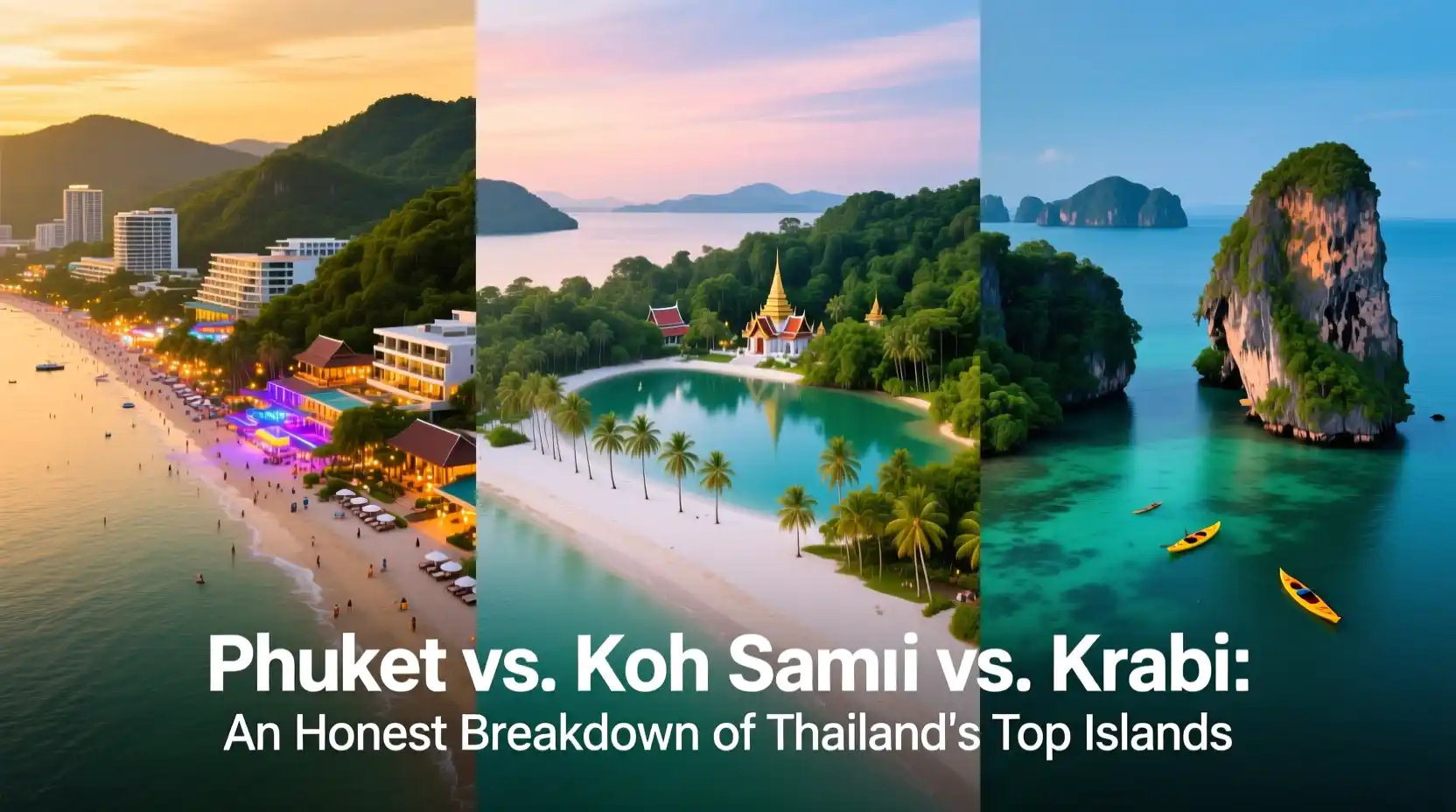
Phuket vs. Koh Samui vs. Krabi An Honest Breakdown of Thailand’s Top Islands
Phuket vs. Koh Samui vs. Krabi: An Honest Breakdown of Thailand’s Top Islands
Thailand. The very name conjures images of emerald waters, limestone karsts piercing the sky, long-tail boats gliding over pristine reefs, and the scent of lemongrass and chili wafting from bustling street stalls. For millions of travelers, the dream of a Thai island getaway is the quintessential vacation. But within this dream lies a crucial, often agonizing, first decision: which island?
Three names consistently dominate the conversation, the brochures, and the Instagram feeds: Phuket, Koh Samui, and Krabi. They are the titans of Thai tourism, each a heavyweight champion in its own right. They all promise sun, sea, and sand, yet they deliver profoundly different experiences. Choosing the wrong one for your travel style, budget, or personality can be the difference between the trip of a lifetime and a disappointing, overpriced holiday.
This is not another glossy travel brochure filled with filtered photos and generic praise. This is an honest, exhaustive, 10,000-word breakdown designed to be your definitive guide. We will strip away the marketing veneer and delve into the nitty-gritty, the pros, the cons, the hidden gems, and the tourist traps. We’ll explore the vibe on the ground, the texture of the sand between your toes, the thumping bass of the nightlife, the tranquility of a hidden cove, and the reality of getting from A to B.
By the end of this guide, you won’t just know about Phuket, Koh Samui, and Krabi; you will understand which one is right for YOU.
The TL;DR: At-a-Glance Verdict
Before we dive deep, here’s a quick-reference table for those who want the headline verdict.
| Feature | Phuket | Koh Samui | Krabi |
| The Vibe | The Big, Boisterous Metropolis. A fully-fledged city on an island. Everything is big, loud, and available 24/7. | The Polished, Established Resort Island. A blend of high-end luxury, backpacker nostalgia, and everything in between. Feels more “tamed.” | The Dramatic, Nature-Focused Gateway. Stunning, otherworldly landscapes. Less of a single hub, more of a collection of coastal towns. |
| Best For | Party-lovers, shoppers, foodies, divers, those who want endless options and don’t mind crowds. | Couples, honeymooners, families, luxury seekers, beach club aficionados. | Adventure seekers, rock climbers, hikers, photographers, those seeking awe-inspiring nature and a slower pace. |
| Beaches | Huge variety. From world-class (Patong, Kata) to utterly secluded (Nai Harn). Can be very crowded. | Beautiful, classic palm-fringed beaches (Chaweng, Lamai). Generally calm, good for swimming. | Less about “beaching” and more about the scenery. Beaches are often smaller, framed by limestone cliffs. Ao Nang is the hub. |
| Nightlife | Unmatched. Bangla Road is legendary. Huge range from sophisticated wine bars to raucous go-go bars and mega-clubs. | Lively but more contained. Chaweng is the main hub. Focus on beach clubs, cocktail bars, and some late-night venues. | Laid-back and relaxed. Centered around beach bars and restaurants in Ao Nang and Railay. Krabi Town is quiet. |
| Cost | Mid-range to very expensive. Can be done on a budget, but tourist areas are pricey. Taxis are a notorious expense. | Mid-range to very expensive. Generally feels a bit more expensive for everyday items than Phuket. Luxury is top-tier. | The most budget-friendly of the three, especially for food and accommodation outside of the main tourist strips. |
| Getting Around | Can be a challenge. Expensive tuk-tuks/taxis. Grab is available but sometimes restricted. Renting a scooter is popular but risky. | Easier than Phuket. Songthaews (shared taxis) are cheap and frequent on the main ring road. Grab works well. | Relatively easy. Long-tail boats are essential for accessing beaches like Railay. Tuk-tuks and songthaews connect the mainland areas. |
| Accessibility | Has its own international airport (HKT) with massive global connectivity. | Has its own international airport (USM) with good connections to Asia and Europe. | Served by Krabi International Airport (KBV). Many fly into Phuket and take a ferry/minivan. |
| The “Honest” Con | Can feel overwhelming, crowded, and commercialized. Scams (especially transport) are common. Lacks a cohesive “island charm.” | Can feel a bit sterile or over-developed in parts. Chaweng’s party scene can be intense. Less “authentic” Thai culture on the surface. | The mainland location means less of that “deserted island” feel. The main hub of Ao Nang can be congested. Weather can be less predictable than the Gulf. |
Part I: The Deep Dive – Phuket
Phuket (pronounced “Poo-ket,” not “Foo-ket”) is the original, the biggest, and the boldest of Thailand’s island destinations. It’s not so much an island as it is a province, a sprawling landmass connected to the mainland by a bridge, with a capital city (Phuket Town) and a population of over half a million people. To call it merely an “island” is to misunderstand its scale and character.
The Vibe: The Unapologetic Powerhouse
Phuket is the New York City of Thai islands. It’s loud, it’s proud, and it never sleeps. It’s a place of incredible energy and staggering variety. One moment you can be in a five-star resort with private butler service, and the next you’re haggling for a fake Rolex in a crowded market. You can find world-class fine dining next to a grimy but delicious street-side noodle stall. This juxtaposition is Phuket’s greatest strength and its most significant weakness. It offers everything, which means it can lack a singular, cohesive identity. It’s a chameleon, and the experience you have is entirely dependent on where you choose to stay and what you choose to do.
The Beaches: A Continent of Coasts
Phuket’s west coast is the famous one, facing the Andaman Sea and offering sunset views that will etch themselves into your memory. The beaches are long, wide, and varied.
- Patong Beach: The epicenter. The sand is fine and white, but you’ll barely see it for the crowds of sunbeds, umbrellas, and vendors. The water is decent for swimming but can be busy with jet skis and parasailers. This is not a beach for quiet relaxation; it’s the beach for the party. Its proximity to the infamous Bangla Road defines it.
- Honest Take: Come here for the energy and people-watching, not for a tranquil beach experience. It’s chaotic, noisy, and a perfect representation of Phuket’s “go-big-or-go-home” attitude.
- Kata & Karon Beaches: Just south of Patong, these two are the popular, more “family-friendly” alternatives. Karon is a massive, sprawling stretch of sand that feels less dense than Patong. Kata is smaller, more scenic, and framed by headlands at each end. Both have a huge array of restaurants, shops, and hotels but lack the intense party vibe of Patong. The water is generally calmer and great for swimming.
- Honest Take: The perfect middle ground. You get great beaches, plenty of amenities, and a lively atmosphere without the full-on debauchery of Patong. They can still get very crowded, especially in high season.
- Bang Tao & Surin Beaches: Further north, you enter the “luxury belt.” Bang Tao is a ridiculously long beach (8km) home to the massive Laguna Phuket complex (a collection of five luxury resorts) and numerous high-end villas. Surin, just next door, is known as “Millionaire’s Row” for its collection of chic beach clubs and fine-dining restaurants. The vibe here is sophisticated and relaxed.
- Honest Take: If your budget allows, this is a fantastic area. The beaches are beautiful and well-maintained, and the atmosphere is upscale. It feels a world away from Patong’s chaos.
- Nai Harn & Nai Thon Beaches: In the southwest corner, you find Phuket’s most beautiful and “untouched” beaches. Nai Harn is a stunning lagoon-like bay with crystal-clear water and a more local, expat feel. Nai Thon is even quieter, a small crescent of sand backed by a thick jungle.
- Honest Take: These are Phuket’s gems. They get crowded during midday but are far more serene than the main west coast beaches. The lack of major development means fewer amenities, so come prepared.
Beyond the Beach: A World of Activity
Phuket is an activity junkie’s paradise.
- Diving & Snorkeling: It’s the primary hub for trips to the Similan and Surin Islands, widely considered some of the best diving sites in the world. Liveaboards depart regularly. Closer to shore, day trips to Phi Phi Island and the Racha Islands are extremely popular for snorkeling.
- Big Buddha & Chalong Temple: For a dose of culture, the 45-meter-tall white marble Big Buddha sitting atop Nakkerd Hill offers panoramic views and a sense of serenity. Wat Chalong is Phuket’s most important Buddhist temple, ornate and bustling with worshippers.
- Phuket Old Town: Don’t skip this. The historic center is a gorgeous grid of Sino-Portuguese shophouses, painted in pastel hues. It’s a fantastic place for photography, independent cafes, art galleries, and excellent restaurants. It offers a glimpse into Phuket’s history as a major trading port.
- Nightlife: Beyond Bangla Road’s neon-lit chaos (which is an experience in itself), Phuket has a sophisticated side. Rooftop bars in Patong, chic beach clubs in Surin, and quiet cocktail lounges are plentiful. For something uniquely Thai, the Phuket FantaSea show is a Las Vegas-style cultural extravaganza.
The Food Scene: A Gastronomic Melting Pot
Phuket’s food is as diverse as its population.
- Street Food: You’ll find it everywhere, but particularly in the back streets of Patong and the markets in Phuket Town. Don’t miss the Hokkien Mee, a local specialty of egg noodles with seafood and a rich, dark soy sauce.
- Local Restaurants: For authentic, cheap, and delicious Thai food, venture away from the main tourist roads. Look for places packed with Thais.
- Fine Dining: Phuket has a Michelin Guide. It’s home to world-class restaurants, often helred by international chefs, particularly in the luxury resorts of Surin and Laguna.
Getting Around: The Infamous Challenge
This is Phuket’s biggest downfall. Public transport is virtually non-existent. You have three main options:
- Tuk-Tuks & Taxis: Infamously expensive. They operate on a fixed-price, non-metered system, and short rides can cost as much as a nice dinner. Scams are common.
- Grab (Uber equivalent): Available, but drivers are often blocked from entering tourist areas like Patong, forcing you to walk to a pick-up point. Prices are higher than in other parts of Thailand.
- Scooter Rental: The most popular and cost-effective way to explore. However, Phuket’s roads are busy and accidents involving tourists are extremely common. Only rent if you are an experienced and licensed rider.
The Honest Pros and Cons of Phuket
Pros:
- Unmatched Variety: Whatever you want, you can find it in Phuket.
- World-Class Infrastructure: International airport, top hospitals, huge range of accommodation.
- Activity Hub: The best base for diving trips to the Similans and exploring the Andaman coast.
- Excellent Food Scene: From street stalls to Michelin stars.
- Something for Everyone: Families, partiers, luxury travelers, and backpackers can all find their niche.
Cons:
- Overwhelming & Crowded: Can feel like a concrete jungle in places.
- Transportation Nightmare: The cost and hassle of getting around are a major negative.
- Commercialized: Lacks the rustic, “paradise island” charm of smaller destinations.
- Higher Cost of Living: Tourist taxes, in the form of inflated prices, are high.
- Scams: Be constantly vigilant, especially with transport and tour pricing.
Part II: The Deep Dive – Koh Samui
If Phuket is the boisterous metropolis, Koh Samui is the polished, established resort town. It’s the second-largest island on Thailand’s Gulf Coast and was one of the first backpacker paradises in the 1970s before transforming into a sophisticated, well-rounded tourist destination.
The Vibe: The Cultured All-Rounder
Koh Samui feels more “tamed” than Phuket. The development is more contained, centered around the main ring road that circumnavigates the island. There’s a sense of maturity here. It’s seen it all before. The vibe is a blend of high-end luxury, particularly on the northern and eastern coasts, and the lingering backpacker spirit of the south. It’s less raw and more refined. The island has a more established expat community, which gives it a comfortable, lived-in feel.
The Beaches: The Postcard Perfect Classics
Samui’s beaches are what tropical dreams are made of: fine, white sand, leaning coconut palms, and typically calm, turquoise water. They are generally better for swimming than Phuket’s west coast.
- Chaweng Beach: The heart of the action. This is a 7km stretch of beautiful sand, but it’s also the most developed. The sand is soft, the water is shallow and warm, and it’s lined with hundreds of hotels, restaurants, and bars. It’s the hub for nightlife and shopping.
- Honest Take: Chaweng is fantastic for its energy and convenience, but it’s not for those seeking solitude. The central part can be very crowded, with a relentless stream of vendors. The northern and southern ends are quieter.
- Lamai Beach: The “second city” of Samui. It’s slightly more relaxed and rustic than Chaweng but still has plenty of bars, restaurants, and a lively nightlife scene. The beach is stunning, though the water can get a bit rocky at low tide in some spots. It’s home to the famous Grandfather and Grandmother rocks (Hin Ta Hin Yai).
- Honest Take: A great alternative to Chaweng. It has all the amenities but with a slightly more laid-back, slightly more “local” feel.
- Bophut & Fisherman’s Village: On the north coast, Bophut is home to the charming Fisherman’s Village. This is a strip of old wooden buildings housing boutique shops, excellent restaurants, and stylish bars. The beach here is pleasant but not as spectacular as Chaweng or Lamai. The famous Walking Street Market is held here every Friday.
- Honest Take: Perfect for couples and families who want a more sophisticated, romantic, and relaxed base. It’s the chic heart of Samui.
- Maenam & Taling Ngam: For true tranquility, head to Maenam on the north coast (a long, quiet beach perfect for walks) or Taling Ngam on the quiet west coast, known for its stunning sunsets over the Ang Thong Marine Park. These areas are dominated by luxury resorts and private villas.
- Honest Take: If you want to escape the crowds and prioritize peace and quiet, these are the spots to be. You’ll need to travel for most amenities.
Beyond the Beach: Culture, Comfort, and Nearby Wonders
Samui offers a good mix of relaxation and exploration.
- Temples & Landmarks: The island’s most iconic sight is the Big Buddha (Wat Phra Yai) at Bang Rak. The mummified monk at Wat Khunaram is a fascinating, if slightly morbid, sight. The Secret Buddha Garden is a tranquil, jungle-shrouded collection of statues.
- Ang Thong Marine Park: A kayaker’s and snorkeler’s dream. This archipelago of 42 islands is a stunning seascape of limestone karsts, hidden lagoons, and pristine beaches. Most tours depart from Samui and are a must-do.
- Koh Phangan & Koh Tao: Samui’s greatest advantage is its location. It’s the main ferry hub for trips to its famous neighbors. You can easily do a day trip or an overnighter to the legendary full-moon party island of Koh Phangan (which is also incredibly beautiful and quiet outside of party nights) or the diving mecca of Koh Tao.
- Nightlife: Chaweng is the main hub, with everything from loud, open-air bars to the famous Ark Bar beach party and sophisticated venues like Sound Club. Lamai is a smaller, more contained version. Bophut offers more relaxed, cocktail-bar-style evenings.
The Food Scene: Excellent and Accessible
Samui has a fantastic food scene that caters to all tastes and budgets.
- Night Markets: Besides the Friday Walking Street in Bophut, there are excellent local markets in Lamai and Maenam, offering cheap and delicious street food.
- Beachfront Dining: The options are endless, from casual shacks serving fresh seafood to high-end restaurants in luxury resorts.
- International Cuisine: Due to its large expat population and long history of tourism, Samui has an incredible variety of international restaurants, from authentic Italian to French patisseries.
Getting Around: A Breeze Compared to Phuket
This is where Samui shines. The ring road makes navigation simple.
- Songthaews: These are the red, shared taxi-trucks that constantly circle the island. They are cheap, frequent, and the primary mode of public transport. Just flag one down and tell the driver your destination.
- Grab: Works seamlessly across the entire island. It’s affordable and reliable.
- Scooter Rental: As with everywhere, it’s a popular option for freedom, but the same safety warnings apply.
The Honest Pros and Cons of Koh Samui
Pros:
- Beautiful, Swimmable Beaches: Classic tropical perfection.
- Easy to Get Around: The ring road and songthaews make transport a breeze.
- Great Base for Exploration: Perfect for visiting Koh Phangan and Koh Tao.
- Well-Rounded Vibe: A good balance of nightlife, relaxation, culture, and activities.
- Sophisticated Options: Excellent choice for couples, honeymooners, and luxury travelers.
Cons:
- Can Feel Over-Developed: The main beach areas can feel like a long strip of resorts and shops.
- Higher Price Point: Generally one of the more expensive islands in Thailand.
- Less “Authentic” Feel: It can feel very tailored to tourists, and you have to seek out genuine local culture.
- Chaweng’s Intensity: The main party zone can be just as overwhelming as Patong.
Part III: The Deep Dive – Krabi
Krabi is different. It’s not an island; it’s a province on the Andaman mainland. But its collection of stunning coastal towns and access to some of the world’s most iconic seascapes place it firmly in the island destination debate.
The Vibe: Nature’s Dramatic Masterpiece
The defining feature of Krabi is its geology. Everywhere you look, sheer limestone karsts jut from the earth and sea, creating a landscape that feels almost otherworldly, like something out of a fantasy film. The vibe is less about the beach itself and more about being immersed in this epic natural environment. It’s the choice for adventurers, photographers, and those who value awe-inspiring scenery over a perfectly manicured resort beach. The pace is generally slower and more laid-back than in Phuket or Samui.
The Beaches: Gateways to Grandeur
Krabi’s “beaches” are often small inlets or mangrove-fringed bays, with the main attraction being the view. The real “beaches” are offshore.
- Ao Nang: The main tourist hub. Ao Nang beach itself is nothing to write home about—it’s a strip of sand backed by a wall of shops, restaurants, and travel agents. Its purpose is not to be a destination, but a launchpad. From here, the long-tail boats depart for the real prizes.
- Honest Take: Ao Nang is chaotic, crowded, and commercial. But it’s also convenient, with a huge range of accommodation and dining. Stay here if you want to be in the center of the action and have easy access to tours.
- Railay Beach (East & West): The jewel in Krabi’s crown. Accessible only by boat due to the towering cliffs that cut it off from the mainland, Railay feels like a separate world. West Railay is the stunning postcard beach: fine white sand, turquoise water, and dramatic karsts. It gets crowded during the day. East Railay is the mangrove side; the water isn’t swimmable, but it’s where the budget accommodation, climbing schools, and lively bars are.
- Honest Take: Railay is breathtaking. It’s a must-visit. Staying here is an experience, but it’s expensive and can feel very insular. The day-trip crowds can be overwhelming.
- Tonsai Beach: Adjacent to Railay (accessible by a short walk at low tide or a long-tail boat), Tonsai is the gritty, bohemian backpacker and rock-climbing mecca. It’s cheap, rustic, and has a very relaxed, community vibe. The beach is small and not as pretty as Railay West.
- Honest Take: The perfect spot for young, budget-conscious travelers and serious climbers. It’s a social, low-key paradise.
- Klong Muang & Tub Kaek: North of Ao Nang, these are the quiet, upscale beaches. They offer beautiful sunset views over the Hong Islands and are home to several luxurious, low-key resorts.
- Honest Take: For those who want a luxury resort base with peace and quiet, but still want to be in the Krabi region.
Beyond the Beach: An Adventurer’s Playground
Krabi is the undisputed king of outdoor activities.
- Rock Climbing: Railay and Tonsai are world-famous destinations for rock climbing, with hundreds of bolted routes for all levels set against the stunning limestone cliffs.
- Island Hopping: This is the main event. Trips to the Phi Phi Islands (including Maya Bay, of “The Beach” fame), the Hong Islands (a stunning lagoon), and the Four Islands tour are essential. These are often done by long-tail boat or speedboat.
- Kayaking & Stand-Up Paddleboarding: Explore the mangrove forests and sea caves at Ao Thalane or Bor Thor. Paddle around the karsts at Railay.
- Hot Springs & Emerald Pool: Inland, the Krabi Hot Springs are a series of thermal pools in a jungle setting, while the Sa Morakot (Emerald Pool) is a stunning, natural spring perfect for a refreshing swim.
- Tiger Cave Temple (Wat Tham Sua): A challenging but rewarding climb of 1,237 steps up a limestone karst, leading to a giant golden Buddha and breathtaking 360-degree views of the region.
The Food Scene: Authentic and Affordable
Krabi offers some of the most authentic and affordable Thai food of the three destinations.
- Krabi Town: The provincial capital, a 20-minute drive from Ao Nang, is where you’ll find the best local food. The night market here is fantastic and far less touristy than the ones on the islands.
- Seafood Barbecues: The restaurants along the Ao Nang beachfront set up impressive barbecue displays every night, where you can pick your fresh seafood and have it grilled to order.
- Budget-Friendly Options: Even in touristy Ao Nang, you can find simple, delicious, and incredibly cheap Thai meals at local eateries just a street or two back from the main drag.
Getting Around: A Mix of Land and Sea
Transport in Krabi is a tale of two systems.
- On the Mainland: Tuk-tuks and songthaews connect Ao Nang, Krabi Town, and the airport. They are reasonably priced compared to Phuket.
- To the Beaches/Islands: Long-tail boats are essential. They are an iconic part of the experience but can be expensive. You have to negotiate the price beforehand. A trip from Ao Nang to Railay, for example, is a fixed fare.
The Honest Pros and Cons of Krabi
Pros:
- Unbelievable Scenery: The most dramatic and awe-inspiring landscapes of the three.
- Adventure Capital: The best destination for rock climbing, kayaking, and serious island exploration.
- More Budget-Friendly: Food and accommodation are generally cheaper, especially if you base yourself in Krabi Town.
- Authentic Thai Feel: The mainland location and proximity to Krabi Town provide a more genuine cultural experience.
Cons:
- Mainland Beaches are Underwhelming: Ao Nang is not a destination beach. You have to take a boat to find the beauty.
- Reliance on Boats: This adds a layer of cost and planning to your daily activities.
- Ao Nang is Congested: The main hub can be a traffic-clogged, tourist-saturated mess.
- Weather: Being on the Andaman coast, it shares a similar monsoon season to Phuket, which can be more intense than on the Gulf coast (Samui).
Part IV: The Head-to-Head Showdown
Now that we know the players, let’s pit them against each other based on traveler type.
For the Party Animal
- Winner: Phuket. It’s not even close. Bangla Road is a sprawling, hedonistic wonderland of go-go bars, beer bars, nightclubs, and everything in between. It’s intense, in-your-face, and offers unparalleled variety.
- Runner-Up: Koh Samui. Chaweng is a fantastic party spot, with the famous Ark Bar leading the charge. It’s lively and fun but more contained and arguably slightly less “wild” than Patong.
- Third Place: Krabi. Nightlife here is about sunset cocktails at a beach bar in Railay or a few drinks in Ao Nang. It’s relaxed and social, not a party destination.
For the Family
- Winner: Koh Samui. The calm, shallow waters of Chaweng and Lamai are perfect for kids. The island is easy to navigate, has a huge range of family-friendly resorts (many with kids’ clubs), and offers gentle activities like aquarium visits and elephant sanctuaries.
- Runner-Up: Phuket. Phuket also has a massive array of family resorts, particularly in Kata and Karon. Activities like Phuket FantaSea and the diversity of tours are a huge plus. The main downside is the difficulty and cost of getting around.
- Third Place: Krabi. While adventurous families will love the kayaking and island hopping, the logistics can be more challenging. The beaches aren’t as “play-friendly” as Samui’s, and the main hub of Ao Nang can be overwhelming.
For the Couple or Honeymooner
- Winner: Koh Samui. The combination of luxury resorts (especially in Bophut and on the north coast), world-class spas, fine-dining restaurants, and beautiful, romantic sunsets makes it a classic honeymoon choice.
- Runner-Up: Krabi. For the adventurous, nature-loving couple, Krabi is unbeatable. A private long-tail boat tour, a sunset dinner on Railay West, or staying in a cliff-top villa is pure romance. The sheer drama of the landscape is incredibly romantic.
- Third Place: Phuket. Phuket can certainly do romance. The luxury resorts in Surin and Laguna are superb. However, you have to actively seek it out and escape the crowds to find it. The overall vibe is less inherently romantic than Samui or Krabi.
For the Backpacker or Budget Traveler
- Winner: Krabi. With its cheap guesthouses in Tonsai and Ao Nang, affordable food in Krabi Town, and a focus on low-cost activities like hiking and climbing, Krabi offers the best value for money.
- Runner-Up: Phuket. Patong has a huge number of cheap hostels and guesthouses. Food can be very cheap if you eat street food. However, the cost of transport and activities can quickly drain your budget.
- Third Place: Koh Samui. Samui is generally the most expensive of the three for budget travel. While Lamai has some cheap options and you can still find budget bungalows, the overall cost of accommodation and food is higher.
For the Digital Nomad
- Winner: Koh Samui. It has the most established infrastructure for nomads, with several coworking spaces (like Kohub), excellent Wi-Fi in many cafes and resorts, and a large, supportive expat community. The ease of getting around is a huge bonus.
- Runner-Up: Phuket. Phuket also has coworking spaces and a huge nomad community, particularly in areas like Cherng Talay. The main drawbacks are the high cost of living and the transport issues.
- Third Place: Krabi. The nomad scene is smaller and less developed here. While you can certainly work, you’ll find fewer dedicated spaces and a smaller community to connect with.
Part V: Logistics, Costs, and Itineraries
Best Time to Visit: The Monsoon Factor
This is a critical distinction.
- Phuket & Krabi (Andaman Coast): The best time to visit is during the dry season, from November to April. The seas are calm, the skies are clear, and it’s hot. The monsoon season runs from May to October, bringing heavy rain, rough seas, and many boat cancellations.
- Koh Samui (Gulf of Thailand): Samui’s weather pattern is different. Its dry season is slightly longer, generally from February to October. It has a shorter, often less intense monsoon season from November to January.
Conclusion: If you’re traveling in July-August, Koh Samui is your best bet. If you’re traveling in December-January, Phuket and Krabi are ideal.
Realistic Cost of Living (Per Person, Per Day)
| Budget Level | Phuket | Koh Samui | Krabi |
| Budget (Hostel, Street Food, Little Tours) | $40 – $60 | $45 – $65 | $35 – $55 |
| Mid-Range (3-Star Hotel, Mix of Food, Some Tours) | $80 – $150 | $90 – $160 | $70 – $130 |
| Luxury (5-Star Resort, Fine Dining, Private Tours) | $250+ | $275+ | $200+ |
Note: These are estimates and can vary wildly. The biggest variable in Phuket is transport.
Sample Itineraries
The 5-Day Phuket Taster:
- Day 1: Arrive, check into a hotel in Kata. Relax on Kata Beach.
- Day 2: Explore Big Buddha & Wat Chalong. Evening in Phuket Old Town for dinner.
- Day 3: Full-day boat trip to the Phi Phi Islands for snorkeling and sightseeing.
- Day 4: Beach hopping. Morning at relaxed Nai Harn, afternoon at surf-friendly Kata.
- Day 5: Last-minute shopping, depart.
The 5-Day Koh Samui Taster:
- Day 1: Arrive, check into a hotel in Bophut. Relax and explore Fisherman’s Village.
- Day 2: Morning at Chaweng Beach. Afternoon exploring the south coast (Lamai, Grandfather Rocks).
- Day 3: Full-day tour of the Ang Thong Marine Park (kayaking, hiking, snorkeling).
- Day 4: Visit the Big Buddha and Secret Buddha Garden. Relax by the pool.
- Day 5: Friday morning: explore Maenam. Friday evening: Bophut Walking Street Market. Depart.
The 5-Day Krabi Taster:
- Day 1: Arrive, check into a hotel in Ao Nang. Walk the strip, have a seafood barbecue dinner.
- Day 2: Take a long-tail boat to Railay. Spend the day exploring West and East Railay, do some kayaking.
- Day 3: Full-day “Four Islands” speedboat tour (Poda, Chicken, Tup Islands, Railay).
- Day 4: Morning climb at Tiger Cave Temple for the views. Afternoon swim at the Emerald Pool and Hot Springs.
- Day 5: Last-minute souvenir shopping in Krabi Town, depart.
Part VI: The Final Verdict – Which Island is Right for YOU?
There is no “best” island, only the best island for you.
Choose Phuket if…
- You want the most options for everything: food, accommodation, activities, and nightlife.
- You are a serious diver and want to access the Similan Islands.
- You love a high-energy, bustling, chaotic atmosphere and don’t mind crowds.
- You want world-class shopping and international-standard infrastructure.
- You are prepared for the logistical challenge and expense of getting around.
Choose Koh Samui if…
- You want beautiful, classic, palm-fringed beaches that are great for swimming.
- You are a couple or family looking for a balance of relaxation and amenities.
- You value convenience and want an island that is easy to navigate.
- You want to use your vacation as a base to explore Koh Phangan and Koh Tao.
- You are looking for a sophisticated, well-rounded, and “polished” holiday experience.
Choose Krabi if…
- Your top priority is jaw-dropping, dramatic, otherworldly scenery.
- You are an adventure seeker: rock climbing, kayaking, and serious island hopping are your main goals.
- You are on a tighter budget and want more authentic, affordable food and lodging.
- You are a photographer or nature lover who wants to be immersed in a stunning landscape.
- You are willing to trade a perfect resort beach for access to some of the most beautiful locations on the planet.
Your perfect Thai island paradise is out there. Now you have the honest, detailed map to find it.
Disclaimer
This document is intended for informational and entertainment purposes only. The information contained within this 10,000-word guide is based on personal experiences, extensive research, and data available at the time of writing (up to early 2024).
- Accuracy and Timeliness: The travel landscape is constantly changing. Prices for accommodation, food, transport, and tours mentioned in this article are estimates and are subject to significant fluctuation based on the season, currency exchange rates, local economic conditions, and inflation. Business hours, operating schedules for tours, and the very existence of specific restaurants, bars, or hotels can change without notice. Always verify critical information directly with official sources or recent reviews before making travel plans.
- Personal Opinion and Subjectivity: This guide is an “honest breakdown,” which inherently includes the subjective opinions and personal biases of the author. What one traveler considers a “pro” (e.g., a bustling party scene), another may consider a “con.” Your individual experience may vary greatly depending on your personal preferences, travel style, budget, expectations, and sheer luck.
- Safety and Risk: Travel, particularly activities like scooter riding, rock climbing, diving, and boat travel, carries inherent risks. This guide does not provide professional safety advice. Always assess risks for yourself, use reputable and licensed operators for tours and activities, wear appropriate safety gear (especially helmets when riding scooters), and ensure you have comprehensive travel insurance that covers all planned activities. The author and publisher are not responsible for any accidents, injuries, illnesses, or losses incurred during your travels.
- Scams and Local Customs: While this guide attempts to provide an “honest” overview of potential issues like scams, it is not exhaustive. Travelers should always exercise common sense, be aware of their surroundings, and practice respectful behavior in accordance with local Thai customs and laws. Negotiating prices politely, being wary of deals that seem “too good to be true,” and dressing modestly when visiting religious sites are standard, responsible travel practices.
- Environmental Impact: Tourism can have a significant impact on fragile ecosystems. This guide encourages responsible travel. Please be a mindful traveler: dispose of waste properly, refuse single-use plastics, do not touch or step on coral reefs, and choose ethical tour operators (e.g., those that do not support animal exploitation).
By using this guide, you acknowledge and agree that the information provided is not a substitute for professional travel advice, and you assume full responsibility for your own travel decisions, safety, and experiences. Enjoy your trip to Thailand
Keywords:Phuket vs Koh Samui,Koh Samui vs Krabi,Phuket vs Krabi,Thailand islands comparison,Best Thailand island,Which Thai island to visit,Phuket travel guide,Koh Samui travel guide,Krabi travel guide,Things to do in Phuket,Things to do in Koh Samui,Things to do in Krabi,Patong Beach,Chaweng Beach,Railay Beach,Ao Nang,Thailand honeymoon,Thailand family vacation,Backpacking Thailand,Thailand nightlife,Thailand island hopping,Rock climbing Thailand,Diving in Thailand,Best time to visit Thailand,Thailand travel costs,Getting around Phuket,Krabi airport,Phuket or Samui for families,Krabi or Phuket for couples,Cheapest Thai island
Have any thoughts?
Share your reaction or leave a quick response — we’d love to hear what you think!
-
 0
-
 0
-
 0
-
 0
-
 0
-
 0
