
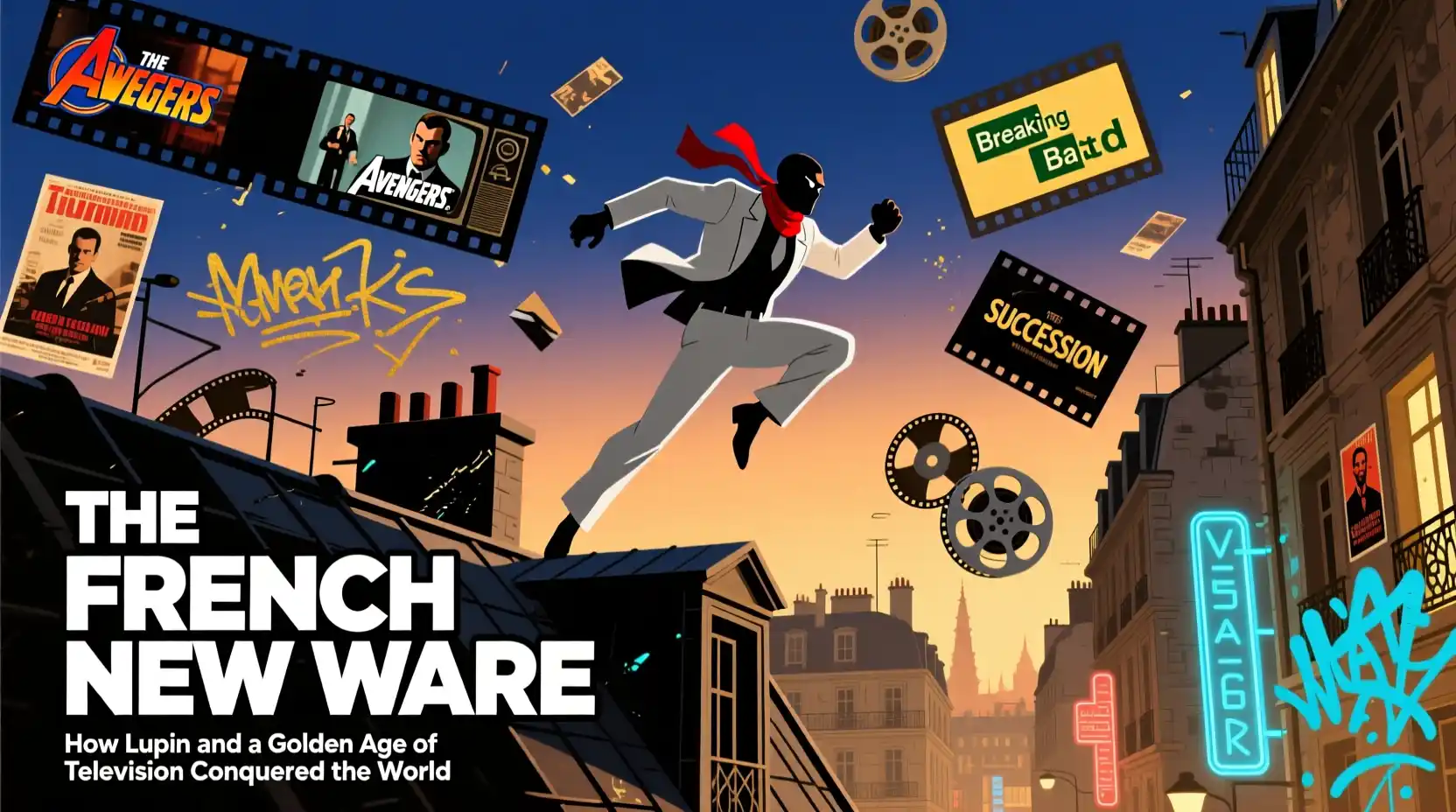
The French TV Series That Stormed the World with Stellar Reviews and a Dazzling Cast
In recent years, global television audiences have witnessed a remarkable shift in viewing habits—no longer dominated solely by English-language content, viewers are increasingly embracing foreign-language series with compelling storytelling, strong characters, and high production value. Few international shows have broken through the cultural and linguistic barriers quite as spectacularly as Lupin, the French thriller series that took the world by storm upon its release on Netflix in January 2021. With rave critical acclaim, record-breaking viewership, and a cast led by the magnetic Omar Sy, Lupin not only redefined the modern heist genre but also elevated French television to unprecedented global prominence.
This blog dives deep into the phenomenon of Lupin, exploring its origins, its cultural significance, the brilliance of its performances, the craftsmanship behind its production, and its lasting impact on international entertainment.
The Origins of “Lupin”: From Literary Legend to Modern Masterpiece
At its core, Lupin is a modern reinterpretation of the beloved French literary character Arsène Lupin, created in 1905 by writer Maurice Leblanc. Often described as the “gentleman thief” counterpart to Sherlock Holmes, Lupin is a charming, intelligent, and morally ambiguous antihero who uses his wit and disguise skills to outsmart the wealthy and corrupt while often helping the downtrodden.
Over the decades, Arsène Lupin has appeared in countless novels, films, radio dramas, and even manga (the popular Lupin III series is a direct descendant), but he had never before been adapted so successfully for the modern streaming era—until Netflix and production company Gaumont stepped in.
The creators of the series, George Kay (a British writer known for Criminal and Hustle) and François Uzan, transformed the classic gentleman thief into a contemporary character rooted in social relevance. The protagonist, Assane Diop—played with electrifying charisma by Omar Sy—draws direct inspiration from Arsène Lupin but is a distinctly modern figure: a Senegalese immigrant’s son living in present-day Paris who uses the stories of Lupin as both a guide and emotional anchor.
Assane’s mission is personal: to avenge his father, Babakar Diop, who was wrongfully accused of stealing a priceless necklace belonging to Lady Pellegrini, a wealthy socialite. Though Babakar maintained his innocence, he died in prison after being framed by the powerful Pellegrini family. As a boy, Assane discovers a copy of Arsène Lupin, Gentleman Burglar and finds solace and strategy in its pages. Decades later, he adopts the thief’s name and methods to dismantle the very system that destroyed his family.
This fusion of classic fiction and contemporary social commentary is what elevates Lupin beyond mere entertainment—it becomes a story about identity, justice, and resilience in a society where race and class often dictate one’s fate.
A Global Breakthrough: How Lupin Captured the World’s Attention
When Lupin premiered on Netflix on January 8, 2021, few expected it to become an instant global sensation. But within a month, the series had been viewed by over 70 million households—making it the most-watched non-English language series in Netflix history at the time, surpassing even Money Heist.
Review aggregators echoed the public enthusiasm. On Rotten Tomatoes, Lupin Season 1 holds a 100% approval rating from critics, with praise for its fast-paced narrative, stylish direction, and Sy’s magnetic performance. On Metacritic, it received a score of 77, indicating “generally favorable reviews.” International outlets like The Guardian, Variety, and The Hollywood Reporter lauded the series not just as a triumph of French television, but as a new benchmark for global storytelling.
What made Lupin such a crossover success?
- Universal Themes: Revenge, justice, family, and the battle against systemic inequality resonate across cultures.
- High-Concept Thrills: Each episode is a puzzle—a clever heist, a daring escape, or a trap meticulously laid. The pacing is relentless, and the stakes are personal.
- Omar Sy’s Superstar Presence: Sy, already known internationally for The Intouchables, brings warmth, intelligence, and effortless cool to Assane Diop. His performance anchors the entire series.
- Cinematic Quality: Shot with the visual flair of a major motion picture, Lupin boasts stunning cinematography, chic fashion, and Paris as a glamorous yet gritty backdrop.
Unlike many international series that are subtitled and remain niche, Lupin proved that language is no longer a barrier when storytelling is bold, universal, and emotionally engaging.
The Stellar Cast: Breathing Life into Complex Characters
One of the most frequently cited strengths of Lupin is its exceptional ensemble cast. Led by Omar Sy, each actor delivers a performance that adds depth, tension, and emotional weight to the narrative.
Below is a detailed look at the main cast members and their contributions:
| Actor | Character | Role & Significance | Notable Achievements |
| Omar Sy | Assane Diop | The protagonist who uses the Arsène Lupin stories as both a blueprint for his heists and a moral compass. Charismatic, intelligent, and driven by a deep sense of justice. | First Black actor to win the César Award for Best Actor (The Intouchables, 2012); Global recognition through X-Men: Days of Future Past. |
| Nicolas Marié | Hubert Pellegrini | The cold, calculating patriarch of the wealthy Pellegrini family. A symbol of entrenched privilege and corruption. | Veteran French actor with decades of stage and screen experience; known for La Crème de la Crème. |
| Clotilde Hesme | Juliette Pellegrini | Hubert’s daughter, a lawyer entangled in the family’s secrets and a potential love interest for Assane. | César Award nominee; starred in The Names of Love and The Connection. |
| Antoine Gouy | Raoul Diop | Assane’s teenage son, caught between admiration for his father and the moral complexities of his actions. | Breakout role; praised for his natural performance. |
| Ludivine Sagnier | Sophie | Assane’s childhood friend and confidante, who becomes an unexpected ally in his revenge plot. | Known for 8 Women and François Ozon’s Swimming Pool; brings emotional authenticity. |
| Soufiane Guerrab | Captain Romain Laugier | A determined police detective assigned to the Lupin case, torn between duty and suspicion about the truth. | Rising star in French cinema; breakout role in In the Beginning; praised for adding humanity to law enforcement. |
What stands out about the cast is not just their individual performances but how their characters intersect. Relationships evolve, loyalties are tested, and moral lines blur—especially between Assane and Laugier, whose intellectual cat-and-mouse game forms a central dynamic in Season 2 and 3.
Even supporting characters are given rich backstories and emotional dimensions. For instance, Juliette Pellegrini evolves from a stereotypical privileged elite to a woman grappling with her complicity in her family’s crimes. Similarly, Raoul’s character arc introduces themes of legacy, fatherhood, and intergenerational trauma.
A Feast for the Eyes and Ears: Production Excellence
Why does Lupin feel like a blockbuster? The answer lies in its exquisite craftsmanship.
Direction & Cinematography:
Directed by Louis Leterrier (The Transporter, Now You See Me) for the first five episodes, the series is visually dynamic. Leterrier, a French director with Hollywood experience, brought a sleek, cinematic aesthetic—sharp camera angles, long tracking shots, and vibrant color grading that highlight the contrasts between Paris’s opulent hotels and the working-class neighborhoods where Assane grew up.
The use of locations—such as the Musée d’Orsay, luxury hotels, and the Paris Métro—adds authenticity and visual grandeur. The heists are meticulously choreographed, often resembling magic tricks or illusions, keeping viewers guessing until the last second.
Costuming & Design:
Costume designer Marie-Amélie Sauvé (who has worked with Jean Paul Gaultier and Chloé) dressed Assane in impeccably tailored suits that reflect his dual identity: a polished, confident thief who can move seamlessly among the elite. His wardrobe—featuring luxury brands like Saint Laurent and Berluti—is both aspirational and symbolic, representing his reclamation of dignity and power.
The production design echoes Assane’s world: contrasting modern Paris with flashes of memory—his childhood in the projects, the trauma of his father’s arrest, and the solitary comfort of reading Lupin books in the library.
Music & Soundtrack:
The score, composed by Nicolas Errèra, blends orchestral tension with modern beats and jazz influences—echoing the suave, stylish nature of the protagonist. The music often mimics the pacing of a thriller, building suspense before a big reveal. Notably, the use of classical music (such as Camille Saint-Saëns’ “Le Carnaval des Animaux”) in key scenes adds a layer of historical homage to French culture.
Beyond Entertainment: Cultural Impact and Social Relevance
While Lupin is, at its surface, a thrilling heist series, its deeper commentary on race, class, and justice has resonated strongly—especially in France and former French colonies.
Assane Diop is not just a hero; he is a Black man navigating a society where he is often underestimated or surveilled because of his background. His intelligence and resourcefulness constantly defy stereotypes. In one powerful scene, he reflects: “They see a Black man in a hoodie and think thief. I show them a Black man in a tuxedo and they don’t know what to think.”
This line encapsulates the show’s critique of systemic racism—the idea that identity is performative, and power is tied to perception. Assane uses illusion not just to commit heists but to dismantle prejudice, revealing truth through deception.
Moreover, the series subtly comments on France’s colonial history through Assane’s Senegalese roots. His father’s wrongful imprisonment echoes real stories of immigrants scapegoated by institutions to protect the elite. Though never overtly political, Lupin becomes a mirror of contemporary French society—diverse, dynamic, and struggling with its contradictions.
Globally, the show has sparked renewed interest in Maurice Leblanc’s original stories. Sales of Arsène Lupin books surged post-release, and a new English translation was published to catch up with demand. It also opened doors for more French-language content on streaming platforms—Netflix renewed Lupin for three additional parts (Seasons 2, 3, and a final Part 5), signaling confidence in international audiences’ appetite for non-English narratives.
Reception and Awards: A Triumph of Global Storytelling
Lupin has earned numerous accolades, both in France and abroad:
- César Awards (2022): Nominated for Best Series, with Omar Sy winning the inaugural César for Best Actor in a Series.
- International Emmy Awards: Nominated for Best Drama Series in 2022.
- Globe de Cristal Awards: Won Best TV Series in 2021.
- BAFTA Television Awards: Nominated for Best International Programme in 2022.
Critics have consistently praised the series for its intelligence, pacing, and emotional core. The New York Times called it “a master class in suspense,” while Le Monde hailed it as “a reinvention of French popular cinema for the digital age.”
Perhaps most telling is viewer engagement. Social media platforms like Twitter and TikTok exploded with fan theories, cosplay, and memes—especially around Assane’s disguises and clever tricks. The hashtag #Lupin amassed millions of views, and fan art depicting Omar Sy in various Lupin personas became viral.
The Future of Lupin: What Lies Ahead?
As of 2023, Lupin has concluded with Part 5, wrapping up Assane’s mission with a dramatic and emotional finale. The series finale delivered on its promises: closure, catharsis, and one final mind-bending heist.
But the legacy of Lupin extends far beyond its five parts.
- A Blueprint for International Success: Lupin proved that language is not a barrier to global stardom. It paved the way for other non-English series—like Squid Game, Dark, and Money Heist—to be taken seriously as mainstream content.
- Representation Matters: Assane Diop stands as a rare example of a Black lead in European television who is not defined by trauma or victimhood but by brilliance, charm, and agency.
- Revival of Classic Literature: The series has inspired adaptations and reboots of other classic characters, showing that timeless stories can find new relevance with modern sensibilities.
- Omar Sy as a Global Icon: Sy has become one of France’s most recognizable exports, with increasing roles in international films and series. He embodies the new era of global French talent.
Conclusion: More Than a Series—A Cultural Moment
Lupin is more than just a hit TV show. It is a cultural milestone—a masterfully crafted narrative that blends nostalgia with innovation, suspense with social commentary, and local storytelling with universal appeal.
It reminded the world that compelling characters and smart writing transcend borders. It gave French television a seat at the table of global entertainment giants. It delivered a protagonist whose charm, intellect, and moral complexity made him a hero for the 21st century.
As streaming platforms continue to seek diverse, authentic content, Lupin serves as both inspiration and proof of concept: great stories, told well, will always find their audience—even if they’re not in English.
In the end, Lupin is not just a series about a thief. It is a show that stole the hearts of millions—and earned every second of its acclaim.
Have you watched Lupin? Share your favorite heist, disguise, or moment in the comments below. And if you haven’t—what are you waiting for? The game is afoot.
Have any thoughts?
Share your reaction or leave a quick response — we’d love to hear what you think!
-
 0
-
 0
-
 0
-
 0
-
 0
-
 0
