
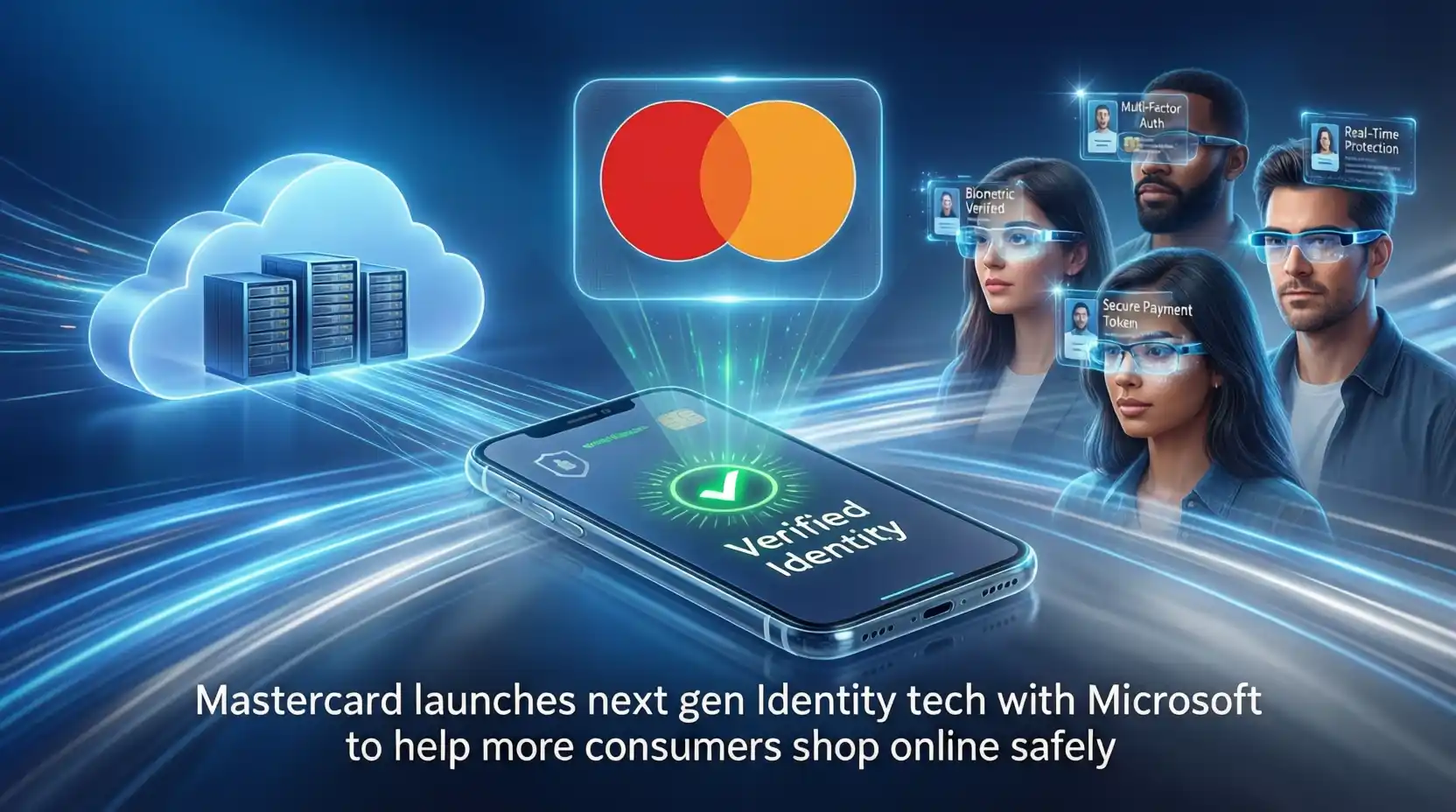
Mastercard and Microsoft Launch Next-Generation Identity Technology: A New Era for Digital Safety and E-Commerce
Abstract
In an era defined by the rapid acceleration of digital transformation, the intersection of convenience and security has become the battleground for the future of e-commerce. As billions of users transact online daily, the antiquated systems of password management and centralized data storage have proven insufficient against the rising tide of cyberfraud and identity theft. Addressing this critical global challenge, financial giants Mastercard and technology leader Microsoft have announced a strategic partnership to launch next-generation identity technology. This collaboration aims to revolutionize how consumers verify their identities online, creating a universally accepted, secure, and user-centric method of Digital Identity. This comprehensive analysis explores the nuances of this partnership, the underlying technologies, the implications for global commerce, and the transformative potential of a decentralized Identity Verification ecosystem.
Introduction: The Imperative for Change in the Digital Age
The modern digital economy is a marvel of connectivity and efficiency, but it rests on a foundation that is increasingly showing cracks. For decades, the primary method of securing online transactions and interactions has been the combination of a username and a password. This system, born in the early days of computing, was never designed to support the complex, high-stakes financial ecosystem we navigate today. Consumers are forced to remember dozens, if not hundreds, of complex passwords for various services, leading to “password fatigue.” This fatigue results in poor security practices, such as reusing passwords across multiple sites, which creates a domino effect: a breach at one retailer can compromise a user’s financial life across the entire internet.
Simultaneously, merchants face a daunting paradox. To prevent fraud, they must implement stringent security checks, but these checks often introduce friction into the shopping experience. A customer ready to buy may abandon their cart if the checkout process requires too many steps, obscure authentication questions, or delays in verification. This friction costs retailers billions of dollars annually in lost revenue.
Against this backdrop, the announcement of the Mastercard and Microsoft partnership is not merely a product launch; it is a paradigm shift. By leveraging Mastercard’s global network and Microsoft’s cloud infrastructure and identity expertise, the two companies aim to introduce a solution that prioritizes Online Security without sacrificing user experience. The goal is ambitious: to create a digital identity that is as easy to use as tapping a card, yet infinitely more secure than any password.
The Evolution of Identity: From Analog to Digital and Beyond
To understand the significance of this launch, one must trace the evolution of identity verification. In the physical world, identity is established through government-issued documents—passports, driver’s licenses, and national ID cards. These documents are trusted because they are issued by authoritative sources and are difficult to forge. When we walk into a bank, we present a physical token (the card) and often a biometric factor (our face or signature) to prove who we are.
Transitioning this trust to the digital world has been fraught with challenges. Initially, digital identity relied on “something you know” (passwords). As this proved insecure, the industry moved to two-factor authentication (2FA), adding “something you have” (a phone or token). However, 2FA is still often vulnerable to SIM swapping and social engineering.
The next phase, championed by the Mastercard-Microsoft collaboration, moves toward a model where identity is a portable, user-controlled asset. This evolution draws on the concept of “Self-Sovereign Identity” (SSI), where individuals hold their own identity data and share it selectively with verifiers. This model moves away from siloed databases where companies hoard user data—a practice that makes them attractive targets for hackers—and toward a decentralized model where the user is the custodian of their own information.
This new generation of identity technology treats identity not as a static profile, but as a dynamic, reusable credential. Just as you use your physical driver’s license to prove your age at a bar, to rent a car, and to board a plane, a digital identity credential can be used to verify your age to buy wine online, to open a bank account, or to log into a government portal, all without revealing unnecessary personal information.
The Architecture of the Solution: How It Works
At the heart of this initiative is the integration of Mastercard’s digital identity framework with Microsoft’s Azure and Authenticator technologies. While the technical underpinnings are complex, the user experience is designed to be intuitive.
The system relies on a distributed ledger architecture, often associated with blockchain technology, though the specifics may vary based on implementation. This architecture allows for the creation of Decentralized Identifiers (DIDs). A DID is a unique ID that an entity (person or organization) can generate and control, independent of any central registry. Because the user controls the private keys associated with the DID, they control their identity.
Here is a step-by-step breakdown of how a transaction might look using this new technology:
- Enrollment: The user first creates their digital identity. This involves a rigorous verification process, often performed by a trusted issuer such as a bank or government agency. The user ties their physical attributes (biometrics, document data) to their digital identifier. This step happens once and establishes the root of trust.
- Storage: The verified credentials are stored securely in the user’s digital wallet (e.g., Microsoft Authenticator). This could be a mobile device. The data is encrypted and protected by the device’s security layers (biometrics, PIN).
- The Transaction: The user visits a participating online retailer. Instead of creating a new account or entering a credit card number, they select the “Digital Identity” checkout option.
- The Request: The merchant’s system sends a request for specific information. For example, to purchase a restricted item, the merchant might ask, “Is this person over 18?” rather than asking for their birth date.
- The Consent: The user reviews the request on their device. They see exactly what data is being asked for. They approve the request using biometric authentication (FaceID, fingerprint).
- The Verification: The user’s device shares a cryptographically signed proof of the requested attribute. The merchant’s system verifies the signature against the issuer’s public key stored on the ledger. The verification happens instantly.
- Completion: Access is granted, or the transaction is processed.
Crucially, this process utilizes Zero-Knowledge Proofs (ZKPs), a cryptographic method that allows one party to prove to another that they know a value (like a password or an attribute), without conveying any information apart from the fact that they know the value. In the context of buying age-restricted goods, the user can prove they are over 18 without actually revealing their date of birth or address.
Strategic Synergy: Why Mastercard and Microsoft?
The partnership between Mastercard and Microsoft is a strategic alignment of two giants with complementary strengths.
Mastercard’s Role: Mastercard is not just a payment network; it is a trusted “validator” of transactions. For decades, they have managed the complex interchange between consumers, merchants, and banks. Their brand is synonymous with safety and acceptance. In this partnership, Mastercard brings the concept of interoperability. For a digital identity to work, it must be accepted everywhere, just like a Mastercard. They provide the “rails” upon which identity travels, leveraging existing relationships with thousands of financial institutions globally to bootstrap the trust network. Furthermore, Mastercard contributes extensive experience in fraud detection and security standards (PCI DSS), which are vital for protecting the ecosystem.
Microsoft’s Role: Microsoft provides the technological backbone and the interface to the consumer. With Azure, they offer the scalable, compliant cloud infrastructure necessary to handle millions of identity verifications per second. More importantly, through products like Microsoft Authenticator, they already have a foothold in the consumer market for accessing digital services. Microsoft has been a vocal advocate for the decentralized identity standard (DID) and is a founding member of the ID2020 alliance, a public-private partnership dedicated to solving the challenges of digital identity. Their expertise in enterprise identity (Azure Active Directory/Entra ID) allows them to bridge the gap between consumer identity and enterprise security needs.
This synergy solves the “cold start” problem that plagues many identity networks. A network needs users to attract merchants, and merchants to attract users. Mastercard brings the merchants (through its existing payment network), and Microsoft brings the users (through its ecosystem of consumer and enterprise software).
Empowering the Consumer: Privacy, Control, and Inclusion
The primary narrative of this new technology is consumer empowerment. In the current model, consumers trade their privacy for convenience. To get a service, they hand over their data, often without knowing how it will be stored, sold, or protected. The Mastercard-Microsoft model flips this script using the principle of data minimization.
Data Minimization and Selective Disclosure The most profound feature of this technology is the ability to disclose only the information necessary for the transaction. If you are renting a car, the agency needs to know you have a valid license and are over 25. They do not need your home address, your organ donor status, or your exact birth date. By enabling selective disclosure, the system drastically reduces the “digital footprint” a user leaves behind, mitigating the risk of data mining and profiling.
User Consent Consent is granular and revocable. The user is prompted for every transaction. Unlike automatic form-fillers, this system requires an active cryptographic signature. If a user feels their credentials have been compromised, or if they simply no longer wish to use a particular service, the digital credential can be revoked, rendering it useless for future verifications.
Financial Inclusion Beyond convenience, this technology has a humanitarian angle. Billions of people worldwide lack traditional forms of identification, excluding them from the formal economy, banking services, and social safety nets. A digital, mobile-first identity system can provide these unbanked populations with a way to prove who they are using alternative verification methods, unlocking access to credit, insurance, and employment. Mastercard has a long history of financial inclusion initiatives, and integrating digital identity is a natural extension of this mission.
Merchant Benefits: Reducing Fraud and Friction
While consumers gain privacy and security, merchants stand to gain significantly in terms of operational efficiency and fraud reduction.
The Cost of Fraud Online payment fraud is a multi-hundred-billion-dollar problem. Merchants lose money not only through the direct loss of goods (chargebacks) but also through the high fees associated with fraud detection tools and the administrative burden of managing disputes. Furthermore, the fear of fraud often leads merchants to reject legitimate transactions—false positives—which is lost revenue.
Streamlined Onboarding (KYC) Know Your Customer (KYC) and Anti-Money Laundering (AML) regulations require banks and fintechs to verify the identity of new customers. This is currently a manual, expensive, and slow process, often taking days or weeks. With reusable digital identity, a customer can verify their identity once and share that verification with multiple financial institutions instantly. This reduces the cost of customer acquisition and accelerates the onboarding process from weeks to seconds.
Eliminating Cart Abandonment Cart abandonment is a scourge of e-commerce. Studies show that a significant percentage of users abandon carts when the checkout process is too long or complex. By replacing manual entry of shipping details and credit card numbers with a biometric scan and a single tap, the friction is virtually eliminated. The “one-click” buy becomes truly universal and secure.
The Technology Stack: Decentralized Identifiers and Verifiable Credentials
To fully appreciate the depth of this innovation, one must look at the specific standards being utilized. Mastercard and Microsoft are aligning with the World Wide Web Consortium (W3C) standards for Decentralized Identifiers (DIDs) and Verifiable Credentials (VCs).
Decentralized Identifiers (DIDs) A DID is a new type of identifier that enables verifiable, decentralized digital identity. Unlike traditional usernames or email addresses, DIDs do not require a centralized registration authority. They are generated by the user, controlled by the user, and can be resolved without relying on a central database. This makes them resistant to censorship and ensures that the user owns the identity, not a service provider.
Verifiable Credentials (VCs) VCs are the digital equivalent of physical credentials. Just as a physical driver’s license is issued by the government, a digital Verifiable Credential is issued by a trusted authority (the issuer) to the holder (the user). The user can then present this credential to a verifier (the merchant). The credential contains tamper-evident claims signed by the issuer. Because it is cryptographically secure, the verifier can trust the credential without having to contact the issuer directly.
The Trust Triangle This ecosystem operates on a “Trust Triangle”:
- Issuer: The entity that attests to the truth of the claim (e.g., a government, a bank, or an educational institution).
- Holder: The user who receives and holds the credential.
- Verifier: The entity that checks the credential (e.g., a retailer, a website).
Mastercard and Microsoft are providing the infrastructure to support this triangle at scale. Mastercard often acts as the bridge, facilitating the trust between issuers and verifiers, while Microsoft provides the “wallet” where the holder keeps their credentials.
Use Cases: Beyond Retail
While the primary focus of the announcement is online shopping, the applications of this technology extend far beyond retail.
- Age Verification: Currently, proving age online often requires uploading a photo of an ID card, which poses privacy risks as the photo is stored on a merchant’s server. With this tech, a user can prove they are over 21 using a zero-knowledge proof, sharing no image or specific birth date.
- Healthcare: Patients can control their medical records, granting doctors access to specific history only when necessary. This simplifies the transfer of records between providers while maintaining HIPAA/GDPR compliance.
- Travel: Digital identity can streamline airport security. Instead of showing a passport and boarding pass at multiple checkpoints, a biometric verification linked to a digital token could streamline the entire journey from check-in to boarding.
- Employment: Job applicants can prove their degrees and certifications to employers instantly without the need for the employer to call universities or background check companies, speeding up the hiring process.
- Internet of Things (IoT): As devices become more autonomous, they will need identities to interact with each other securely. A smart thermostat might need to verify its identity to a utility provider. The standards developed for humans can easily be adapted for machines.
Security Considerations: Protecting the New Infrastructure
Deploying a global identity system requires military-grade security. Both Mastercard and Microsoft bring top-tier security capabilities to the table.
Hardware Security The credentials are typically stored in a hardware-backed secure enclave on the user’s smartphone. This means that even if the phone’s operating system is compromised with malware, the keys to the identity cannot be extracted.
Biometric Binding The use of biometrics (Face ID, fingerprint) ensures that even if a device is stolen, the thief cannot use the digital identity without the owner’s physical presence. This “something you are” factor is the strongest form of authentication currently available to the mass market.
Resilience to Breaches Because the system is decentralized, there is no central honeypot of data for hackers to steal. In a traditional breach, millions of records are compromised. In this decentralized model, an attacker would need to compromise individual user devices one by one, which is economically infeasible for large-scale fraud.
Regulatory Landscape and Compliance
The launch of this technology comes at a time when global regulation regarding data privacy is tightening. The General Data Protection Regulation (GDPR) in Europe and the California Consumer Privacy Act (CCPA) in the US have set high standards for how personal data is handled.
The Mastercard-Microsoft solution is designed with “Privacy by Design” at its core. By giving users control over their data and minimizing the data collected by merchants, the system naturally aligns with GDPR principles. The ability to port data (data portability) and the right to be forgotten are technically feasible in this architecture, as the user can simply delete their wallet and credentials, effectively vanishing from the digital identity ecosystem.
Furthermore, this system aids in Anti-Money Laundering (AML) efforts. A reusable, verified digital identity makes it much harder for bad actors to create synthetic identities (fake identities built from bits of real information) to launder money. The immutable audit trail provided by the underlying ledger technology allows regulators to trace the provenance of identity attestations without compromising user privacy.
The Competitive Landscape
Mastercard and Microsoft are not the only players in the digital identity space. They face competition from other tech giants, fintech startups, and government initiatives.
- Visa: Mastercard’s primary rival has its own digital identity initiatives, often partnering with different tech firms.
- Apple: With Apple ID and the Secure Element in iPhones, Apple is a major contender, particularly in the consumer retail space.
- Google: Google’s efforts with Android identity and its vast account database make it a competitor in the web authentication space.
- Blockchain ID Startups: Companies like Sovrin (now Evernym) and Civic have been pioneers in this space.
However, the partnership between Mastercard and Microsoft is unique because it bridges the gap between the financial world and the enterprise IT world. While Apple may have the consumers, and Google has the web, Mastercard has the merchants and the banks. This cross-industry interoperability gives the partnership a distinct advantage in achieving ubiquity.
The Future Roadmap
The roadmap for this technology involves a phased rollout. Initially, we can expect to see the technology integrated into high-value, high-risk transactions where the cost of fraud is highest (e.g., buying luxury goods, opening bank accounts). As consumer confidence grows and infrastructure matures, it will trickle down to everyday retail purchases.
Looking further ahead, the integration of the Metaverse and augmented reality (AR) will necessitate a robust digital identity layer. As our digital and physical lives merge, the need to carry a persistent, trusted identity across virtual worlds becomes critical. The digital identity token launched today could eventually serve as the avatar’s passport, allowing the user to carry their reputation, assets, and credentials across different virtual platforms.
Conclusion: A Safer, Frictionless Future
The collaboration between Mastercard and Microsoft represents a pivotal moment in the history of the internet. It acknowledges that the password-based model is broken and offers a viable, scalable alternative that puts the user back in control.
By combining Mastercard’s global payment network with Microsoft’s cloud and identity prowess, the two companies are building a digital infrastructure that mimics the trust we have in the physical world. This technology promises to reduce fraud, lower costs for merchants, and most importantly, provide consumers with a safer, more private way to navigate the digital economy.
As we move forward, the success of this initiative will depend on adoption. It requires merchants to update their checkout flows, banks to act as issuers, and consumers to embrace a new way of logging in. However, the benefits are too compelling to ignore. In a world where Digital Identity is the key to accessing services, protecting our finances, and proving our rights, the launch of this next-generation technology is a significant step toward a safer, more inclusive, and efficient digital future.
Keywords:
- Digital Identity
- Identity Verification
- Online Security
Disclaimer: This article is for informational purposes only and does not constitute financial, legal, or professional advice. The details regarding the partnership between Mastercard and Microsoft are based on publicly available information and industry analysis at the time of writing. Technology implementations and product features are subject to change. Readers are advised to conduct their own due diligence and consult with professional advisors before making business or financial decisions based on the content of this article.
Have any thoughts?
Share your reaction or leave a quick response — we’d love to hear what you think!
-
 0
-
 0
-
 0
-
 0
-
 0
-
 0
