
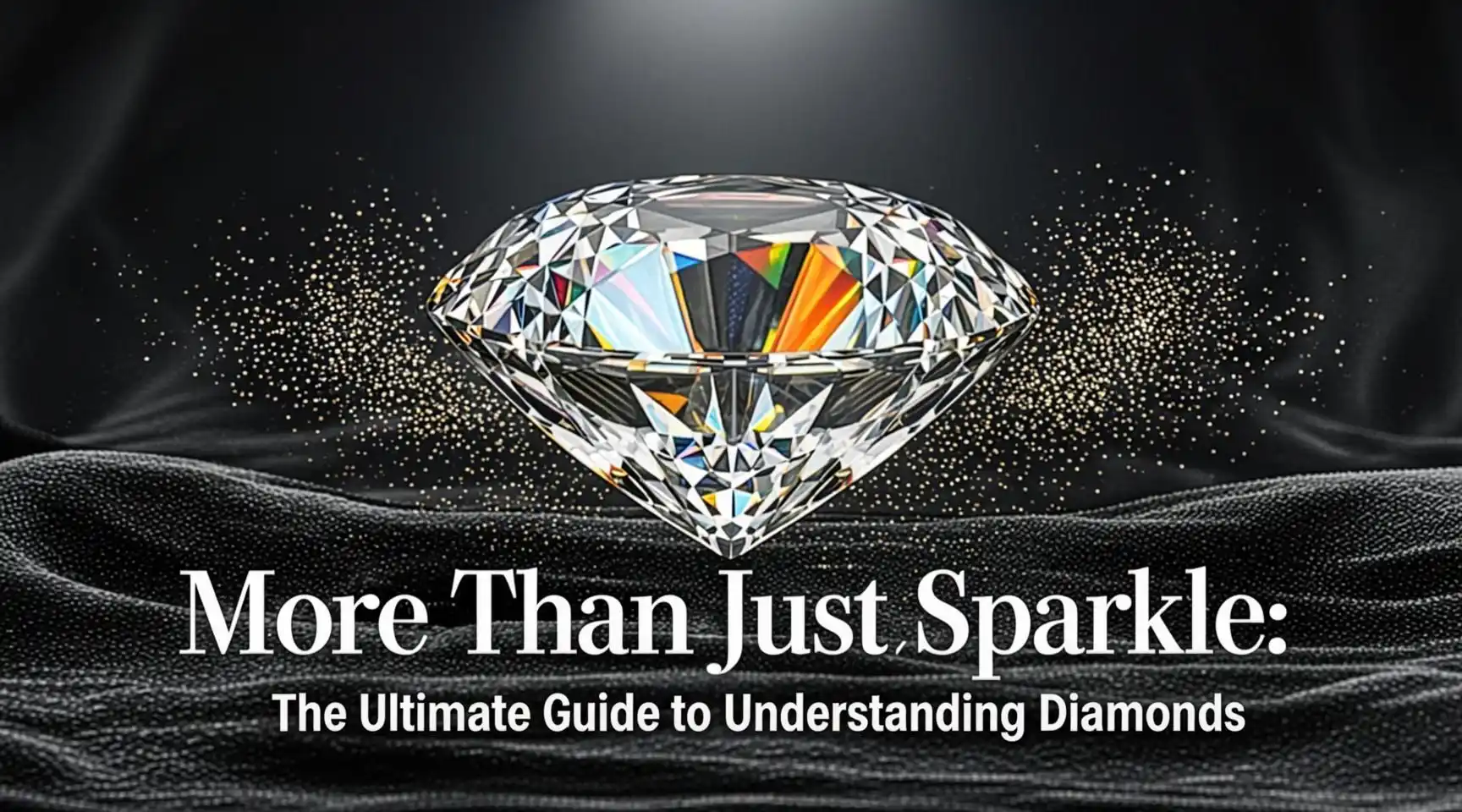
More Than Just Sparkle: The Ultimate Guide to Understanding Diamonds
Introduction
For centuries, diamonds have captivated the human imagination. They are symbols of enduring love, markers of milestone achievements, and objects of profound natural beauty. Yet, for all their fame, diamonds remain one of the most misunderstood purchases a consumer can make. To the untrained eye, a diamond is simply a shiny stone; to the informed buyer, it is a complex interplay of geology, physics, art, and economics.
In a marketplace flooded with terminology like “Ideal Cut,” “VVS1,” “Hearts and Arrows,” and “Lab-Grown,” the journey to finding the perfect stone can feel overwhelming. Misinformation is rampant, and the difference between a wise investment and a costly mistake often comes down to subtle details invisible to the naked eye.
This guide is designed to demystify the process. Whether you are purchasing an engagement ring, a milestone gift, or an investment piece, understanding the anatomy of a diamond goes far beyond superficial sparkle. We will take you step-by-step through the science of light performance, the nuances of grading reports, and the modern ethical landscape of the industry. Welcome to your ultimate resource for understanding diamonds.
Step 1: The Foundation – Understanding the 4Cs
Before you can appreciate a diamond’s value, you must speak the language. The Gemological Institute of America (GIA) established a universal standard for evaluating diamonds known as the 4Cs: Cut, Color, Clarity, and Carat Weight.
- Cut: The Soul of the Diamond
Often confused with the shape of the stone (round, oval, pear), the Cut actually refers to the arrangement of facets and the quality of the craftsmanship. It is the most critical of the 4Cs because it determines the diamond’s brilliance.
- Poorly Cut Diamonds: Light enters and leaks out the sides or bottom, resulting in a dull, dark appearance.
- Well-Cut Diamonds: Light enters, reflects internally, and returns to the viewer’s eye, creating that sought-after “fire” and “scintillation.”
- The Scale: Ranging from Excellent/Ideal to Poor. For maximum sparkle, never compromise on Cut quality.
- Color: The Absence of Hue
Most gem-quality diamonds are graded on a lack of visible color.
- The Scale: Ranges from D (Colorless) to Z (Light Yellow or Brown).
- The Sweet Spot: D, E, and F are colorless and rare. However, G, H, and I grades often appear colorless to the naked eye, especially when set in white gold or platinum, offering better value.
- Fancy Colors: Diamonds that occur naturally in pink, blue, or yellow are graded on a different scale and are exponentially rarer.
- Clarity: The Internal Story
Clarity measures the absence of internal inclusions (flaws) and external blemishes.
- The Scale: FL (Flawless) → IF (Internally Flawless) → VVS1/VVS2 (Very Very Slightly Included) → VS1/VS2 (Very Slightly Included) → SI1/SI2 (Slightly Included) → I1/I2/I3 (Included).
- The Reality: Most inclusions are microscopic. A Flawless diamond is rare and expensive, but an SI1 or VS2 diamond often looks identical to the naked eye, offering a significant cost saving without sacrificing beauty.
- Carat Weight: The Measure of Mass
Carat is a unit of weight, not size.
- The Price Jump: Prices rise exponentially at specific milestones (0.50, 1.00, 1.50 carats). A 1.00-carat diamond is significantly more expensive than a 0.90-carat diamond of the same quality, even if they look identical in size to the casual observer.
- “Magic Sizes”: Buying slightly “shy” of these benchmarks (e.g., buying a 0.95ct instead of a 1.00ct) is a smart strategy for maximizing budget.
Step 2: The 5th C – Certification
Never buy a diamond without a grading report from a reputable laboratory. The certification acts as the diamond’s birth certificate and guarantees the quality you are paying for.
- GIA (Gemological Institute of America): The industry gold standard. They have the strictest grading consistency.
- AGS (American Gem Society): Highly respected, particularly for their proprietary cut grade system for round brilliants.
- Other Labs: EGL, IGI, and HRD are common, but their grading standards can be more lenient (or inconsistent) compared to GIA. A diamond graded “F color” by one lab might be graded “H color” by GIA.
Step 3: The Anatomy of Light – Brilliance, Fire, and Scintillation
To understand why one diamond outshines another, you must understand how it interacts with light.
- Brilliance: The white light reflected from the diamond. This is primarily determined by the crown angle and table size.
- Fire: The dispersion of white light into the colors of the rainbow (spectral colors).
- Scintillation: The sparkle—the flashes of light and dark you see when the diamond or the light source moves.
A diamond with “Ideal” proportions acts like a hall of mirrors, bouncing light back efficiently. If the pavilion (bottom half) is too deep or too shallow, light exits the back of the stone, causing it to look glassy or dark.
Step 4: The Shape Factor
While “Cut” is a quality grade, “Shape” is the geometric outline of the stone. The shape dictates the style and alters the perception of size.
- Round Brilliant: The classic choice. Designed for maximum sparkle. Hides color and inclusions well due to light return.
- Princess: Square or rectangular, sharp corners, excellent sparkle retention.
- Oval: Elongates the finger. Can show a “bow-tie” effect (a dark area across the center) if cut poorly.
- Cushion: A soft, pillow shape. Excellent for vintage looks but retains less light return than rounds.
- Emerald: A “step-cut” with long, open facets. It does not sparkle but offers a hall-of-mirrors reflection. Shows inclusions and color tint much more easily than brilliant cuts.
Step 5: Natural vs. Lab-Grown Diamonds
The modern buyer faces a major choice: a stone formed by the earth or one created by technology.
- Natural Diamonds: Formed over billions of years deep within the earth. Their value lies in their rarity and natural origin. They tend to hold resale value better than lab-grown stones.
- Lab-Grown Diamonds (LGD): Chemically, physically, and optically identical to natural diamonds. They are real diamonds, not simulants like moissanite. They cost 30-60% less than natural diamonds for the same size and quality.
- The Verdict: If you want a larger stone for a lower budget, LGD is the choice. If you view the diamond as an asset or value the geological history, natural is the path.
Step 6: Fluorescence – Friend or Foe?
Fluorescence is the visible light some diamonds emit when exposed to ultraviolet (UV) rays (like sunlight or blacklights).
- Blue Fluorescence: The most common. In medium or strong grades, it can make a lower-color diamond (like I or J) appear whiter.
- The Stigma: Historically, fluorescence lowered the price. However, in recent years, the market has recognized that medium blue fluorescence in a near-colorless diamond can actually improve face-up appearance. It is often a way to get a discount on a stone that looks beautiful.
Step 7: The Buying Process – A Strategic Checklist
- Set a Budget: Ignore the old “two months’ salary” marketing myth. Spend what you are comfortable with.
- Prioritize: Decide what matters most. Usually, the hierarchy is Cut > Color > Clarity > Carat.
- Select the Setting: The metal and setting style can enhance the diamond. A yellow gold setting can mask a yellow tint in the diamond; a halo setting makes the center stone look larger.
- Inspect the Diamond: If buying online, use high-resolution 360° viewers. Look for “eye-cleanliness”—ensure no inclusions are visible without magnification.
- Verify Certification: Ensure the certificate number on the diamond matches the report from the lab.
Conclusion
A diamond is more than a financial transaction; it is a wearable piece of art that withstands the test of time. By moving beyond the surface-level sparkle and understanding the mechanics of cut, the importance of certification, and the trade-offs of clarity and color, you empower yourself to make a purchase you will cherish forever. Whether you choose a billion-year-old natural wonder or a technological marvel grown in a lab, knowledge is the most valuable carat in your collection.
Keywords
- Diamond Buying Guide
- Diamond 4Cs
- Lab-Grown Diamonds
Hashtags
#DiamondEducation #EngagementRingGuide #LuxuryJewelry
Disclaimer
Disclaimer: This content is for educational and informational purposes only. It does not constitute financial, investment, or professional gemological advice. Diamond prices fluctuate, and grading standards can vary between laboratories. Always consult with a certified gemologist or reputable jeweler before making a purchase decision. The author and publisher assume no liability for any losses or damages incurred based on the information provided in this guide.
Have any thoughts?
Share your reaction or leave a quick response — we’d love to hear what you think!
-
 0
-
 0
-
 0
-
 0
-
 0
-
 0
