
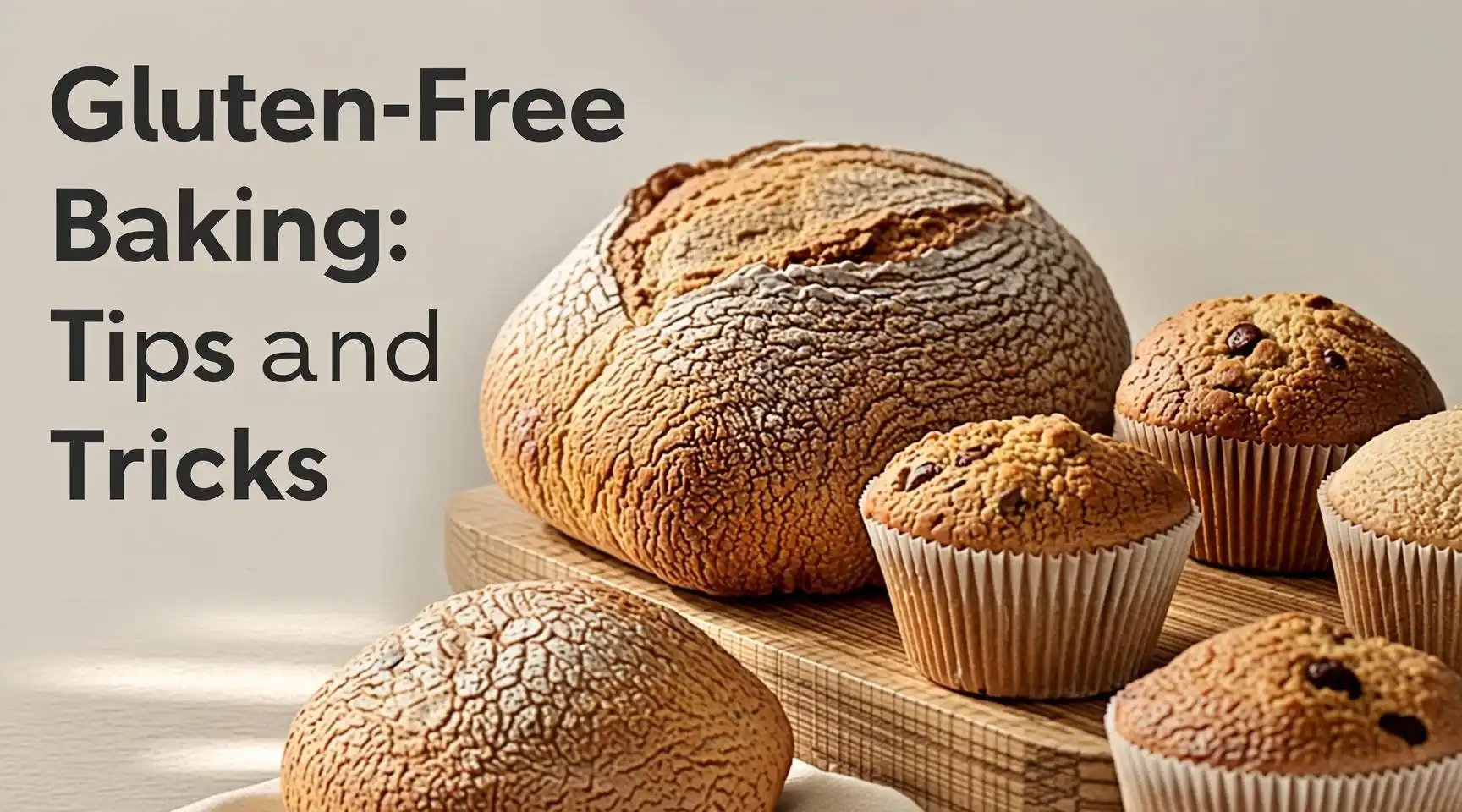
Gluten‑Free Baking: Tips, Tricks, and Proven Strategies for Perfect Results
Discover expert gluten‑free baking tips, ingredient swaps, essential tools, and fool‑proof techniques that turn every loaf, cookie, and cake into a delicious, crumb‑perfect masterpiece.
Introduction
Baking without gluten used to feel like navigating a culinary minefield—one wrong ingredient or a missed step, and the batter could collapse into a dense, gummy mess. Today, thanks to a surge of high‑quality gluten‑free flours, binders, and a deeper understanding of the science behind gluten‑free (GF) dough, home bakers can achieve results that rival traditional wheat‑based creations.
Whether you’re new to a gluten‑free diet for health reasons, cooking for a loved one with celiac disease, or simply curious about the next‑level texture possibilities, this guide equips you with the most actionable tips and tricks to turn every bake into a triumph. From choosing the right flour blend to mastering the art of mixing, resting, and troubleshooting, we’ll walk you through each step with clear explanations, handy checklists, and even a few tested recipes to get you started right away.
Ready to banish crumbly cookies and flat loaves? Let’s dive into the definitive resource for gluten‑free baking success.
- Why Gluten‑Free Baking Matters
| Reason | What It Means for Your Baking |
| Health & Safety | For people with celiac disease, even trace amounts of gluten can trigger severe symptoms. A well‑executed GF bake eliminates that risk. |
| Flavor Freedom | GF flours each bring distinct flavors—tapioca’s chewiness, almond’s nuttiness, sorghum’s mild sweetness—allowing endless creative combos. |
| Texture Innovation | Without gluten’s elasticity, you can explore textures from crisp, biscuit‑like cookies to airy, cake‑like loaves. |
| Allergy‑Friendly | Many GF mixes are also free from common allergens such as soy or dairy, broadening the audience for your baked goods. |
Understanding why you’re baking gluten‑free helps you stay focused on the unique challenges and opportunities this style presents.
- Essential Gluten‑Free Ingredients & Substitutes
2.1 The Core Flours
| Flour | Flavor Profile | Best Uses | Typical Ratio in Blends |
| Rice Flour (white or brown) | Neutral, slightly earthy | Cookies, muffins, pancakes | 30‑40 % |
| Almond Flour | Nutty, moist | Cakes, brownies, quick breads | 15‑25 % |
| Sorghum Flour | Mild, sweet | Breads, pizza crusts | 20‑30 % |
| Tapioca/Starch | Chewy, glossy | Crisp edges, thickening | 10‑15 % |
| Potato Starch | Light, airy | Light cakes, biscuits | 5‑10 % |
| Buckwheat Flour | Robust, earthy | Pancakes, savory breads | 10‑15 % |
| Gluten‑Free Oat Flour | Slightly sweet, oatty | Muffins, cookies | 10‑20 % |
Tip: Use a home‑blended “all‑purpose” mix (e.g., 2 parts rice flour, 1 part sorghum, 1 part tapioca, ½ part potato starch) for consistent results across recipes.
2.2 Binders & Structure Builders
| Binder | How It Works | Typical Amount |
| Xanthan Gum | Mimics gluten’s elasticity; traps air bubbles. | ½ tsp per cup of flour (for cookies) – 1 tsp per cup (for breads). |
| Guar Gum | Similar to xanthan but creates a softer crumb. | Same as xanthan; often mixed ½ tsp xanthan + ½ tsp guar for balance. |
| Psyllium Husk Powder | Forms a gel that provides stretch and moisture retention. | 1 tsp per cup of flour (bread) up to 2 tsp (pizza dough). |
| Eggs | Natural binder; adds leavening and richness. | 1 large egg per ½ cup of flour (general rule). |
| Flaxseed Meal (1:3 ratio with water) | Vegan binder; adds omega‑3s. | 1 tbsp flax + 3 tbsp water = 1 egg‑equivalent. |
2.3 Leavening & Sweeteners
- Baking Powder & Baking Soda: Ensure they’re gluten‑free (most are, but double‑check labels).
- Cream of Tartar: Works with baking soda for extra lift.
- Honey, Maple Syrup, Coconut Sugar: Provide moisture and browning—especially needed because GF dough can dry out faster.
- Must‑Have Tools for Gluten‑Free Success
| Tool | Why It’s Crucial |
| Stand Mixer with Paddle Attachment | Guarantees uniform hydration—critical when mixing dense GF flours. |
| Digital Scale | GF recipes rely on precise ratios; a 1 oz error can ruin texture. |
| Silicone Baking Mat | Prevents sticking without the need for extra flour that can dry out the crust. |
| Thermometer (Oven & Instant‑Read) | Ensures proper bake temperature and checks internal doneness (e.g., 190 °F for bread loaf). |
| Bench Scraper | Helps lift sticky dough from bowls and work surfaces. |
| Parchment Paper | Provides a non‑stick surface for delicate pastries. |
| Dough Divider or Bench Scale | Ideal for portioning rolls or biscuits evenly. |
Pro Tip: Invest in a quality stand mixer early; it reduces hand‑mixing fatigue and improves aeration, especially for larger batches.
- Core Techniques & Pro Tips
4.1 Hydration Is Your Best Friend
Gluten‑free flours absorb more liquid than wheat flour. A typical ratio for a cake batter is 1 cup of flour to 1 ¼‑1 ½ cups of liquid (milk, buttermilk, or non‑dairy alternatives).
- Tip: Let the batter rest for 10‑30 minutes after mixing. This allows starches to fully hydrate, reducing gritty textures.
4.2 Master the Mix‑and‑Rest Method
- Combine dry ingredients (flours, starches, xanthan, leavening).
- Whisk wet ingredients (liquids, eggs, sweeteners).
- Mix until just combined—over‑mixing can break down the binder gel.
- Rest the dough/batter.
- Fold in any add‑ins (nuts, chocolate chips) after the rest.
4.3 Temperature Control
- Oven: Preheat fully; GF batter often needs a higher temperature (375‑400 °F) for a quick rise and crust formation.
- Butter & Eggs: Use room‑temperature butter and eggs for better emulsification.
4.4 Shaping & Handling Sticky Dough
- Lightly dust the work surface with tapioca starch (instead of flour) to prevent sticking without altering moisture levels.
- For breads, line a banneton with a well‑dried kitchen towel and dust with a blend of rice flour and tapioca starch to kick‑start the crust.
4.5 Baking Time Tweaks
- Check early: GF items can brown faster; start checking 5‑10 minutes before the recipe’s suggested time.
- Use visual cues: For cookies, edges should be set and tops lightly golden; for cakes, a toothpick should come out clean or with a few moist crumbs (not wet batter).
- Common Mistakes & How to Fix Them
| Mistake | Symptom | Fix |
| Too little liquid | Dry, crumbly crumb; dough breaks apart. | Increase liquid by ¼‑½ cup; add a tablespoon of applesauce or yogurt for extra moisture. |
| Skipping binders | Gummy, rubbery texture; collapsed loaves. | Incorporate xanthan/guar or psyllium husk as per flour weight (usually 1 % of flour weight). |
| Over‑mixing | Dense, tough crumb; loss of airy structure. | Mix until just combined; use a gentle fold for the final minutes. |
| Under‑baking | Soggy centers; rapid staling after cooling. | Extend bake by 5‑10 minutes; ensure internal temperature reaches recommended level. |
| Using only one flour | One‑dimensional flavor; textural issues. | Blend at least three different flours to balance taste and structure. |
| Old gluten‑free flour | Off‑flavors, reduced rise. | Store flours in airtight containers in the fridge or freezer; replace every 6‑12 months. |
- Proven Gluten‑Free Recipes to Test Your Skills
Below are three starter recipes that incorporate the tips above. Each includes a nutrition snapshot (approx.) and a troubleshooting note.
6.1 Fluffy Gluten‑Free Banana Bread
Ingredients (12‑slice loaf)
- 1 ½ cups gluten‑free all‑purpose flour blend (see Table 2.1)
- ½ cup tapioca starch
- ¼ cup sorghum flour
- 1 tsp xanthan gum
- 1 tsp baking soda
- ½ tsp salt
- ½ cup coconut sugar
- 3 ripe bananas, mashed (≈1 ½ cups)
- ¼ cup olive oil (or melted coconut oil)
- 2 large eggs
- ¼ cup plain Greek yogurt (or dairy‑free alternative)
- 1 tsp vanilla extract
- ½ cup walnuts, chopped (optional)
Method
- Preheat oven to 375 °F. Grease a 9×5‑inch loaf pan and line with parchment.
- Whisk together dry ingredients (flour blend, starch, sorghum, xanthan, soda, salt, sugar).
- In a separate bowl, combine bananas, oil, eggs, yogurt, and vanilla. Beat until smooth.
- Mix wet into dry until just combined. Rest batter for 15 minutes.
- Fold walnuts if using, then pour into prepared pan.
- Bake 45‑55 minutes, or until a toothpick inserted 2 inches from the center comes out clean.
- Cool 10 minutes in pan, then transfer to a wire rack.
Nutrition (per slice): 210 kcal, 6 g protein, 30 g carbs, 8 g fat, 3 g fiber.
Troubleshooting Note: If the loaf domes too much, lower oven temperature to 350 °F and extend bake time.
6.2 Crispy Almond‑Lemon Shortbread Cookies
Ingredients (≈24 cookies)
- 1 cup almond flour
- ½ cup white rice flour
- ¼ cup potato starch
- ½ tsp xanthan gum
- ¼ tsp salt
- ½ cup unsalted butter, softened
- ¼ cup powdered erythritol (or sugar)
- 1 tsp pure vanilla extract
- Zest of 1 lemon
- 1 tbsp lemon juice
Method
- Preheat oven to 350 °F. Line a baking sheet with a silicone mat.
- Sift together almond flour, rice flour, potato starch, xanthan, and salt. Set aside.
- Using a stand mixer, cream butter and erythritol on medium speed until light and fluffy (≈2 minutes).
- Add vanilla, lemon zest, and juice; mix briefly.
- Gradually add dry mixture, mixing on low until a stiff dough forms.
- Shape dough into a log (≈2‑inch diameter), wrap in parchment, and chill 30 minutes.
- Slice into ¼‑inch rounds and place on the prepared sheet.
- Bake 12‑14 minutes, until the edges turn pale gold.
- Cool on wire rack; store in an airtight container.
Nutrition (per cookie): 95 kcal, 2 g protein, 5 g carbs, 7 g fat, 1 g fiber.
Troubleshooting Note: If cookies spread excessively, increase xanthan to ¾ tsp or chill dough longer.
6.3 Light & Airy Gluten‑Free Pizza Crust
Ingredients (1 12‑inch crust)
- 1 ½ cups brown rice flour
- ½ cup sorghum flour
- ¼ cup tapioca starch
- 1 tsp psyllium husk powder
- 1 tsp xanthan gum
- 1 tsp instant yeast
- ½ tsp salt
- 1 tbsp olive oil
- 1 cup warm water (110 °F)
- 1 tsp sugar (to feed yeast)
Method
- Activate yeast: In a small bowl, dissolve sugar in warm water, sprinkle yeast, let sit 5‑7 minutes until foamy.
- Combine dry: In a large bowl, whisk rice flour, sorghum flour, tapioca starch, psyllium, xanthan, and salt.
- Add wet: Pour yeast mixture and oil into dry; stir with a wooden spoon until a shaggy dough forms.
- Knead for 2‑3 minutes using a stand mixer on low (or by hand) until dough becomes elastic and pulls away from the sides.
- Rest: Cover bowl with a damp towel; let rise 30‑45 minutes in a warm spot.
- Preheat oven to 475 °F with a pizza stone inside.
- Shape: Transfer dough to parchment; using wet hands, press into a 12‑inch circle, about ¼‑inch thick.
- Par‑bake 7‑9 minutes until lightly golden.
- Add sauce, toppings, and bake another 8‑10 minutes until cheese bubbles and crust is crisp.
Nutrition (per crust): 300 kcal, 9 g protein, 55 g carbs, 6 g fat, 4 g fiber.
Troubleshooting Note: If crust is too dense, increase water to 1 ¼ cups or add an extra ¼ tsp of baking powder for extra lift.
- Quick Troubleshooting Cheat Sheet
| Issue | Likely Cause | Immediate Fix |
| Flat, heavy bread | Insufficient binder or over‑mixing | Add ½ tsp extra xanthan or replace one cup of flour with psyllium husk; mix gently. |
| Crumbly cookies | Too little fat or over‑baking | Increase butter by 1‑2 tbsp; reduce bake time by 2‑3 minutes. |
| Gummy interior | Under‑hydration | Add 1‑2 tbsp extra liquid (milk or water); rest dough 15‑30 minutes. |
| Dry, crumbly cake | Over‑baking or too much flour | Lower oven temp by 25 °F; double‑check flour measurement with a scale. |
| Uneven rise | Yeast temperature shock | Warm the dough gently (cover with towel in a warm oven for 10 minutes) before the final rise. |
| Crust cracking | Over‑mixing or high oven heat | Reduce mixing time; lower oven temp 10‑15 °F on the first 5 minutes. |
- Frequently Asked Questions (SEO‑Optimized)
Q1. Do I need to buy a special gluten‑free flour blend for every recipe?
Answer: No. A well‑balanced all‑purpose GF blend (rice, sorghum, tapioca, and potato starch) works for most cookies, quick breads, and cakes. Adjust the ratio based on the desired texture (more almond flour for moist cakes, more tapioca for crisp edges).
Q2. Can I use the same measuring cups for gluten‑free flours as I do for wheat flour?
Answer: While you can, weight‑based measurements are far more reliable. A cup of rice flour weighs ~120 g, whereas a cup of almond flour weighs ~96 g. Using a digital scale eliminates inconsistencies.
Q3. Are xanthan and guar gum interchangeable?
Answer: They’re similar, but xanthan provides stronger elasticity, making it ideal for breads. Guar yields a softer crumb, perfect for cookies. Many bakers combine both for balanced texture.
Q4. How long can I store a homemade gluten‑free flour blend?
Answer: Store in an airtight container in the refrigerator or freezer; it stays fresh 6‑12 months. Keep flours away from light and moisture to prevent rancidity (especially nut‑based flours).
Q5. My gluten‑free muffins are sinking in the middle. What went wrong?
Answer: Likely over‑mixing or under‑baking. Stir just until combined, rest the batter, and ensure the oven is fully pre‑heated. Bake until a toothpick comes out clean at the center.
Q6. Can I substitute dairy or eggs in GF recipes?
Answer: Absolutely. Plant‑based milks (almond, oat, soy) work perfectly. Replace each egg with 1 tbsp flaxseed meal + 3 tbsp water (let sit 5 minutes) for a vegan binder.
- Final Thoughts & Call to Action
Gluten‑free baking no longer belongs to a niche corner of the culinary world—it’s a thriving field where science meets creativity. By mastering the fundamentals—proper flour blends, essential binders, precise hydration, and the art of rest—you’ll consistently produce loaves, cookies, and pastries that delight the palate and respect dietary needs.
Ready to put these tips into practice? Grab a kitchen scale, stock up on a few high‑quality gluten‑free flours, and try out one of the recipes above today. Share your results, tweaks, and favorite flavor combos in the comments; we love seeing the community thrive!
Happy Baking!
Keywords (SEO)
- Gluten‑free baking tips
- Gluten‑free flour blend
- How to bind gluten‑free dough
- Gluten‑free bread recipe
- Best gluten‑free baking ingredients
- Gluten‑free cookie texture
Hashtags (Social Promotion)
#GlutenFreeBaking #GFRecipes #CeliacFriendly #GlutenFreeLife #BakingTips #HealthyBaking
Disclaimer: The information in this article is intended for educational purposes only. While we strive for accuracy, individual results may vary based on equipment, ingredient quality, and personal health conditions. Always consult a qualified healthcare professional for personalized dietary advice, especially if you have celiac disease or severe gluten intolerance.
Have any thoughts?
Share your reaction or leave a quick response — we’d love to hear what you think!
-
 0
-
 0
-
 0
-
 0
-
 0
-
 0
