
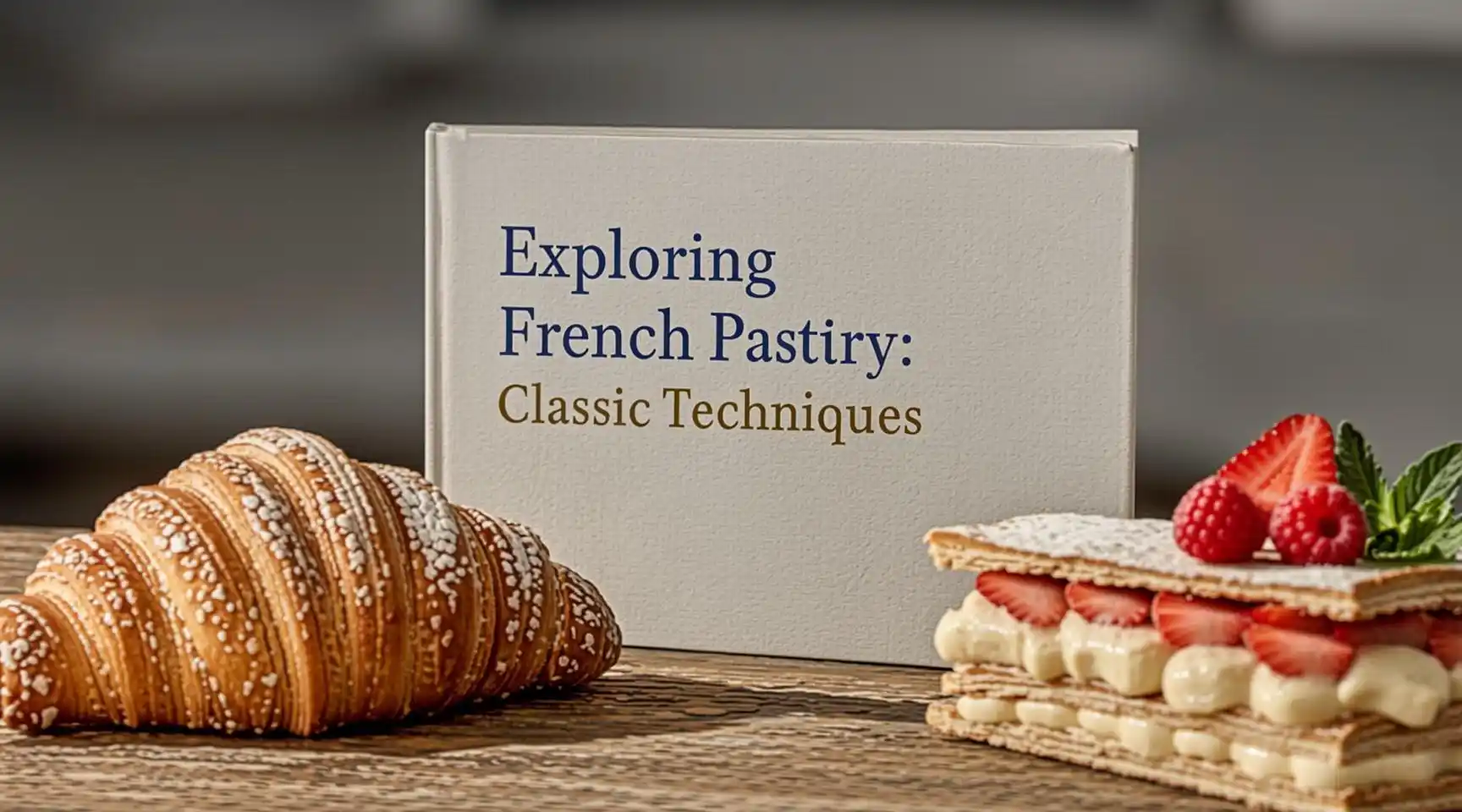
Exploring French Pastry: Classic Techniques
Your ultimate guide to mastering the timeless methods that make French pâtisserie the gold standard of dessert craftsmanship.
Disclaimer: The recipes, techniques, and tips shared in this article are for informational and educational purposes only. Always follow proper food‑safety guidelines, and remember that results can vary based on individual skill, equipment, and ingredient quality. The author is not liable for any mishaps, injuries, or culinary disasters that may occur while attempting these methods.
Table of Contents
- Why French Pastry Still Reigns Supreme
- Essential Tools & Pantry Staples
- Foundational Doughs & Batters
- 3.1 Pâte Feuilletée (Butter‑Laminated Pastry)
- 3.2 Pâte à Choux (Choux Pastry)
- 3.3 Pâte Sucrée & Pâte Sablée (Sweet Tart Crusts)
- [Classic Techniques Explained] (#classic-techniques-explained)
- 4.1 Lamination & the Art of the Flake
- 4.2 The Perfect Macaron Meringue
- 4.3 Tempered Chocolate & Glaze Mastery
- 4.4 Caramelization & Sugar Work
- 4.5 Pastry Cream & Crème Diplomatique
- 4.6 Precision Piping & Shaping
- Step‑by‑Step Mini‑Projects to Practice Each Technique
- Common Mistakes & Pro‑Level Fixes
- Bringing It All Together: A Showcase French Pastry Plate
- Final Thoughts & Next Steps
Why French Pastry Still Reigns Supreme
French pastry isn’t just a style of sweet‑making; it’s a culinary philosophy that blends precision, patience, and an almost scientific respect for ingredients. From the delicate macaron to the buttery layers of a croissant, every classic pastry follows a set of time‑tested methods that ensure consistent texture, flavor, and visual appeal.
- Historical gravitas: Since the 17th‑century Pâtissier guilds, French bakers have codified techniques that are now taught in culinary schools worldwide.
- Technical rigor: French recipes often demand exact temperature control, precise measurements, and meticulous timing—traits that elevate any baker from hobbyist to artisan.
- Global influence: Today, bakeries across continents replicate French classics because the techniques guarantee a reliably spectacular result.
If you master the core methods, you’ll unlock a toolbox that lets you create everything from a kouign‑amann to a modern, deconstructed tarte tatin.
Essential Tools & Pantry Staples
Before you dive into doughs and laminations, assemble a well‑equipped workstation. Quality tools don’t replace skill, but they make the learning curve smoother and the outcomes more consistent.
| Category | Must‑Have Items | Why It Matters |
| Measuring | Digital kitchen scale, set of metric/US measuring cups, fine‑grid measuring spoons | French pastry tolerates ±1 g variance in key ingredients (e.g., butter for lamination). |
| Mixing | Stand mixer with whisk & paddle attachments, large stainless‑steel bowls | Uniform mixing prevents over‑ or under‑developing gluten. |
| Temperatures | Instant‑read thermometer, candy thermometer, digital oven probe | Critical for pâte à choux, chocolate tempering, and caramel. |
| Rolling & Shaping | Heavy rolling pin (marble or wood), bench scraper, silicone pastry mat | Smooth, even layers are the foundation of lamination. |
| Cutting & Molding | French‑style pastry cutters, pipe tip set (including 1‑mm round tip), silicone molds | Consistent size and shape affect baking uniformity. |
| Baking | Heavy‑bottomed sheet pans, insulated baking trays, silicone baking mats, convection oven (or a regular oven with a steam tray) | Even heat distribution avoids “spongy” layers. |
| Finishing | Offset spatula, pastry brush, kitchen torch, whisk, fine sieve | Enables glossy glazes, precise dusting, and caramel finishes. |
Pantry Staples (keep fresh, high‑quality):
- Unsalted European butter (82 % butterfat)
- All‑purpose flour + cake flour (for tender crumb)
- Granulated & caster sugar
- Cornstarch (or fine cornflour)
- Almond flour (for macarons)
- High‑quality dark chocolate (70 % cocoa)
- Heavy cream (35 % fat)
- Fresh eggs (room temperature)
Foundational Doughs & Batters
The six classic French pastries that most bakers start with are built on just a handful of foundational doughs. Master each, and you’ll have the scaffolding for countless variations.
3.1 Pâte Feuilletée – The Butter‑Laminated Pastry
Think croissants, mille‑feuilles, and vol-au-vent.
Key Concept: Layers of beurrage (cold butter slab) folded into a relatively low‑hydration dough create steam pockets that puff the pastry into airy, flaky sheets.
Core Ingredients (for 1 kg dough):
| Ingredient | Weight | Purpose |
| Flour (all‑purpose) | 500 g | Gluten network |
| Unsalted butter (cold) | 250 g | Lamination “fat” |
| Water (cold) | 250 g | Hydration |
| Salt | 10 g | Flavor + gluten tightening |
| Sugar (optional) | 30 g | Slight sweetness, color |
Technique Snapshot (8‑fold turn):
- Mix flour, salt, sugar; add water; combine into a shaggy dough.
- Rest 30 min (cold).
- Roll into a rectangle; place butter slab (2 × 2 × 0.5 cm) in the center, fold dough over (“enveloping”).
- Turn 1: Roll to 1 cm thickness; fold thirds (letter fold).
- Turn 2‑4: Repeat roll‑fold cycles, chilling 15 min between each to maintain butter integrity.
- Final Rest: 1 hour before shaping.
3.2 Pâte à Choux – The Light, Hollow Canvas
Eclairs, profiteroles, gougères.
Fundamental Formula (Classic Ratio):
| Ingredient | Weight | Role |
| Water | 250 g | Steam generation |
| Butter | 100 g | Flavor, richness |
| Salt | 5 g | Seasoning |
| Flour | 150 g | Structure |
| Eggs | 4 large (≈200 g) | Leavening, elasticity |
Technique Overview:
- Boil water, butter, salt.
- Add flour all at once, stir vigorously until the mixture pulls away from the pan (forming a “ball”).
- Cool 5 min, then incorporate eggs one at a time, beating until smooth and glossy.
- Pipe onto parchment; bake 100 °C for 20 min (dry‑out stage), then increase to 200 °C for final puff.
3.3 Pâte Sucrée & Pâte Sablée – Sweet Tart Crusts
Madeleines, tarte aux citrons, fruit tarts.
- Pâte Sucrée (firm, shortbread‑like): 1 part butter, 2 parts flour, 1 part sugar, 1 egg.
- Pâte Sablée (crumbly, “sandy” texture): Higher butter proportion, often chilled before adding egg to limit gluten development.
Both start with creaming butter and sugar until pale, then incorporate flour and egg. Chill 30 min before rolling.
Classic Techniques Explained
Below you’ll find the six signature techniques that elevate a simple dough into a French pastry masterpiece. Each section includes a concise definition, the science behind it, and pro tips for flawless execution.
4.1 Lamination & the Art of the Flake
What it is: A process of repeatedly folding butter into dough to create dozens of ultra‑thin layers.
Science: Butter melts during baking, releasing steam. The dough’s gluten network traps that steam, producing the characteristic “flake.”
Pro Tips:
- Butter temperature must be 10–12 °C (50–54 °F). Too soft → butter leaks; too cold → cracking.
- Dough hydration should stay around 55 % to keep butter from absorbing moisture.
- Resting after each turn prevents butter from melting into the dough (maintains separation).
4.2 The Perfect Macaron Meringue
What it is: An Italian‑style meringue (egg whites + sugar syrup) folded into almond‑flour mixture to create delicate, shiny shells.
Science: The hot syrup (~115 °C) partially cooks the egg whites, producing a stable, glassy meringue that can hold crisp edges yet remain chewy inside.
Critical Steps:
| Step | Temperature | Timing |
| Sugar syrup | 115 °C | 30 s boil |
| Whisk egg whites | Ambient | 3 min soft peaks |
| Add syrup & whisk | 115 °C syrup | 2 min medium peaks |
| Fold almond‑flour mix | “Macaronnage” | Until batter flows like lava (smooth ribbon) |
Key Indicator: When the batter falls back on the whisk, the ribbon should slowly melt without breaking—this is the “macaronnage” window.
4.3 Tempered Chocolate & Glaze Mastery
What it is: Controlled heating & cooling of chocolate to stabilize cocoa butter crystals, yielding a glossy, snap‑ready coating.
Temper Curve (Dark 70 %):
- Melt to 45–48 °C (109–118 °F).
- Cool to 27–28 °C (80–82 °F).
- Re‑heat to 31–32 °C (88–90 °F) for working.
Glazing Tip: Use a silicone brush and a thin layer (≈2 mm). Thin coats dry faster, preventing bloom.
4.4 Caramelization & Sugar Work
What it is: Heating sugar until it reaches deep amber (170–180 °C) for sauces, glazes, or cracking shards.
Safety Note: Sugar temperatures above 150 °C can cause severe burns. Use a candy thermometer and keep a spray bottle of water nearby (never add water to hot sugar).
Pro Tip: Add a pinch of cream of tartar or lemon juice early to minimize crystal formation, ensuring a smooth caramel.
4.5 Pastry Cream & Crème Diplomatique
What it is: A thickened custard base (pastry cream) that can be lightened with whipped cream (crème diplomatique) for fillings.
Process Highlights:
- Scald milk with vanilla before tempering eggs.
- Temper egg‑yolk mixture by whisking in warm milk slowly.
- Cook over medium heat, stirring constantly, until the mixture coats the back of a spoon (≈85 °C).
- Ice‑bath to stop cooking and prevent a skin from forming.
Stabilizer: Add 2 g gelatin (pre‑bloomed) for a firmer set, especially for warm climates.
4.6 Precision Piping & Shaping
What it is: Using pastry bags and various tips to control size, shape, and airflow for items such as éclairs, profiteroles, and ornamental choux.
Key Factors:
- Tip size should match the diameter of the final product (e.g., 1 mm tip for macarons, 12 mm plain tip for éclairs).
- Consistency of dough/batter determines how evenly it will pipe; a too‑thin mixture leads to spreading; too‑thick results in bulging.
Tip: Tap the bag gently on the counter to release trapped air before piping onto parchment.
Step‑by‑Step Mini‑Projects to Practice Each Technique
Goal: Acquire muscle memory for each classic technique by completing a small, focused project.
| Technique | Mini‑Project | Approx. Time | Expected Outcome |
| Lamination | Mini Croissant (4‑inch) | 3 h (incl. rests) | 8–10 flaky layers, buttery aroma |
| Macaron Meringue | Single‑Flavor Macaron (raspberry) | 2 h + overnight set | Smooth, glossy shells; tender interior |
| Chocolate Tempering | Glazed Dark Chocolate Bark with sea‑salt | 45 min | Snap‑crisp break, mirror‑shine |
| Caramelization | Salted Caramel Sauce (for drizzling) | 30 min | Silky, deep amber sauce |
| Pastry Cream | Vanilla Crème Pâtissière for fruit tarts | 1 h | Rich, velvety filling that holds shape |
| Piping | Eclair Batter (12‑inch) + Chocolate Icing | 2 h | Classic éclair shape, glossy top |
How to Use This Table: Choose one mini‑project each week. Record your observations (e.g., dough temperature, baking time) in a pastry journal. Over time, patterns will emerge, and you’ll gain the intuition that French pastry demands.
Common Mistakes & Pro‑Level Fixes
| Mistake | Symptom | Fix |
| Butter leaks during lamination | Pâte looks greasy, layers stick together | Keep butter at 10 °C; chill dough thoroughly (15 min) between turns. |
| Macarons develop hollow shells | “Feet” are absent; shells look flat | Ensure proper macaronnage; bring batter to the right consistency; bake at a steady 150 °C (302 °F). |
| Chocolate blooms (white specks) | Dull, cloudy glaze | Re‑temper chocolate correctly; store finished pieces in a cool, dry place. |
| Caramel hardens too quickly | Cracks when serving | Finish caramel with a splash of cream while still hot; keep warm until use. |
| Pastry cream curdles | Grainy texture, lumps | Keep heat below 85 °C; whisk constantly; strain through fine mesh before chilling. |
| Eclairs spread too much | Flat, wide pastries | Pipe onto parchment in a single line, not side‑by‑side; bake first at lower temperature for structure, then finish hot for rise. |
Showcase French Pastry Plate
Putting all your newly‑honed techniques together creates an impressive tasting board that tells a story of French craftsmanship. Here’s a suggested layout:
- Mini Croissant – served warm with a dab of almond butter.
- Raspberry Macarons – sandwiched with light citrus crème diplomatique.
- Chocolate‑Glazed Praline – thin bark broken into shards.
- Salted Caramel Drizzle – artfully poured over a mini tarte aux pommes (apple tart).
- Eclair – filled with vanilla pastry cream, topped with chocolate icing.
- Petits Fours – bite‑size madeleines dusted with powdered sugar.
Plating Tips:
- Use a white marble slab for contrast.
- Add edible flowers (e.g., violets) and a few fresh berries for color.
- Provide a small palate cleanser (e.g., a shot of chilled espresso) between items.
Final Thoughts & Next Steps
French pastry is a continuous learning journey. The classic techniques outlined here are like the five pillars of a grand cathedral—each one supports and elevates the others. By mastering lamination, meringue, tempering, caramel, custard, and piping, you’ll possess the confidence to experiment:
- Fusion creations: Swap traditional fillings for exotic fruits (mangosteen, yuzu) while keeping classic structures.
- Seasonal menus: Adapt desserts for holidays—think a cinnamon‑spiced croissant for Christmas or a lavender‑infused macaron for spring.
- Teaching & sharing: Host a small workshop; teaching reinforces your own mastery.
Remember, the key to French pastry is precision, patience, and passion. Keep a meticulous notebook, respect the science, and don’t be afraid to taste—because in the end, the true measure of a pastry is how it makes you feel.
Bonne pâtisserie!
SEO Keywords (highlighted for reference)
- French pastry
- pâte à choux
- lamination
- macaron technique
- pastry cream
- tempered chocolate
Suggested Hashtags
#FrenchPastry #BakingTips #PastryTechniques #Macaron #Patisserie #Foodie
Ready to roll, pipe, and bake your way into the world of French pâtisserie? Grab your whisk, preheat that oven, and let the classic techniques guide you to perfection.
Have any thoughts?
Share your reaction or leave a quick response — we’d love to hear what you think!
-
 0
-
 0
-
 0
-
 0
-
 0
-
 0
