
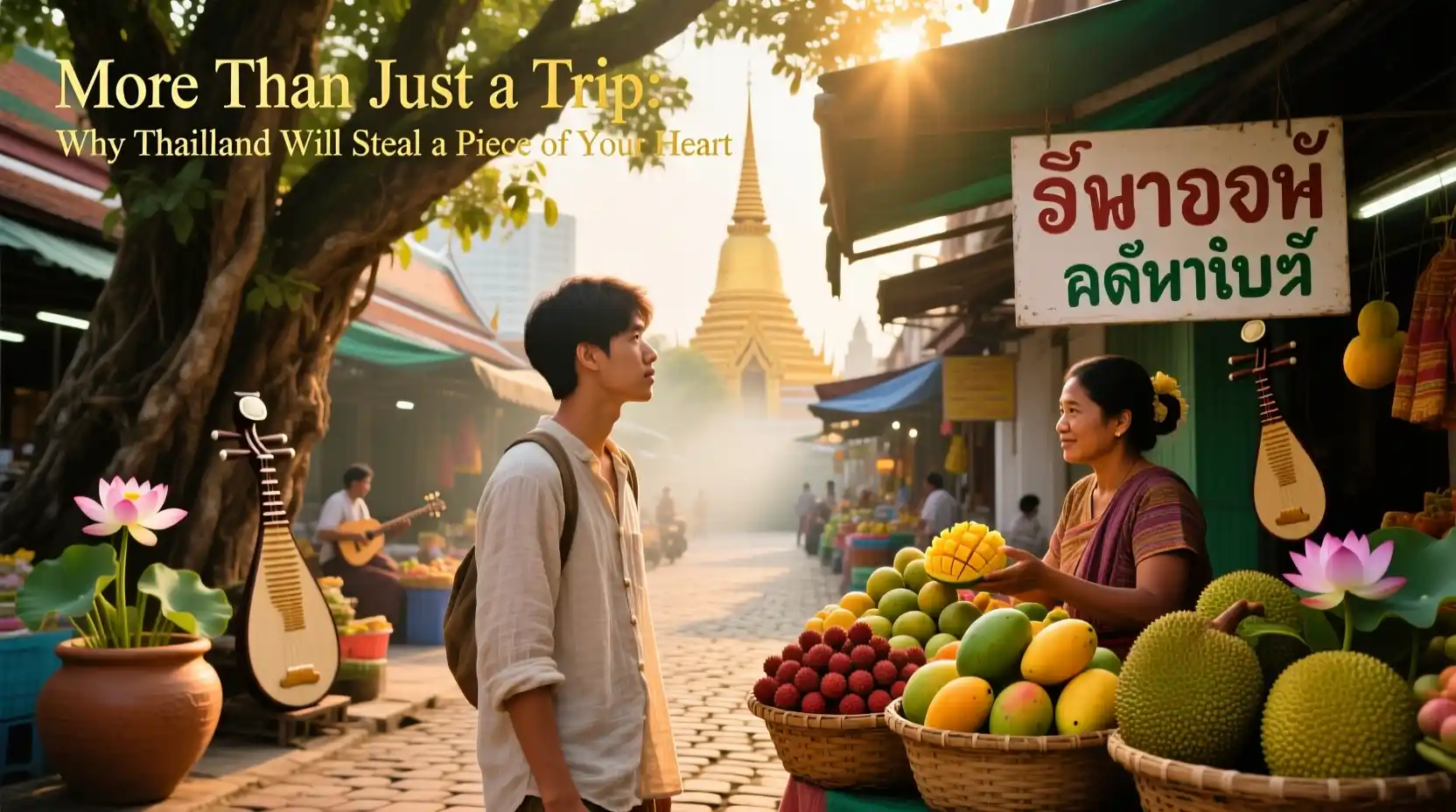
More Than Just a Trip Why Thailand Will Steal a Piece of Your Heart
More Than Just a Trip: Why Thailand Will Steal a Piece of Your Heart
There are places you visit, and then there are places that visit you. Long after you’ve returned home, unpacked your bags, and settled back into the rhythm of daily life, they remain. They echo in your memory, a phantom scent of lemongrass on the air, the distant sound of a temple bell, the vibrant splash of a sunset over the Andaman Sea. Thailand is one of those places.
It’s a country that has been written about, filmed, and Instagrammed a million times over. We all have a preconceived notion: tropical beaches, ornate temples, bustling markets, and maybe a Full Moon Party or two. But to reduce Thailand to a checklist of attractions is to miss the point entirely. It’s like judging a book by its cover, or a symphony by its first three notes.
Thailand doesn’t just offer a vacation; it offers a transformation. It’s a visceral, full-body experience that seeps into your pores and rewires your perspective. It’s the chaos of Bangkok’s traffic that gives way to the profound serenity of a monk’s chant. It’s the fiery explosion of a street-side som tam that teaches you about balance and complexity. It’s the genuine, disarming warmth of a stranger’s smile that reminds you of our shared humanity.
This isn’t just another travel guide telling you where to go. This is an exploration of why Thailand will capture a piece of your heart and refuse to let it go. It’s about the soul of the nation, the symphony for the senses, and the deep, personal journey you’ll embark on, whether you realize it or not. So, let’s peel back the layers of the postcards and the travel brochures. Let’s journey into the heart of the Land of Smiles and discover why, for so many, it becomes a second home.
Part 1: The Soul of a Nation – Understanding the Thai Ethos
Before we dive into where to go and what to do, we must first understand the why. The magic of Thailand isn’t just in its stunning geography; it’s in the invisible cultural fabric that weaves everything together. It’s a set of unwritten rules, a national philosophy that governs daily life and creates an atmosphere of unique grace and resilience.
The Trinity of Thai Happiness: Sanuk, Sabai Sabai, and Mai Pen Rai
You will hear these three phrases repeatedly during your travels. They are more than just words; they are the pillars of the Thai attitude towards life, and understanding them is your key to unlocking the local heart.
- Sanuk (สนุก): This is often translated as “fun,” but its meaning is far deeper. Sanuk is about finding joy and pleasure in whatever you do. It’s the laughter that erupts among street food vendors as they work through the sweltering heat. It’s the playful banter between a tuk-tuk driver and a potential fare. It’s the idea that work, even hard work, should have an element of enjoyment. To live with sanuk is to inject a sense of playfulness into the mundane. As a traveler, embracing sanuk means not just seeking out fun activities, but finding the joy in the process—the journey, the mishaps, the unexpected detours.
- Sabai Sabai (สบาย ๆ): Literally “comfortable comfortable,” this phrase encapsulates the Thai concept of taking it easy, going with the flow, and not getting worked up. It’s the antithesis of the Western-driven, Type-A personality. When your bus is late, when the rain starts pouring just as you head to the beach, when a plan falls through—the response is a gentle shrug and a “sabai sabai.” It’s an acceptance of life’s impermanence and a conscious decision to remain relaxed and unruffled. For a traveler accustomed to strict itineraries, this can be a lesson in letting go and finding peace in the present moment, whatever it may hold.
- Mai Pen Rai (ไม่เป็นไร): This is perhaps the most famous and profound of the three. It translates to “it’s okay,” “no problem,” or “don’t worry about it.” But it’s not just a casual brush-off. It’s a philosophy of forgiveness, non-attachment, and moving forward from conflict or inconvenience. Spill a drink? “Mai pen rai.” Bump into someone on a crowded street? “Mai pen rai.” Make a mistake in ordering food? “Mai pen rai.” It’s a social lubricant that diffuses tension and promotes harmony. To witness mai pen rai in action is to see a culture that prioritizes peace and connection over being right. It’s a powerful reminder that most of our daily anxieties are, in the grand scheme of things, not a big deal.
The Duality: A Land of Beautiful Contrasts
Thailand is a country of beautiful, often jarring, contradictions. This duality is part of its charm and its depth.
- Chaos and Serenity: Nowhere is this more apparent than in Bangkok. One moment you’re navigating a symphony of honking horns, sputtering motorcycles, and shouting vendors on a Soi (alleyway). Turn a corner, and you step into the hushed, incense-filled courtyard of a 200-year-old temple, where the only sound is the gentle chime of a bell. This constant push and pull teaches you to find your own center of calm amidst the storm of life.
- Ancient and Hyper-Modern: You can spend your morning exploring the ruins of an ancient capital like Ayutthaya or Sukhothai, feeling the weight of centuries of history. By afternoon, you can be in a state-of-the-art mall in Bangkok, ordering a latte from a robot barista and shopping for the latest designer fashion. Thailand doesn’t discard its past; it builds upon it, creating a fascinating palimpsest of old and new.
- Reverence and Revelry: The Thai people hold a deep, profound reverence for their monarchy, their religion (Buddhism), and their elders. This respect is visible in the wai (a prayer-like greeting), the quiet contemplation in temples, and the solemnity of national holidays. Yet, this is the same culture that throws the world’s biggest water fight for Songkran (the New Year) and knows how to party with infectious energy. They understand that life requires both solemn reflection and joyous celebration.
The “Land of Smiles”: Deconstructing the Myth
You’ve heard the nickname: “The Land of Smiles.” It’s true, you will see smiles everywhere. But to mistake these for simple, generic happiness is to miss their nuance. The Thai smile is a complex form of communication, a social tool with many different meanings. There’s the smile of genuine welcome, the smile of apology, the smile of embarrassment, the smile that diffuses a tense situation, and the smile that says “I don’t understand, but I’m trying to be polite.”
Learning to read these smiles is like learning a new language. It’s a window into a culture that prioritizes harmony and “saving face” above all else. A smile isn’t just an expression of emotion; it’s a gesture of grace, a way to navigate social interactions with kindness and ease. It’s this constant, gentle undercurrent of goodwill that makes you feel so welcome and, ultimately, why it’s so hard to leave.
Part 2: A Symphony for the Senses – Experiencing Thailand
To truly understand Thailand, you must experience it with your entire body. It is a country that doesn’t just observe you; it engages you on every sensory level. It’s a symphony, and you are the audience, the conductor, and a musician all at once.
Taste: A Culinary Pilgrimage That Will Change Your Palate Forever
Let’s be honest: for many of us, the journey to Thailand begins in our stomachs. Thai food is a global phenomenon, but tasting it abroad is like listening to a recording of a symphony; eating it in Thailand is like sitting in the front row of the concert hall.
Thai cuisine is a masterclass in balance. The four core pillars—sweet, sour, salty, and spicy—don’t just coexist; they dance together in a delicate, harmonious choreography. Add to this the fifth flavor, bitter (found in herbs like bitter melon), and the aromatic depth of lemongrass, galangal, kaffir lime leaves, and turmeric, and you have a culinary landscape of infinite complexity.
The Street Food Revolution: The True Heart of Thai Cooking
Forget fine dining for a moment (though Thailand has that in spades). The soul of Thai food is on the street. A humble cart with a single burner and a few well-worn woks can produce a meal that will bring you to your knees.
- The Symphony of the Soi: Walk down any food-focused soi in the evening. The air is a thick, intoxicating cloud of smells: the smoky char of gai yang (grilled chicken), the pungent funk of nam pla (fish sauce) caramelizing in a wok, the nutty aroma of roasted peanuts being crushed for som tam, the sweet perfume of mango sticky rice. The sounds are just as evocative: the rhythmic clatter of the wok spatula, the sizzle of hot oil, the whir of a blender making a smoothie.
- Must-Try Street Food Experiences:
- Pad Thai (ผัดไทย): The undisputed king. A good pad thai is a thing of beauty—sweet, tangy, nutty, with a hint of chili, studded with firm tofu, plump shrimp, and crushed peanuts, all bound together with a luscious tamarind sauce.
- Som Tam (ส้มตำ): A green papaya salad that is a punch in the best way possible. It’s a riot of flavors: sour from lime, salty from fish sauce, sweet from palm sugar, and fiery from chilies, all pounded together with crunchy green beans, tomatoes, and peanuts. It’s addictive.
- Tom Yum Goong (ต้มยำกุ้ง): The iconic soup. A fragrant, boiling cauldron of spicy and sour broth, infused with lemongrass, galangal, kaffir lime leaves, and chilies, filled with plump shrimp and mushrooms. It will clear your sinuses and awaken your soul.
- Moo Ping / Gai Yang (หมูปิ้ง / ไก่ย่าง): Skewers of marinated pork or grilled chicken, cooked slowly over charcoal. Served with a sticky sweet and savory dipping sauce, they are the perfect on-the-go snack.
- Mango Sticky Rice (ข้าวเหนียวมะม่วง): The dessert of dreams. Sweet, glutinous rice soaked in coconut milk, served with slices of ripe, sweet mango and an extra drizzle of salty-sweet coconut cream. It’s pure, simple perfection.
Beyond the Cart: Regional Specialities and Cooking Classes
To go deeper, venture beyond the tourist trail and explore regional cuisines. Take a cooking class. It’s one of the best investments you can make. You’ll not only learn to recreate the flavors at home, but you’ll also gain a profound appreciation for the ingredients and the philosophy behind the food. You’ll visit a local market with your instructor, learning to differentiate between types of eggplants and basil, and understanding the role of each component. It’s a cultural immersion that happens to be delicious.
Sight: A Visual Tapestry from Golden Spires to Azure Waters
Thailand is a photographer’s paradise, but more importantly, it’s a feast for the naked eye. The sheer diversity of its landscapes is breathtaking.
- The Spiritual Grandeur: The visual language of Thailand is dominated by its temples, or wats. They are not just buildings; they are spiritual centers, works of art, and repositories of history. The glittering, gold-leafed spires (chedis) piercing the sky, the intricate, multi-colored mosaics of mirror glass on the walls, the serene, smiling faces of giant Buddha statues, and the graceful sweep of a multi-tiered roof—all create an atmosphere of awe and reverence. Wat Pho in Bangkok, with its colossal reclining Buddha, and the mountain temples of Chiang Mai, like Wat Phra That Doi Suthep, are unforgettable.
- The Natural Masterpiece: And then there is the nature. The limestone karsts of Krabi and Railay, rising vertically from turquoise waters like ancient giants. The impossibly white, powder-soft sand of the beaches on Koh Lanta or Koh Kood. The lush, emerald-green tapestry of the rice paddies in the north, dotted with the conical hats of farmers. The dense, steamy jungle of Khao Sok National Park, home to hidden lakes and diverse wildlife. The cascading waterfalls of Erawan National Park. Every turn reveals a new, postcard-perfect vista.
- The Human Canvas: Don’t forget the human element. The sight of a monk in his saffron robe walking silently through the dawn mist. The vibrant chaos of a floating market, with long-tail boats laden with colorful fruits and vegetables. The intricate patterns of a traditional Thai silk weaving. The focused face of an artist creating a fruit carving. These are the living, breathing images that will stay with you.
Sound: The Acoustic Landscape of a Nation
Close your eyes in Thailand and just listen. The soundscape is as rich and varied as the visual one.
- The Urban Rhythm: In Bangkok, it’s the constant, low hum of traffic, the high-pitched whine of a motorcycle, the insistent “tuk-tuk?” from a driver, the call of a street vendor, and the distant thump of a nightclub bassline. It’s the sound of a city that is alive, 24/7.
- The Sacred Silence and Chant: Inside a temple courtyard, the city noise fades away. The dominant sounds become the gentle clinking of wind chimes, the soft rustle of a monk’s robes, and, if you’re lucky, the low, melodic chanting of monks during their evening prayers. It’s a sound that vibrates through your chest and instills a deep sense of peace.
- The Symphony of Nature: On the islands or in the mountains, the sounds change. It’s the gentle lapping of waves against the shore, the rhythmic chirping of geckos, the cacophony of cicadas in the jungle at dusk, the call of a distant hornbill, and the rumble of a long-tail boat engine cutting across a quiet bay. These are the sounds of nature, untamed and beautiful.
Smell and Touch: The Intoxicating Aroma and The Feeling of Thailand
Finally, the senses that are perhaps the most primal.
- The Aroma: Thailand has a distinct smell. It’s a complex cocktail of frangipani and jasmine blossoms, the savory scent of garlic and chilies frying in a wok, the sweet perfume of ripe tropical fruit, the earthy smell of incense sticks curling in a temple, and the clean, petrichor scent of rain on hot asphalt. It’s a smell that, years later, can instantly transport you back.
- The Feeling: It’s the feeling of the hot, humid air on your skin the moment you step off the plane. It’s the fine, soft sand squishing between your toes. It’s the cool, smooth stone of a Buddha statue under your palm. It’s the satisfying burn of a good Thai massage as a therapist works out knots you didn’t know you had. It’s the sticky sweetness of mango rice on your fingers. It’s the refreshing coolness of a coconut water, straight from the shell. Thailand is a place to be touched, and to touch, in every sense of the word.
Part 3: Beyond the Brochure – Immersing in Thai Culture
To let Thailand truly steal your heart, you must move from being an observer to a participant. This requires a willingness to engage with the culture on a deeper level—to understand its history, respect its traditions, and connect with its people.
The Gentle Grace of Theravada Buddhism
Buddhism isn’t just a religion in Thailand; it’s the foundation of the entire culture. Over 90% of Thais are Theravada Buddhists, and its principles influence everything from social hierarchy to daily etiquette.
- The Concept of Karma and Merit-Making: The idea of karma—that good actions lead to good results and bad actions to bad results—is central. This leads to the practice of “making merit” (tham bun). You’ll see this everywhere: people giving food to monks in the morning, releasing birds or fish from cages, or donating to the building of a new temple hall. It’s a tangible way of accumulating good fortune for this life and the next.
- Monks and Daily Life: The sight of orange-robed monks is ubiquitous. They are highly revered figures. Men often spend a period of their lives as a monk, even if only for a few months, as it is seen as a great blessing for a family. As a visitor, it’s crucial to show respect. Always give them the right of way, and if you are a woman, never touch a monk or hand anything directly to them; place the item down for them to pick up.
- Spirit Houses (San Phra Phum): Outside almost every building, from a grand shopping mall to a humble shophouse, you’ll find a small, ornate spirit house. These are homes for the protective spirits of the land. You’ll see people leaving offerings of food, drink (often red Fanta), and incense to keep the spirits happy. It’s a beautiful example of the animist beliefs that are woven into Thai Buddhism.
A Glimpse into History: From Kingdoms to a Modern Nation
Thailand, or Siam as it was formerly known, boasts a rich history as the only country in Southeast Asia never to have been colonized by a European power. This has fostered a deep sense of national pride and independence.
- Sukhothai: The Dawn of Happiness: Visit the ruins of Sukhothai, the first capital of Thailand (13th-14th centuries). Here, amidst the crumbling chedis and serene Buddha images, you can feel the birth of a nation. It’s a peaceful, park-like UNESCO World Heritage site that offers a tangible connection to the past.
- Ayutthaya: The Glorious Empire: Next came Ayutthaya (14th-18th centuries), a magnificent and cosmopolitan capital that was one of the largest cities in the world. It was famously sacked by the Burmese in 1767. Today, the ruins are a haunting and powerful sight. The iconic image of a Buddha head entwined in the roots of a banyan tree at Wat Mahathat is a symbol of nature’s reclamation and the enduring spirit of the faith.
- The Chakri Dynasty and Modern Thailand: The current Chakri Dynasty, founded in 1782, has guided Thailand into the modern era. King Bhumibol Adulyadej (Rama IX), who reigned for 70 years, was deeply loved and is seen as the father of the modern nation. Understanding the deep respect for the monarchy is essential for any visitor. Lèse-majesté laws are extremely strict, so any public criticism or disrespect is a serious offense.
The Rhythm of the Year: Festivals that Bind a Nation
If you can time your visit to coincide with a festival, do it. It’s the best way to see the culture come alive in a joyous, communal explosion.
- Songkran (April 13-15): The Thai New Year. This is not just a festival; it’s a national water fight. For three days, the streets erupt in a friendly, joyful battle as people douse each other with water using buckets, hoses, and super soakers. The water symbolizes washing away the misfortunes of the previous year to start anew. It’s chaotic, soaking wet, and an absolute blast.
- Loy Krathong (November): The “Festival of Lights.” On the evening of the full moon, Thais gather at rivers, lakes, and canals to float a krathong—a small, beautifully decorated basket made of banana leaves, flowers, and a candle. It’s a gesture of apology to the water goddess and a way to let go of grudges. In the north, particularly in Chiang Mai, it’s celebrated alongside Yi Peng, where thousands of glowing lanterns are released into the night sky, creating a breathtaking, magical spectacle.
- Phi Ta Khon (June/July): Held in the Loei province, this is one of Thailand’s most unique and animist festivals. Locals wear elaborate masks made of carved coconut-tree rice baskets, topped with wicker sticky-rice steamers, to parade through the streets. It’s a vibrant, ghostly, and wonderfully strange celebration with deep roots in Buddhist folklore.
Respect and Etiquette: How to Be a Welcome Guest
Being a mindful traveler is the best way to show respect and ensure a positive interaction. Here are a few key points:
- The Wai: The traditional Thai greeting involves pressing your palms together in a prayer-like gesture. The higher your hands, the more respect you’re showing. As a foreigner, you’re not expected to initiate it, but returning a wai with a smile and a nod is always appreciated.
- The Head and Feet: In Thai culture, the head is the most sacred part of the body, and the feet are the lowest and dirtiest. Never touch a person’s head or hair, not even a child’s. Never point your feet at someone, at a Buddha image, or at a royal portrait. When sitting on the floor, try to tuck your feet underneath you or to the side.
- Temple Dress Code: When visiting temples, dress respectfully. This means covering your shoulders and knees (for all genders). You’ll often be offered a sarong or robe to borrow at the entrance if you’re not appropriately dressed, but it’s best to be prepared.
- The Royal Family: As mentioned, reverence for the monarchy is paramount. Stand in respect when the royal anthem is played in cinemas (before the movie). Never deface or step on currency, as it bears the image of the King.
Part 4: Charting Your Course – A Journey Through Thailand’s Regions
Now that we’ve explored the soul and the senses, let’s talk about the geography. Thailand is a diverse country, and each region offers a completely different experience. Here’s how to let each one steal a little piece of your heart.
Bangkok: The Electric Heart of the Nation
For most, the journey begins and ends in Bangkok. It can be overwhelming, but if you lean into the chaos, you’ll discover a city of incredible depth, energy, and charm.
- The Grandeur: Start with the heavy hitters. The Grand Palace and Wat Phra Kaew (Temple of the Emerald Buddha) are the spiritual and historical epicenters of the country. Go early to beat the crowds and the heat. The scale and detail are staggering. Right next door is Wat Pho, home to the giant, golden reclining Buddha and the birthplace of traditional Thai massage. A massage here is a must-do. Across the river, Wat Arun (Temple of Dawn) offers stunning views, especially at sunset when its porcelain-encrusted spiers glow.
- The Markets: Bangkok is a city of markets. Chatuchak Weekend Market is a legendary labyrinth of over 15,000 stalls selling everything from live puppies to vintage clothing to homewares. It’s an assault on the senses in the best way possible. For a more traditional experience, visit a floating market like Damnoen Saduak (touristy but iconic) or a more authentic one like Amphawa (better in the afternoon/evening).
- The Food Scene: Beyond street food, Bangkok is a culinary powerhouse. Explore the food courts of modern malls like Siam Paragon, or dive into the neon-lit streets of Yaowarat (Chinatown) at night for some of the best seafood and noodles of your life.
- The Modern Vibe: See the city from above at one of the many rooftop sky bars, like the Vertigo and Moon Bar at the Banyan Tree or the more accessible Octave at the Marriott. Explore the trendy neighborhoods of Thonglor and Ekkamai for chic cafes and boutiques. For a dose of local art and cool bars, check out the Talad Noi and Bang Rak areas.
Chiang Mai & The North: The Cultural Soul
If Bangkok is the energetic heart, Chiang Mai is the serene, cultured soul. The pace of life slows down, the air cools, and the mountains rise up around you.
- The City of Temples: Within the walls of the old city, you’ll find over 30 temples. Wat Chedi Luang is a ruined, atmospheric 15th-century chedi that once housed the Emerald Buddha. Wat Phra Singh is home to a highly revered Buddha image and is a beautiful example of Lanna architecture. Rent a bicycle or a scooter and spend a day temple-hopping.
- Doi Suthep: The mountain that overlooks the city is crowned with Wat Phra That Doi Suthep, one of northern Thailand’s most sacred temples. The climb up the 306-step Naga serpent staircase is part of the pilgrimage, and the panoramic view of the city from the top is breathtaking.
- Ethical Elephant Encounters: The north is the best place to have an ethical elephant experience. Avoid places that offer riding or shows. Instead, visit sanctuaries like Elephant Nature Park or Elephant Jungle Sanctuary, where you can feed, walk with, and bathe rescued elephants in a river, knowing you are supporting their well-being. It’s a profoundly moving experience.
- Trekking and Hill Tribes: The surrounding mountains are a paradise for trekkers. Multi-day hikes will take you through lush jungle, past cascading waterfalls, and into villages of various hill tribes like the Karen, Hmong, and Lisu. Choose a reputable, ethical tour operator that ensures the visits are respectful and beneficial to the local communities.
- The Night Bazaar and Food: Every night, the Chang Khlan Road transforms into the Night Bazaar, a sprawling market perfect for souvenir hunting. For food, don’t miss the myriad of street food stalls and the delicious, cheap eats at the Chiang Mai Gate and Chang Phueak Gate markets.
The Andaman Coast: The Tropical Dream (Phuket, Krabi, Koh Lanta)
This is the Thailand of your dreams. Towering limestone karsts, crystal-clear water, and world-class beaches. The Andaman Sea is on the west coast and is best visited during the dry season from November to April.
- Phuket: The Glamorous Hub: Phuket is the largest island and has a reputation for being overly commercialized, and in places like Patong, that’s true. But look beyond the nightlife, and you’ll find a beautiful island with stunning beaches like Bang Tao and Surin, charming Old Town with Sino-Portuguese architecture, and a fantastic food scene. It’s a great base for exploring the surrounding islands.
- Krabi & Railay: The Adventurer’s Playground: The town of Krabi on the mainland is the launchpad. From here, you can take a boat to Railay Beach, which is only accessible by sea. It’s a peninsula of jaw-dropping beauty, with sheer cliffs that attract rock climbers from all over the world. The atmosphere is laid-back and bohemian. Don’t miss a boat trip to the Phi Phi Islands (go early to avoid the crowds) and Hong Island, a lagoon of unparalleled beauty.
- Koh Lanta: The Relaxed Vibe: If you want the beautiful beaches of the Andaman coast without the intense party scene, Koh Lanta is your answer. It’s a larger island with a more spread-out, relaxed feel. The west coast has a string of beautiful beaches, each with a slightly different character. It’s popular with families and couples, and it still retains a lot of its local charm.
The Gulf Coast: The Island Paradise (Koh Samui, Koh Phangan, Koh Tao)
The Gulf Coast, on the east side, has a slightly different climate, with its dry season typically running from February to October. It’s home to another trio of famous islands.
- Koh Samui: The Polished Pearl: Samui is the most developed of the three, with an international airport, luxury resorts, spas, and fine dining. It has beautiful beaches like Chaweng (lively) and Lamai (a bit more relaxed), as well as a stunning interior with jungle and waterfalls. It’s a great all-rounder island.
- Koh Phangan: Beyond the Full Moon: Famous (or infamous) for its Full Moon Parties, Koh Phangan is so much more than that. If you venture away from Haad Rin, you’ll find a yogi’s paradise with world-class retreats, secluded beaches, a chilled-out vibe, and a burgeoning healthy food scene. The north and west coasts are particularly beautiful and tranquil.
- Koh Tao: The Diving Mecca: “Turtle Island” is one of the cheapest and best places in the world to get your PADI scuba diving certification. The island is small, hilly, and focused almost entirely on the ocean. By day, people dive; by night, they watch the sunset from beach bars. It’s a simple, wonderful, and incredibly friendly place.
Isaan & The Northeast: The Untamed, Authentic Spirit
For the truly adventurous, consider heading to Isaan, the vast northeastern plateau that makes up a third of the country. This is the real Thailand, largely untouched by mass tourism. The food is spicier, the customs are more traditional, and the landscape is a mix of rice fields, rugged national parks, and Khmer ruins. Visit places like Khon Kaen, Surin (famous for its elephant round-up), and the Phanom Rung Historical Park, a stunning Khmer temple complex on a volcanic mountain. Coming here is a rewarding challenge that will give you a much deeper understanding of the country.
Part 5: The Echo of the Journey – Bringing Thailand Home With You
The trip will end. You’ll board the plane, leaving the heat and the humidity behind. But a part of Thailand will come with you. And a part of you will forever remain there.
The Inevitable “Thailand Blues”
It’s a real phenomenon. In the days and weeks after you return, you might feel a sense of melancholy. The colors of your own life will seem a little duller. The food will seem a little bland. You’ll find yourself absent-mindedly saying “khob khun krap/ka” to the cashier. This is the “Thailand Blues.” It’s a form of grief for an experience that has ended. But it’s also a testament to how deeply the country affected you. Embrace it. It’s the mark of a journey well-traveled.
How the Trip Changes Your Perspective
Travel to Thailand has a way of recalibrating your internal compass.
- You’ll Appreciate Slowness: The sabai sabai philosophy will stick with you. You might find yourself less agitated by traffic jams or delays. You’ll learn to find the joy in the journey, not just the destination.
- You’ll Be More Mindful: Witnessing the deep-rooted faith and the practice of mindfulness in daily life might inspire you to be more present. You might find yourself taking a few deep breaths when you feel stressed, or just pausing to appreciate a small moment of beauty.
- You’ll Be More Grateful: Seeing the ingenuity and joy with which many people live, often with very little, can be a powerful lesson in gratitude. You’ll appreciate the simple things more: a good meal, a friendly conversation, a safe place to sleep.
Recreating the Magic at Home
You can’t replicate Thailand, but you can bring echoes of it into your life.
- In the Kitchen: This is the easiest. Buy a good cookbook, source some authentic ingredients (fish sauce, palm sugar, lemongrass), and try to cook your favorite dishes. The smell of a Thai curry simmering on your stove will instantly transport you back.
- In Your Mind: Incorporate a short meditation practice. Light some incense. Listen to a playlist of Thai music or the sounds of a jungle.
- In Your Connections: The warmth and friendliness (sanuk) you experienced is something you can practice in your own life. Make an effort to smile at strangers, to find joy in your work, and to connect with people on a genuine level.
The Promise of Return
The best part about Thailand stealing a piece of your heart is that it always leaves the door open. You will leave with a promise to yourself: “I’ll be back.” And you will. Because you’ve only scratched the surface. There are more islands to explore, more mountains to climb, more temples to see, and more food to eat. The first trip is just the beginning of a lifelong love affair.
Conclusion: An Open Invitation
Thailand is not a place you simply see. It’s a place you feel. It’s the heat on your skin, the taste of chili on your tongue, the sound of a monk’s chant in your ears, and the sight of a sunset that paints the sky in colors you didn’t know existed. It’s the feeling of connection—with the people, with the culture, with nature, and ultimately, with a deeper part of yourself.
It will challenge you, overwhelm you, and inspire you. It will teach you about balance, respect, and the profound beauty of a simple smile. It will show you a different way to move through the world.
So, go. Book the ticket. Pack your bags. But more importantly, pack an open heart and an open mind. Be prepared to let go of your plans, to embrace the chaos, and to say “mai pen rai” when things don’t go your way.
Because Thailand is waiting for you. And it has a piece of your heart, just waiting for you to come and claim it.
Disclaimer
Last Updated: [Date of Publication]
The information contained in this blog post, “More Than Just a Trip: Why Thailand Will Steal a Piece of Your Heart,” is for general informational and entertainment purposes only. While I have made every effort to ensure the accuracy and completeness of the information provided at the time of writing, travel details, prices, opening hours, cultural norms, and safety conditions are subject to change.
Affiliate Disclosure: This blog post may contain affiliate links. This means that if you click on a link to a product, service, or hotel and make a purchase, I may receive a small commission at no additional cost to you. This helps support the maintenance of this blog and allows me to continue to provide free content to you. I only recommend products or services that I genuinely believe in and have personally researched or experienced.
Travel Advisory: Travel inherently involves risks. It is your responsibility to conduct your own research and due diligence before traveling to any destination. This includes, but is not limited to:
- Checking current travel advisories from your home country’s government (e.g., the U.S. Department of State, UK Foreign Office).
- Consulting with a healthcare professional regarding necessary vaccinations, health precautions, and travel insurance.
- Verifying visa requirements, entry restrictions, and local laws and customs.
- Assessing your personal safety and taking appropriate precautions at all times. Be aware of your surroundings, especially in crowded areas, and safeguard your valuables.
Content Accuracy: The opinions expressed in this blog post are my own and are based on personal experiences and research. Descriptions of places, food, and experiences are subjective. What one person finds enchanting, another may not. Your personal experience may vary.
External Links: This blog post may contain links to external websites that are not provided or maintained by or in any way affiliated with this blog. I do not guarantee the accuracy, relevance, timeliness, or completeness of any information on these external websites.
By using this blog post as a resource for your travel planning, you acknowledge and agree that I am not liable for any loss, injury, damage, or inconvenience that may arise from your use of the information contained herein. Travel safe, travel smart, and most importantly, travel with an open heart.
Have any thoughts?
Share your reaction or leave a quick response — we’d love to hear what you think!
-
 0
-
 0
-
 0
-
 0
-
 0
-
 0
