
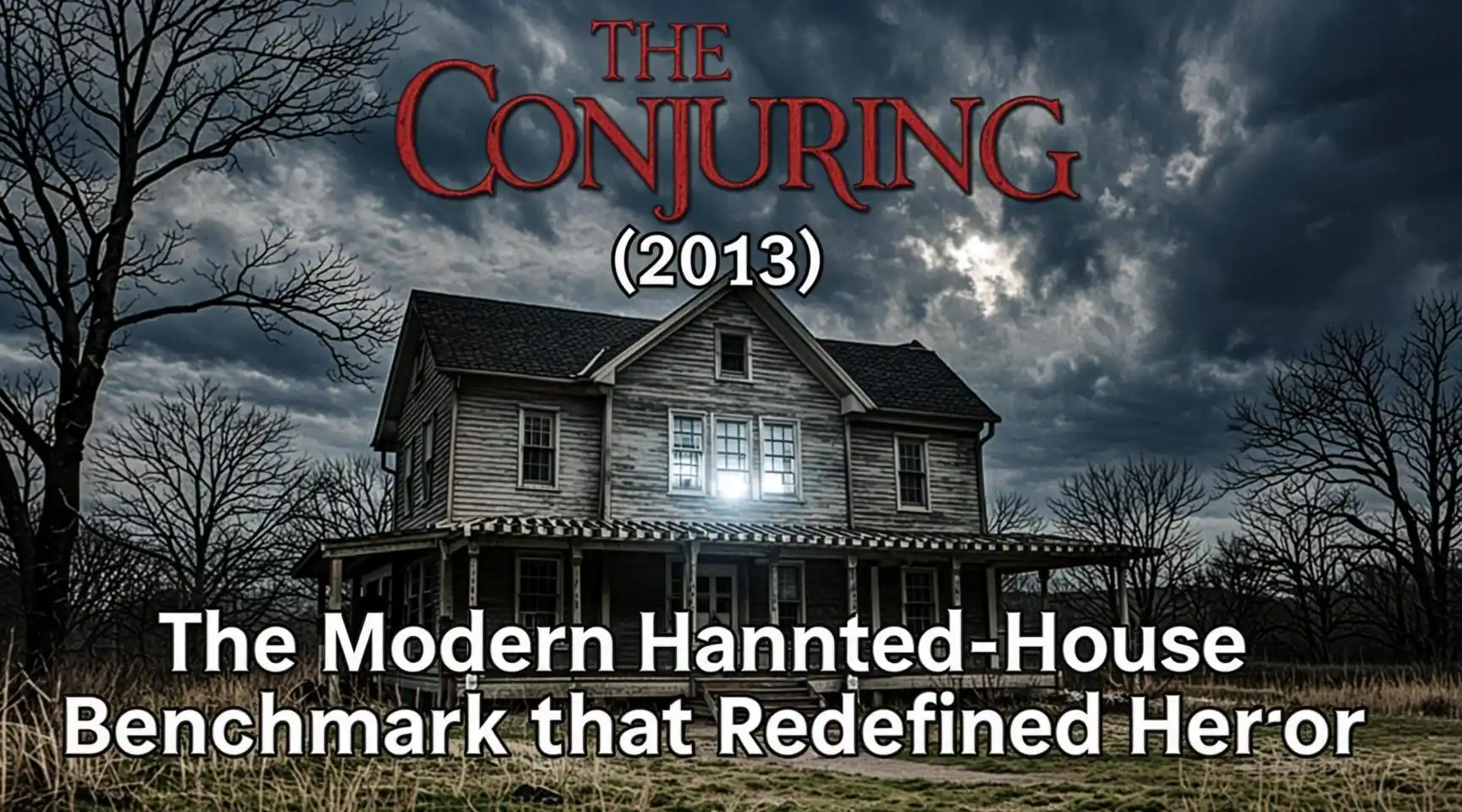
The Conjuring (2013): The Modern Haunted-House Benchmark That Redefined Horror
Introduction: A New Era of Terror
In the summer of 2013, director James Wan unleashed upon the world a film that would not only terrify audiences but fundamentally reshape the horror landscape for years to come. “The Conjuring” arrived at a time when the horror genre was experiencing something of an identity crisis—franchises had become stale, original concepts were increasingly rare, and found footage had begun to overstay its welcome. Into this uncertain terrain came a film that felt both familiar and startlingly fresh, drawing from the rich tradition of haunted house narratives while injecting new life into conventions that had been growing tired.
The film’s success wasn’t merely commercial—though its $319 million worldwide gross against a modest $20 million budget certainly signaled that something special had occurred. Rather, “The Conjuring” achieved the rare feat of balancing mass appeal with genuine artistic merit, earning critical praise alongside its box office dominance. Critics and audiences alike found themselves genuinely frightened, not merely by jump scares, but by an atmosphere of dread that built methodically, character development that made viewers care about those in peril, and a commitment to practical effects over computer-generated specters.
What sets “The Conjuring” apart from its predecessors and imitators is its unwavering dedication to craftsmanship. Every element—from the meticulous production design to Patrick Wilson and Vera Farmiga’s nuanced performances—serves the story’s singular vision. This is horror cinema made with respect for both the genre and the audience, understanding that the most effective terror emerges not from what we see, but from what we fear we might see.
In examining “The Conjuring” as the modern haunted-house benchmark, we must consider not only its immediate qualities but its lasting influence. The film launched a cinematic universe that would gross billions, yes, but more importantly, it proved that thoughtful, character-driven horror could find mainstream success without compromising its scares. It challenged the industry to elevate the genre, demonstrating that horror films could be both artistically ambitious and commercially viable.
The following exploration will delve into the myriad elements that make “The Conjuring” such a significant achievement in horror cinema, examining how it revitalized a classic subgenre, influenced countless filmmakers, and set new standards for what audiences should expect from supernatural thrillers.
Historical Context: Haunted House Cinema Before The Conjuring
To fully appreciate “The Conjuring’s” achievement, we must first understand the haunted house subgenre’s evolution prior to 2013. The concept of a domicile inhabited by malevolent spirits predates cinema itself, with literary traditions stretching back through “The Turn of the Screw,” “The Haunting of Hill House,” and countless ghost stories passed down through generations. When film emerged as a storytelling medium, it was only natural that these haunted narratives would find new expression on screen.
The 1960s and 1970s represent a golden age for haunted house cinema, with Robert Wise’s adaptation of Shirley Jackson’s “The Haunting” (1963) setting an early standard for psychological horror that relied more on suggestion than spectacle. Wise understood that the most terrifying ghosts were those we constructed in our own minds, employing subtle audio techniques and distorted camera angles to create unease rather than relying on visual effects. This approach would influence countless filmmakers, including those behind “The Conjuring” decades later.
The following decade saw the release of “The Amityville Horror” (1979), which brought haunted house narratives into the realm of “based on true events” marketing—a technique that “The Conjuring” would also employ to powerful effect. While “Amityville” blended supernatural elements with family drama in ways that resonated with audiences, its legacy was complicated by questions about the veracity of its source material, foreshadowing the debates that would surround “The Conjuring’s” claims of authenticity.
Stanley Kubrick’s “The Shining” (1980) elevated the haunted house concept to high art, transforming it into something more akin to a haunted hotel populated by the ghosts of America’s violent history. Kubrick’s approach—meticulous composition, deliberate pacing, and Jack Nicholson’s legendary performance—demonstrated that horror films could be as visually and thematically rich as any other genre. This ambition toward artistic excellence would later find echoes in James Wan’s directorial choices for “The Conjuring.”
The 1980s saw the haunted house concept morph into something flashier and more commercial with films like “Poltergeist” (1982), which brought state-of-the-art special effects to bear on suburban terror. While “Poltergeist” featured genuine scares and a compelling family dynamic, its escalating spectacle arguably moved the subgenre away from the psychological dread that had characterized its finest examples. This tension between subtlety and spectacle would become a central challenge for haunted house filmmakers in subsequent decades.
By the 1990s and early 2000s, the haunted house film had fallen somewhat out of favor, replaced first by the slasher revival of the late nineties and then by the found footage phenomenon spearheaded by “The Blair Witch Project” (1999) and “Paranormal Activity” (2007). While these films innovated in terms of technique and marketing, they largely abandoned the haunted house setting, suggesting perhaps that audiences had grown tired of spirits in attics and basements.
It was against this backdrop that “The Conjuring” emerged, returning to classic haunted house territory but with fresh eyes and techniques that acknowledged both the subgenre’s history and the evolving expectations of modern horror audiences. Rather than reinventing the wheel, James Wan and his collaborators instead perfected it, taking the best elements of what had come before and combining them in new and exciting ways.
The Real-Life Foundation: The Perron Family Case
One of the most distinctive aspects of “The Conjuring” is its framing as a true story, based on the experiences of the Perron family and the investigations of paranormal researchers Ed and Lorraine Warren. This foundation in purportedly real events provides the film with an immediate sense of authenticity that separates it from purely fictional haunted house narratives.
The Perron family—parents Roger and Carolyn and their five daughters—moved into a farmhouse in Harrisville, Rhode Island in 1971. Almost immediately, they reported strange phenomena: objects moving on their own, mysterious sounds, and even physical encounters with unseen forces. The situation escalated over approximately ten years before the family eventually left the house.
Ed and Lorraine Warren, already well-known paranormal investigators, became involved in the case in 1973. Their investigation formed the basis for what would become “The Conjuring” decades later. The Warrens claimed the house was occupied by a deceased witch named Bathsheba Sherman, who had lived there in the 19th century and allegedly sacrificed her child to the devil.
This real-world foundation serves multiple purposes in the film. First, it provides immediate emotional stakes—the idea that actual people suffered these traumas makes the horror feel more immediate and tangible. Second, it creates a framework for the narrative that doesn’t require extensive exposition—the investigators’ roles are already established through their real-world reputations. Finally, it taps into a timeless human fascination with the unexplained, inviting audiences to question the boundaries between the known and unknown.
Of course, the veracity of the Warrens’ claims has been extensively debated. Skeptics point to the lack of verifiable evidence and the Warrens’ financial motivations, while believers emphasize the consistency of testimonies from multiple family members over extended periods. The film itself takes an uncritical position, presenting the events as factual within its narrative universe.
What’s undeniable is that “The Conjuring” uses its foundation in real events not merely as a marketing gimmick but as a storytelling device that deepens its impact. By grounding its supernatural elements in the specific historical context of the Perron family and the Harrisville farmhouse, the film creates a sense of place and reality that purely fictional haunted houses often lack. The house becomes a character with its own history, its terrors emerging not merely from supernatural evil but from human stories of suffering and violence.
Character Development: The Heart of the Horror
What truly elevates “The Conjuring” above typical genre fare is its investment in character development. Too often in horror films, characters exist merely as vessels for elaborate death sequences or jump scare reactions. James Wan and screenwriters Chad and Carey Hayes take a different approach, crafting fully realized people whose fates genuinely matter to the audience.
The Perron family feels like a real family, with all the dynamics, tensions, and affections that implies. Roger and Carolyn, portrayed by Ron Livingston and Lili Taylor, carry themselves with the weariness of parents raising five daughters on limited means. Their initial encounters with supernatural phenomena are framed through the practical concerns of daily life—how will they afford to move? What will this do to the children? This grounding in relatable human concerns makes the escalating terror feel more personal and impactful.
The five Perron daughters each have distinct personalities that emerge even within the film’s relatively limited running time. Andrea, Nancy, Christine, Cindy, and April aren’t interchangeable victims-in-waiting but individuals with their own fears, strengths, and relationships. This attention to detail pays dividends when the terror escalates—we care not just that “the children” are in danger, but that these specific children, whom we’ve come to know, are threatened.
Perhaps most significantly, Ed and Lorraine Warren are given depth beyond their function as plot devices. Patrick Wilson and Vera Farmiga imbue these characters with warmth, intelligence, and a genuine devotion to each other that provides an emotional core to the film. Their marriage isn’t merely background information but a central element of the story, with their love and trust serving as a counterforce to the evil they confront.
The film also takes time to establish the Warrens’ professional ethics and methodology. They’re presented not merely as ghost hunters but as people of faith who approach their work with compassion and respect for those they’re helping. This humanizing approach makes their eventual confrontation with the film’s supernatural forces feel more meaningful—we’re invested not just in whether they’ll succeed but in what their success might cost them personally.
This investment in character development pays off during the film’s climax. When Lorraine is pulled into the spiritual realm to rescue Carolyn, or when Ed risks his life to perform the exorcism, these moments carry emotional weight because we understand the relationships and personal histories involved. The horror becomes more than mere spectacle—it becomes a test of character and relationships that we’ve come to care about.
In an era where horror often prioritizes set pieces over substance, “The Conjuring” demonstrates that character development isn’t antithetical to scares but actually enhances them. By making us care about the people on screen, the film makes their peril more terrifying and their triumphs more satisfying. It’s a lesson that subsequent horror films would do well to heed.
Technical Mastery: Building Dread Through Craft
While “The Conjuring’s” characters provide its emotional foundation, its technical execution creates the atmospheric dread that makes those characters’ fates matter. Every element of the film’s construction—from cinematography to sound design to editing—serves the singular purpose of building and maintaining tension.
John R. Leonetti’s cinematography eschews the shaky cam and rapid editing that had become horror conventions in favor of more classical techniques. Long takes and smooth camera movements create a sense of inevitability, as if we’re being drawn inexorably toward some terrible revelation. The film frequently employs the “slow push,” inching ever closer to characters as they sense something amiss, mirroring their growing unease for the audience.
Lighting plays a crucial role in establishing mood. Much of the film takes place in darkness or near-darkness, but Leonetti and Wan avoid the common mistake of making everything simply difficult to see. Instead, light sources are carefully positioned to create ominous shadows and highlight key elements within the frame. The use of practical light sources—lanterns, matches, flashlights—creates an immediate sense of verisimilitude while allowing for dramatic interplay between light and shadow.
The film’s production design deserves special praise for creating the Harrisville farmhouse as both a believable domestic space and an embodiment of encroaching evil. The house’s layout is established clearly early on, allowing audiences to understand the geography of terror as the paranormal activity escalates. Each room has its own personality—the claustrophobic cellar, the expansive attic, the girls’ shared bedroom—and these spaces become arenas for specific types of horror.
Joseph Bishara’s score avoids the bombastic orchestral assaults that characterize many horror soundtracks in favor of more subtle approaches. Discordant strings, rhythmic percussion, and unsettling electronic elements combine to create a sonic landscape that keeps audiences perpetually off-balance. Perhaps most effectively, the score often falls silent at crucial moments, allowing natural sounds to take on heightened significance.
Sound design, supervised by Bill Dean and Kelly Cabral, works in concert with the score to create an environment of dread. The film understands that what we hear but don’t see can be more terrifying than what’s shown on screen. Creaking floorboards, distant whispers, and sudden silences all contribute to a sense of a house that’s not merely haunted but actively malevolent. The famous “hide and clap” sequence demonstrates this mastery perfectly—simple sounds used to maximum effect.
The editing, by Kirk Morri, balances classical horror techniques with more contemporary approaches. Pacing builds deliberately, with tension established through careful assembly of shots rather than through rapid cutting. When the scares do come, they’re earned through this methodical build-up rather than deployed as cheap thrills. The film’s most shocking moments gain their power from the contrast with the quieter passages that precede them.
Special effects are used judiciously, with a clear preference for practical effects over CGI. This commitment to tangible horror elements grounds the supernatural in physical reality, making it feel more immediate and threatening. Whether it’s a possessed Carolyn levitating or the ghostly figure of Bathsheba, the effects maintain a tactile quality that computer-generated imagery often lacks.
This technical excellence extends to seemingly minor details as well—the period-accurate costumes, the authentic props, the weathered texture of the farmhouse walls. Nothing feels manufactured or artificial, which allows audiences to fully immerse themselves in the film’s world. It’s this comprehensive attention to craft that elevates “The Conjuring” above typical genre fare and establishes it as a benchmark for horror filmmaking.
Narrative Structure: Classical Horror, Modern Execution
“The Conjuring’s” narrative structure represents a careful balance between classical horror conventions and more contemporary storytelling techniques. The film follows a relatively straightforward haunted house narrative—family moves into troubled home, supernatural events escalate, experts are called in, confrontation occurs—but executes this framework with such precision and artistry that it feels fresh rather than derivative.
The film’s first act establishes the Perron family and their new home with efficient storytelling. We learn essential details about the family dynamics, their financial situation, and their hopes for their new life. Simultaneously, we’re introduced to the Warrens through a lecture sequence that establishes their expertise and methodology without resorting to heavy-handed exposition. This parallel introduction creates a sense of inevitability—these two groups will converge, and we understand both enough to anticipate the consequences.
The second act carefully escalates the supernatural activity, beginning with subtle disturbances and building toward overt threats. This escalation follows a deliberate pace, with each incident slightly more extreme than the last. A game of hide-and-seek becomes terrifying when April finds a new friend only she can see. Sleepwalking becomes dangerous when Cindy is attacked by an unseen force. The gradual nature of this escalation allows audiences to acclimate to each new level of horror, making each subsequent development feel earned rather than excessive.
Perhaps most importantly, the film takes time to establish the rules of its supernatural universe. We learn about Lorraine’s clairvoyant abilities, the nature of the demonic presence, and the limitations of what the Warrens can do. This establishment of clear parameters prevents the later supernatural events from feeling arbitrary or convenient. When the stakes are raised in the final act, we understand both what’s possible and what’s at stake.
The third act brings all elements together in a sustained sequence of terror. The possession of Carolyn raises the stakes dramatically—not only is a mother in danger, but she becomes the vessel for the very force threatening her family. The decision to focus the climax on an exorcism sequence connects the film to a long tradition of religious horror while providing a dramatic framework for the final confrontation between good and evil.
Throughout this structure, the film maintains careful attention to character development. Even as the supernatural events escalate, we never lose sight of the people experiencing them. The Perron family’s love for each other remains evident even in their terror, and the Warrens’ relationship provides an emotional anchor that grounds the increasingly extreme events.
The resolution—when it finally comes—feels earned rather than contrived. The film doesn’t cheat by introducing previously unmentioned solutions or powers. Instead, the resolution emerges naturally from what we’ve learned about the characters and the supernatural forces they face. This narrative integrity is perhaps one reason the film resonated so strongly with audiences tired of horror films that played fast and loose with their own rules.
In an era when horror narratives were becoming increasingly convoluted or abandoning structure entirely in favor of set pieces, “The Conjuring” demonstrated that classical storytelling remains powerful when executed with skill and conviction. It proved that there’s value in escalation, in establishing clear parameters, and in allowing audiences to understand the rules of the supernatural world before breaking them.
The Performance: Acting That Elevates Genre
One of the most remarkable aspects of “The Conjuring” is the caliber of performances throughout its cast. Rather than accepting the notion that horror acting merely requires screaming and looking terrified, James Wan elicited nuanced, fully realized performances that elevate the material beyond typical genre fare.
Lili Taylor delivers a tour-de-force performance as Carolyn Perron, transitioning convincingly from loving mother to terrified victim to possessed vessel. Taylor understands that horror works best when rooted in believable human emotion, and she grounds even the most extreme sequences in psychological authenticity. Her gradual transformation under the influence of the malevolent presence is handled with remarkable subtlety—small changes in posture, vocal inflection, and facial expression accumulate to create a terrifying portrait of possession that transcends mere theatricality.
Patrick Wilson brings quiet strength and vulnerability to Ed Warren, creating a character who’s both capable as a paranormal investigator and deeply human in his concerns for his wife and those they’re trying to help. Wilson avoids the trap of making Ed merely a heroic figure; instead, he plays him as a man of faith who genuinely struggles with the weight of his responsibilities. This complexity makes his eventual confrontation with the supernatural forces more compelling—we understand both his determination and his fear.
Vera Farmiga’s Lorraine Warren is the film’s emotional center, a character whose sensitivity to the supernatural makes her both powerful and vulnerable. Farmiga brings a quiet intensity to the role, conveying Lorraine’s psychic experiences through subtle shifts in expression and bearing rather than exaggerated theatricality. Her scenes with Patrick Wilson establish a genuine connection between these characters, making their marriage feel lived-in and real, which provides crucial emotional grounding for the supernatural events that unfold.
The younger cast members deserve special recognition for their authentic performances as the Perron children. Child actors in horror films face particular challenges—they must convey terror while remaining believable as children, and they’re often asked to carry scenes that would tax even experienced adult actors. The five actresses playing the Perron daughters (Shanley Caswell, Hayley McFarland, Joey King, Mackenzie Foy, and Kyla Deaver) create a believable sibling dynamic and respond to the escalating horror with age-appropriate reactions that never feel forced or artificial.
Ron Livingston provides solid support as Roger Perron, bringing a working-class authenticity to the role that makes the family feel grounded in reality. Livingston effectively conveys Roger’s confusion and desperation as the supernatural events unfold, as well as his determination to protect his family despite not fully understanding what’s happening. His performance serves as a crucial anchor during the film’s most extreme sequences.
Even in smaller roles, the performances are consistently strong. John Brotherton plays the skeptical police officer with appropriate authority, while Steve Coulter brings gravity to the role of Father Gordan. These supporting performances, while brief, help establish the film’s world as populated by real people rather than mere plot devices.
This commitment to performance quality sets “The Conjuring” apart from many horror films where acting is secondary to effects and set pieces. By casting actors capable of bringing depth and nuance to their roles, and by allowing them the space to develop fully realized characters, James Wan created a horror film where the human elements are as compelling as the supernatural ones. This balance between character and horror is perhaps the key to the film’s enduring impact and critical success.
The Horror Philosophy: Less is More
At the heart of “The Conjuring’s” success is its philosophical approach to horror—specifically, its understanding that what we don’t see is often more terrifying than what we do. While the film certainly delivers its share of shocking visual moments, these are most effective because they emerge from a foundation of subtle suggestion and atmospheric dread.
James Wan demonstrates a master’s understanding of horror tension throughout the film. In one of the most effective sequences, Carolyn investigates a noise in the kitchen while playing a game of hide-and-seek with her daughters. The camera follows her slowly as she moves through the darkened house, the sound design emphasizing every creak and groan of the structure. When two pairs of hands clap together—a simple sound created through practical effects—the impact is genuinely terrifying precisely because we haven’t been overwhelmed with visual spectacle.
This philosophy extends to the film’s approach to its supernatural antagonist. While we do see the ghostly figure of Bathsheba Sherman at key moments, much of the terror comes from her unseen presence—a door opening slowly, a figure standing in the shadows, a cold spot in a previously warm room. The film understands that the human imagination is more powerful than any special effect, and it uses this understanding to maximum advantage.
Even the possession sequences, which could easily have descended into over-the-top theatricality, are handled with remarkable restraint. Carolyn’s transformation is conveyed through subtle changes—a colder gaze, a more rigid posture, a different quality to her voice—rather than dramatic physical alterations. This restraint makes the eventual full possession all the more shocking, as it represents a culmination of subtle changes we’ve been tracking throughout the film.
The film’s sound design exemplifies this less-is-more philosophy. Rather than bombarding audiences with constant noise, the sound mix creates spaces of relative quiet that make sudden disturbances more impactful. A character’s labored breathing in an otherwise silent room creates more tension than a orchestral crescendo might. The film understands that silence itself can be terrifying when properly deployed within a horror context.
This approach to horror reflects a broader trend in post-millennial horror cinema, which had begun moving away from the increasingly graphic violence and spectacle that characterized much of 1980s and 1990s horror. Films like “The Others” (2001), “The Ring” (2002), and ” Paranormal Activity” (2007) had demonstrated that suggestion and atmosphere could be more effective than explicit gore. “The Conjuring” represents both a continuation of this trend and a refinement of it, combining subtle horror with more traditional cinematic techniques to create something that felt both classical and contemporary.
The film’s success with this approach would influence countless subsequent horror films, which increasingly recognized the value of restraint and suggestion. While splatter films and graphic horror continue to have their place in the genre, “The Conjuring” demonstrated that mainstream audiences would respond positively to more subtle approaches when executed with skill and conviction.
This philosophical commitment to less-is-more horror is perhaps the key reason “The Conjuring” holds up to repeated viewings. Jump scares and gore may lose their impact with familiarity, but the atmospheric dread and psychological tension that the film creates remain powerful even when we know what’s coming. It’s this quality that elevates “The Conjuring” above typical genre fare and establishes it as a modern classic of horror cinema.
The Warrens: Horror’s New Icons
The introduction of Ed and Lorraine Warren as central characters in “The Conjuring” represented a significant development in modern horror cinema. Rather than creating entirely fictional paranormal investigators, the film adapted real-life figures who had already achieved a degree of celebrity for their paranormal investigations. This decision would have profound implications not only for the film itself but for the franchise that would follow.
The Warrens as presented in “The Conjuring” differ significantly from the more sensationalized versions that appeared in some of their earlier film appearances. Patrick Wilson and Vera Farmiga play them with dignity and restraint, emphasizing their compassion for those they help and their genuine faith rather than any desire for publicity or sensationalism. This approach humanizes them in ways that make their paranormal abilities feel grounded in character rather than mere plot devices.
The decision to focus on the Warrens’ relationship rather than merely their professional activities adds emotional depth to the film. We see them supporting each other through traumatic experiences, struggling with the moral implications of their work, and finding strength in their faith and their marriage. This humanizing approach makes them more relatable to audiences, who see them not merely as ghost hunters but as people facing extraordinary challenges.
The film also establishes specific rules and limitations for the Warrens’ abilities that make them more interesting as characters. Lorraine’s clairvoyance is shown to be physically and emotionally draining, taking a toll that makes her hesitate to use it. Ed’s role as a demonologist is presented not as a superpower but as a calling that carries significant risks and responsibilities. These limitations make the characters more vulnerable and their eventual confrontation with evil more dramatic.
From a franchise perspective, the Warrens represent an ideal center for a shared horror universe. Unlike traditional horror villains who become less frightening with each appearance, investigators facing different supernatural threats in each film can sustain audience interest across multiple installments. The Warrens’ real-world history of alleged paranormal cases provided ready-made source material for sequels and spin-offs, which would quickly materialize following “The Conjuring’s” success.
The critical and commercial success of the Warrens as characters represented a significant shift in horror cinema. For decades, the genre had centered on villains—Freddie, Jason, Michael Myers—as its enduring figures. “The Conjuring” demonstrated that heroes could be equally compelling, particularly when they’re well-developed characters with personal stakes in the supernatural events they confront.
This shift would have implications beyond the immediate franchise. Horror films began investing more heavily in protagonist development, recognizing that compelling heroes could drive franchises just as effectively as compelling villains. The success of films like “The Witch” (2015), “Hereditary” (2018), and “The Babadook” (2014) suggests that this trend toward character-centered horror continues to gain momentum.
Of course, the real Ed and Lorraine Warren remain controversial figures, with skeptics questioning their methods and motives. The films’ largely uncritical portrayal of them has drawn criticism from some quarters. However, within the fictional universe of “The Conjuring” franchise, they’ve emerged as complex, compelling characters who have revitalized the horror protagonist in ways that continue to influence the genre.
The Cultural Impact: A New Horror Standard
The cultural impact of “The Conjuring” extends far beyond its immediate commercial success or even the franchise it launched. The film represented a turning point in horror cinema, establishing new standards for quality and commercial viability that would influence countless films in its wake.
Perhaps most significantly, “The Conjuring” demonstrated that horror films could achieve both critical acclaim and massive commercial success without compromising their genre identity. For years, horror had been dismissed by many critics as a lesser genre, worthy of attention only when it transcended its roots through artistry that distanced it from typical horror fare. “The Conjuring” earned a remarkable 86% positive rating on Rotten Tomatoes while grossing over $300 million worldwide, proving that critics and audiences could embrace horror on its own terms.
This success had immediate practical effects on the industry. Studios became more willing to greenlight horror projects with substantial budgets and marketing campaigns, recognizing that the genre could deliver significant returns on investment. The film’s success also encouraged more established directors to consider horror projects, lending the genre additional legitimacy within the industry.
The “based on a true story” marketing approach employed by “The Conjuring” would be widely imitated, though rarely with equal effectiveness. Dozens of horror films in subsequent years would make similar claims, with varying degrees of credibility and success. What these imitators often missed was that “The Conjuring” didn’t merely use its “true story” foundation as a marketing gimmick—it incorporated this element deeply into its narrative structure and character development, making the claim feel authentic rather than exploitative.
The film’s influence is particularly evident in the realm of haunted house cinema. After years in which supernatural horror had largely abandoned the traditional haunted house setting in favor of more varied locations, “The Conjuring” sparked a revival of interest in domestic terror. Films like “Oculus” (2013), “The Babadook” (2014), and “Hereditary” (2018) all owe something to “The Conjuring’s” demonstration that the family home remained fertile ground for horror when approached with fresh eyes and techniques.
The critical discourse around horror also shifted following “The Conjuring’s” success. Critics became more willing to engage seriously with horror elements rather than dismissing them as mere genre conventions. This critical embrace has created space for more ambitious and artistically adventurous horror films, as filmmakers no longer feel they must distance themselves from genre elements to achieve critical recognition.
The film’s influence extends to international horror cinema as well, with filmmakers around the world citing “The Conjuring” as an inspiration for their own work. The balance it struck between classical horror techniques and modern sensibilities provided a model that transcended cultural boundaries, demonstrating that effective horror relies on universal human fears rather than culturally specific references.
Perhaps the most significant measure of “The Conjuring’s” cultural impact is the way it has become a reference point for subsequent horror films. When critics and audiences discuss contemporary horror, “The Conjuring” is frequently the benchmark against which other films are measured—a standard for technical excellence, narrative coherence, and effective scares. This position as a touchstone represents a form of cultural influence that few films achieve, and even fewer within the horror genre.
The Extended Universe: Building on Success
The remarkable success of “The Conjuring” inevitably led to discussions of sequels and expanded universe possibilities, but what emerged went far beyond typical franchise development. The Conjuring Universe would become one of the most successful horror franchises in cinema history, grossing billions of dollars worldwide and establishing a new model for horror franchise building.
What distinguishes the Conjuring Universe from typical horror franchises is its thoughtful approach to expansion. Rather than simply churning out sequels with diminishing returns, the franchise developed organically, with each film exploring different aspects of the supernatural world established in the original film. “Annabelle” (2014), the first spin-off, expanded on the creepy doll that appeared only briefly in “The Conjuring,” creating an entirely new narrative around this minor element. This approach—taking something small from the original film and building it into something substantial—would characterize much of the franchise’s expansion.
“The Conjuring 2” (2016) returned to Ed and Lorraine Warren, this time investigating the Enfield Poltergeist case in London. This sequel demonstrated that the Warrens could sustain audience interest across multiple cases, with Patrick Wilson and Vera Farmiga deepening their characters while facing new supernatural challenges. The film’s critical and commercial success proved that the franchise had staying power beyond its initial entry.
Subsequent films like “The Nun” (2018), “The Curse of La Llorona” (2019), and “Annabelle Comes Home” (2019) continued to expand the universe’s supernatural mythology while occasionally intersecting with the main narrative arc. What’s remarkable about this expansion is how it maintained relatively consistent quality despite involving different directors, writers, and creative teams. This consistency suggests a strong core vision guiding the franchise’s development.
The franchise’s commercial performance has been extraordinary, with the films collectively grossing over $2 billion worldwide against relatively modest budgets. This financial success has encouraged studios to invest more heavily in horror franchises, recognizing the genre’s potential for sustained profitability when managed thoughtfully.
The Conjuring Universe also pioneered a new approach to horror franchise building that differs significantly from models established by earlier horror franchises like Friday the 13th or Nightmare on Elm Street. Rather than centering on a single villain who returns repeatedly, the franchise centers on investigators facing different supernatural threats in each film. This approach allows for greater narrative variety while maintaining thematic continuity through the Warrens and their investigations.
This model has influenced subsequent horror franchise development, with studios increasingly looking for “universe potential” when developing horror properties. The success of the Conjuring Universe demonstrated that horror franchises could be built around concepts rather than just characters, creating more expansive storytelling possibilities.
Of course, franchise expansion always carries the risk of diminishing returns and creative exhaustion. As the Conjuring Universe continues to grow, maintaining the quality and integrity that characterized the original film becomes increasingly challenging. However, the franchise’s track record thus far suggests that its creative team understands the importance of thoughtful expansion rather than mere commercial exploitation.
The Critical Reception: Validation for Horror
The critical reception of “The Conjuring” represented a significant moment in horror cinema history. For a genre often dismissed by mainstream critics, the film’s overwhelmingly positive reviews signaled a shift in how horror was perceived and evaluated within the broader critical landscape.
Reviewers praised nearly every aspect of the film, from James Wan’s direction to the performances, technical execution, and screenplay. What emerged from these reviews was a consensus that “The Conjuring” elevated the horror genre through craft, care, and respect for its audience. Rather than dismissing the film as merely effective scare delivery, many critics engaged seriously with its thematic elements, character development, and place within horror cinema history.
Perhaps most significantly, critics praised the film’s restraint and its understanding that suggestion often works better than explicit spectacle. This critical validation of a less-is-more approach to horror encouraged other filmmakers to pursue similar strategies, knowing that such films could receive serious critical attention. The success of “The Conjuring” helped create critical space for more subtle, atmospheric horror films that might otherwise have been overlooked or dismissed.
The film’s strong critical performance also demonstrated that horror could succeed with mainstream audiences without abandoning its genre identity. Too often, horror films that achieve critical praise do so by distancing themselves from genre conventions—becoming psychological dramas or dark character studies with only vestigial horror elements. “The Conjuring” earned its praise precisely because it excelled as horror, embracing rather than avoiding its genre identity.
This critical reception had practical effects beyond mere validation. Studios became more willing to market horror films as prestige releases rather than exploitation fare, investing in higher production values and more sophisticated marketing campaigns. The critical success of “The Conjuring” helped create an environment where horror films could receive serious awards consideration, though the genre’s struggle for respect in this area continues.
The film’s performance with critics also influenced audience expectations. As more people became aware of the film’s critical acclaim, they approached it with different expectations than they might bring to typical horror fare. This elevated expectation likely contributed to the film’s strong word-of-mouth performance, as audiences found their critical expectations met or exceeded by the actual film.
Of course, not all critics were equally enthusiastic about “The Conjuring.” Some found it derivative of earlier haunted house films, while others questioned the “based on a true story” marketing. However, even these dissenting reviews typically acknowledged the film’s technical craftsmanship and effectiveness within its genre parameters. This qualified praise still represented a significant step forward for horror, which had often been dismissed entirely rather than engaged with critically.
The critical discourse around “The Conjuring” also reflected evolving attitudes toward horror’s relationship to real-world fears and anxieties. Many critics noted how the film’s domestic setting and focus on a family under threat tapped into broader cultural anxieties about economic instability and the vulnerability of the home. This more sophisticated critical engagement with horror’s relationship to social context would become increasingly common in subsequent years.
The Box Office Performance: Commercial Validation
“The Conjuring’s” commercial performance represents a remarkable success story by any standard, but particularly within the horror genre. The film’s $319.1 million worldwide gross against a production budget of approximately $20 million represents not just profitability but an extraordinary return on investment that would have significant implications for horror cinema financing and distribution.
What makes this commercial success particularly noteworthy is how it was achieved. The film didn’t rely on established intellectual property, star power, or expensive special effects. Instead, its success emerged from positive word-of-mouth driven by genuinely satisfied audiences and smart marketing that emphasized its quality and effectiveness as horror rather than sensationalism. This demonstrated that horror films could achieve massive commercial success through quality and audience satisfaction rather than mere market positioning.
The film’s opening weekend of $41.9 million was strong but not spectacular, particularly for a summer release. However, unlike many horror films that experience steep drop-offs in subsequent weeks, “The Conjuring” demonstrated remarkable legs, holding well week after week as audiences spread the word about its quality. This pattern suggested that the film was benefiting from genuine audience enthusiasm rather than merely marketing hype.
The international performance was equally impressive, with the film grossing $177.6 million outside North America. This worldwide success demonstrated that the film’s appeal transcended cultural boundaries, tapping into universal fears and storytelling traditions that resonated across different markets. The international gross also indicated that horror could perform strongly in global markets when it didn’t rely on culturally specific references or humor.
From an industry perspective, “The Conjuring’s” financial performance validated the model of modestly budgeted, quality-focused horror filmmaking. Studios became more willing to greenlight horror projects with creative teams who had strong visions rather than merely following market trends. The film proved that horror didn’t need massive budgets or expensive effects to succeed commercially—it needed strong execution of a compelling concept.
The success also had implications for horror’s positioning within release calendars. Traditionally, horror had been relegated to less competitive periods like late summer or Halloween season. “The Conjuring’s” July release demonstrated that quality horror could compete successfully during peak moviegoing periods, potentially opening more release window options for future horror films.
The film’s box office performance also influenced subsequent marketing approaches for horror films. The emphasis on “based on a true story” and the clever use of critical praise in marketing materials became more common as studios sought to replicate “The Conjuring’s” success. While these marketing techniques had been used before, “The Conjuring” demonstrated how effectively they could be deployed when backed by a genuinely quality film.
Perhaps most significantly, the commercial success of “The Conjuring” created financial justification for expanded universe development. The film’s profitability made the investment in sequels and spin-offs a logical business decision, leading directly to the creation of the broader Conjuring Universe. This commercial foundation would allow the franchise to develop with relatively substantial budgets despite remaining cost-effective compared to major franchise productions.
The Influence on Horror Filmmaking
The influence of “The Conjuring” on subsequent horror filmmaking cannot be overstated. The film’s success demonstrated that classical horror techniques, when executed with skill and conviction, could resonate powerfully with contemporary audiences. This realization would influence countless filmmakers in the years following the film’s release.
Perhaps the most visible influence has been the revival of the haunted house subgenre. After years in which supernatural horror had largely abandoned domestic settings for more varied locations, “The Conjuring” sparked renewed interest in terror within the home. Films like “Oculus” (2013), “The Babadook” (2014), “The Witch in the Window” (2018), and “Hereditary” (2018) all explore domestic terror in ways that owe something to “The Conjuring’s” demonstration of the haunted house’s enduring potential.
The film’s approach to character development has also been widely influential. Rather than treating characters merely as vessels for scares, subsequent horror films have increasingly invested in developing fully realized people whose fates genuinely matter to audiences. This character-first approach to horror has become increasingly common, with films like “The Babadook” and “Hereditary” placing character psychology at the center of their horror narratives.
The technical execution of “The Conjuring” has provided a model for filmmakers seeking to create atmospheric dread without relying exclusively on jump scares. The film’s careful use of lighting, sound design, and composition to build tension has been studied and emulated by countless directors working in horror and other genres. In particular, the “hide and clap” sequence has become a reference point for how simple elements can be combined to maximum effect.
The success of “The Conjuring” also influenced horror’s relationship with religious themes. After decades in which religious horror had largely fallen out of favor following the 1970s exorcism cycle, “The Conjuring” demonstrated that these themes could resonate with contemporary audiences when approached with respect rather than exploitation. This influence is evident in films like “The Crucifixion” (2017) and “The Prodigy” (2019), which incorporate religious elements in ways that recall “The Conjuring’s” approach.
The film’s balance of practical and digital effects has also been influential in an era increasingly dominated by CGI. “The Conjuring” demonstrated that practical effects, when used judiciously and skillfully, could create more convincing and terrifying supernatural entities than computer-generated alternatives. This influence has been evident in the increased use of practical effects in horror films like “The Babadook” and “Hereditary,” which combine physical effects with digital enhancement rather than relying entirely on CGI.
The “based on a true story” framework employed by “The Conjuring” has also been widely imitated, though rarely with equal effectiveness. While many horror films in subsequent years have made similar claims, what separates the most successful from the merely exploitative is the extent to which they integrate this element into their narrative and character development rather than using it merely as a marketing hook.
Perhaps most significantly, “The Conjuring” has influenced a new generation of horror filmmakers to approach the genre with seriousness and artistic ambition. The film demonstrated that horror could achieve both critical and commercial success without compromising its genre identity, encouraging filmmakers to pursue their visions within the horror framework rather than feeling the need to transcend or abandon the genre to achieve legitimacy.
The Enduring Appeal: Why The Conjuring Resonates
Nearly a decade after its release, “The Conjuring” continues to resonate with audiences and maintain its position as a modern horror classic. This enduring appeal stems from several factors that distinguish it from even the most successful of its contemporaries.
At its core, “The Conjuring” taps into universal fears about home, family, and the unknown that transcend cultural boundaries and generational differences. The home represents sanctuary in human psychology—the one place where we should be safe from external threats. When that sanctuary is violated by supernatural forces, the horror is particularly acute because it strikes at our most fundamental sense of security. The Perron family’s experience speaks to a primal fear that resonates regardless of whether one believes in ghosts or demons.
The film also benefits from its period setting, specifically the 1970s. This temporal distance allows the supernatural elements to exist in a world without the technological solutions that might complicate contemporary horror narratives. There are no cell phones to call for help, no internet to research the house’s history, no security cameras to capture evidence. This technological absence increases the characters’ isolation and vulnerability in ways that enhance the horror while also creating a nostalgic appeal for audiences.
The character of Lorraine Warren as a clairvoyant who experiences the supernatural more directly than those around her provides another point of audience connection. Many people have experienced the feeling of being sensitive to their environment in ways others don’t understand. Lorraine’s gift, while extreme, represents an exaggeration of a common human experience—the sense of perceiving something that remains invisible to others.
The film’s pacing also contributes to its enduring appeal. Rather than overwhelming audiences with constant scares, “The Conjuring” builds tension methodically, allowing moments of relative calm that make the horror more impactful when it arrives. This rhythm creates a satisfying emotional arc that rewards careful viewing and holds up to repeated experiences.
The practical effects and makeup work have aged remarkably well compared to contemporary horror films that relied more heavily on CGI. The tangible nature of the supernatural elements—the rotting flesh of the possessed, the physical distortions of the demonic presence—gives the film a visceral quality that computer-generated effects often lack. This physicality helps the film maintain its power even as visual effects technology has advanced significantly since its release.
The film’s moral clarity also contributes to its enduring appeal. While many contemporary horror films embrace moral ambiguity, “The Conjuring” presents a relatively straightforward battle between good and evil. This clarity doesn’t mean the film is simplistic—the characters are complex and the situations challenging—but the fundamental moral framework provides a satisfying structure for the supernatural conflict.
Perhaps most importantly, “The Conjuring” understands that effective horror ultimately depends on emotional connection. By making us care about the Perron family and the Warrens, the film makes their ordeal genuinely affecting rather than merely scary. This emotional investment remains powerful across multiple viewings, as we return not just to be frightened but to spend time with characters we’ve come to care about.
The Legacy: Assessing The Conjuring’s Place in Horror History
Assessing “The Conjuring’s” place in horror history requires considering both its immediate impact and its lasting influence on the genre. A decade after its release, the film has established itself as a significant milestone in horror cinema, though its ultimate historical position continues to evolve.
In terms of immediate impact, “The Conjuring” revitalized both the haunted house subgenre and the “based on a true story” approach to horror filmmaking. It demonstrated that classical horror techniques could resonate powerfully with contemporary audiences when executed with skill and conviction. This revitalization inspired a wave of imitators and influenced countless filmmakers working in horror and other genres.
The film’s most significant historical contribution may be its role in elevating horror’s critical and commercial standing. Before “The Conjuring,” horror was often dismissed by mainstream critics and treated as a secondary genre by major studios. The film’s critical acclaim and massive commercial success challenged these assumptions, creating space for more ambitious and artistically adventurous horror projects. This elevated status for horror has arguably been the film’s most lasting legacy.
The Conjuring Universe that emerged from the film’s success represents another significant contribution to horror history. By creating a shared universe of supernatural films centered on investigators rather than villains, the franchise established a new model for horror franchise building that has influenced subsequent genre development. The commercial success of this model has encouraged studios to invest more heavily in horror properties with franchise potential.
From a technical perspective, “The Conjuring” has influenced horror filmmaking through its demonstration of practical effects’ continued relevance in an era increasingly dominated by CGI. The film’s successful integration of physical effects with digital enhancement provided a model for subsequent horror films seeking to create convincing supernatural elements without relying exclusively on computer-generated imagery.
The film’s approach to character development has also left a lasting mark on horror cinema. By treating its characters as fully realized people rather than mere victims or investigators, “The Conjuring” demonstrated that character-driven horror could achieve both critical and commercial success. This influence is evident in the increased complexity of horror protagonists in subsequent years, with films like “The Babadook” and “Hereditary” placing character psychology at the center of their narratives.
Culturally, “The Conjuring” represents a particular moment in early 21st century horror—a point when the genre was finding new ways to address contemporary anxieties through classical frameworks. The film’s focus on domestic security, family protection, and the vulnerability of the home spoke to broader cultural concerns following the economic instability of the late 2000s. In this sense, the film serves as a time capsule of specific cultural anxieties even as it taps into universal human fears.
Looking forward, “The Conjuring’s” historical position will likely continue to evolve as the franchise expands and as new filmmakers build upon or react against its approaches. What seems certain is that the film will be remembered as a significant milestone in horror cinema—a point where the genre gained new respect, new commercial viability, and new artistic possibilities.
Whether future historians will view “The Conjuring” as the beginning of a horror renaissance or as the high point of a particular approach to supernatural terror remains to be seen. What is undeniable is that the film changed the landscape of horror cinema in ways that continue to resonate a decade after its initial release, establishing a benchmark against which subsequent haunted house films continue to be measured.
Conclusion: The Benchmark Endures
A decade after its initial release, “The Conjuring” stands as a testament to the enduring power of classical horror techniques executed with skill, conviction, and respect for both the genre and its audience. The film’s remarkable achievement lies not in inventing new approaches to horror but in perfecting existing ones, combining elements from decades of haunted house cinema into something that felt both familiar and startlingly fresh.
The film’s status as the modern haunted-house benchmark rests on multiple foundations: its commitment to character development, its technical excellence, its understanding that suggestion often works better than explicit spectacle, and its respect for horror traditions even as it updates them for contemporary audiences. These elements combine to create an experience that satisfies on multiple levels—as genuine horror, as emotional drama, and as craftsmanship.
The influence of “The Conjuring” continues to shape horror cinema in visible and invisible ways. The haunted house subgenre it revitalized remains vibrant, the Conjuring Universe it launched continues to expand, and the standard of quality it established continues to influence how horror films are made, marketed, and evaluated. Even filmmakers working outside the horror genre have borrowed from its approach to building tension and developing characters in extreme situations.
Perhaps most significantly, “The Conjuring” demonstrated that horror could achieve both critical acclaim and massive commercial success without abandoning its genre identity. This validation has opened doors for countless filmmakers working in horror, creating space for more ambitious and artistically adventurous projects that might otherwise have struggled to find financing or distribution.
As the horror genre continues to evolve, responding to new cultural anxieties and technological possibilities, “The Conjuring” remains a touchstone—a reminder of what’s possible when classical techniques meet contemporary sensibilities, when character development takes priority over set pieces, and when horror is treated with the respect and craft it deserves.
The benchmark established by “The Conjuring” endures not because it was revolutionary but because it was exceptionally well-executed. It proved that there was still life in traditional haunted house narratives, that character-driven horror could find mass audiences, and that less-is-more approaches to terror could be more effective than overwhelming spectacle. These lessons continue to resonate with filmmakers and audiences alike, ensuring that “The Conjuring’s” influence will be felt in horror cinema for years to come.
In the final analysis, what makes “The Conjuring” such an enduring benchmark is its fundamental respect for horror as a genre capable of artistic achievement and emotional power. The film understands that at its best, horror speaks to our deepest fears and most fundamental experiences—the vulnerability of our homes, the preciousness of our families, and the mystery of what lies beyond the boundaries of our understanding. By engaging these elements with craft, care, and conviction, “The Conjuring” earned its place as the modern haunted-house benchmark and secured its legacy as a horror classic that will continue to terrify and inspire audiences for generations to come.
Keywords: James Wan, Supernatural Horror, Haunted House Film
Hashtags: #TheConjuring #HorrorCinema #HauntedHouseMovies
Disclaimer: This article is an independent analysis and expansion of the film “The Conjuring” (2013). It is not affiliated with, endorsed by, or sponsored by Warner Bros., New Line Cinema, James Wan, or any other entities associated with the film’s production and distribution. All opinions expressed are those of the author. The film’s portrayal of the Perron family case and the Warrens’ investigations is based on their own accounts and may not reflect historical accuracy.
Have any thoughts?
Share your reaction or leave a quick response — we’d love to hear what you think!
-
 0
-
 0
-
 0
-
 0
-
 0
-
 0
